Approach to hematuria (pediatrics) Quiz: Ace Your Exams
Get ready to dominate your medical and nursing exams by using our dynamic quizzes to elevate your knowledge and increase your confidence. Whether you're gearing up for the USMLE®, COMLEX®, or your next in-class assessment, Osmosis quizzes tackle key topics in pathology, diagnostics, and treatment approaches. By honing in on clinical readiness and decision-making, we make sure the knowledge you gain empowers you both in the classroom and in real-world practice. Jump in and supercharge your exam prep!
Learning videos
Flashcards
Expert reviewed
Spaced Repetition
Mobile app
Custom Quizzes
1 of 3
A 6-year-old boy presents to the primary care office for evaluation of dark urine. His parents report that he has had dark, reddish-brown urine for the last 24 hours. He does not have dysuria, frequency, or urgency. His parents have also noticed swelling around his eyes and hands. The child does not have any chronic medical conditions and does not take daily medication. Temperature is 37.0°C (98.6°F), pulse is 92/min, respiratory rate is 22/min and blood pressure is 122/80 mmHg. On examination, the patient appears fatigued but is in no acute distress. Edema of the face and hands is noted. Urinalysis is performed, and the urine sample, pictured below, shows innumerable dysmorphic red blood cells per high power field. C3 is low and C4 is normal. Anti-streptolysin O (ASO) antibodies are positive (reference range: negative). Which of the following additional clinical findings is most likely to be present given the most likely underlying condition?
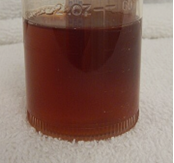 Image is cropped from the original image by James Heilman, MD and is licensed under the Creative Commons Attribution-Share Alike 4.0 International license. Reproduced from WikiCommons
Image is cropped from the original image by James Heilman, MD and is licensed under the Creative Commons Attribution-Share Alike 4.0 International license. Reproduced from WikiCommons Elimination tool
0 XP
Press space to continue