Approach to metabolic alkalosis Quiz: Ace Your Exams
Get ready to dominate your medical and nursing exams by using our dynamic quizzes to elevate your knowledge and increase your confidence. Whether you're gearing up for the USMLE®, COMLEX®, or your next in-class assessment, Osmosis quizzes tackle key topics in pathology, diagnostics, and treatment approaches. By honing in on clinical readiness and decision-making, we make sure the knowledge you gain empowers you both in the classroom and in real-world practice. Jump in and supercharge your exam prep!
Learning videos
Flashcards
Expert reviewed
Spaced Repetition
Mobile app
Custom Quizzes
1 of 4
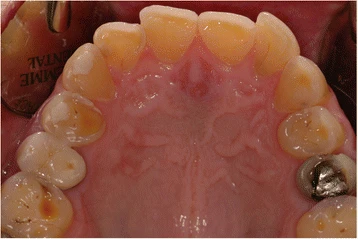
A 21-year-old woman presents to the emergency department to be evaluated for several days of generalized malaise and muscle cramping. She has no significant past medical history and does not currently take any medication. Temperature is 36.2 ºC (97.2 ºF), pulse is 48/min, respiratory rate is 16/min, and blood pressure is 88/59 mm Hg. BMI is 17 kg/m2. On physical examination, the patient is fatigued and has evidence of muscle wasting, but she is in no acute distress. There are skin abrasions on the dorsum of the right hand, and the tongue is dry appearing. An image of her teeth is shown below. Serum potassium level is 3.0 mEq/L and bicarbonate is 31 mEq/L. Intravenous access is established, and the nutrition team is consulted due to the patient’s low BMI. Which of the following is the best next step in management?
Elimination tool
0 XP
Press space to continue