Bacterial vaginosis Quiz: Ace Your Exams
Get ready to dominate your medical and nursing exams by using our dynamic quizzes to elevate your knowledge and increase your confidence. Whether you're gearing up for the USMLE®, COMLEX®, or your next in-class assessment, Osmosis quizzes tackle key topics in pathology, diagnostics, and treatment approaches. By honing in on clinical readiness and decision-making, we make sure the knowledge you gain empowers you both in the classroom and in real-world practice. Jump in and supercharge your exam prep!
Learning videos
Flashcards
Expert reviewed
Spaced Repetition
Mobile app
Custom Quizzes
1 of 3
A 28-year-old woman presents to the primary care office for one week of abnormal vaginal discharge. The patient noticed an increased amount of watery discharge as well as a prominent odor from the vaginal area after intercourse. The patient is sexually active with one biologically male partner. For contraception, the patient has a copper intrauterine device. Temperature is 37.0°C (98.6°F), pulse is 68/min, blood pressure is 116/78 mmHg, and respiratory rate is 18/min. Chaperoned vaginal examination reveals a thin, grayish-white, watery discharge with a vaginal pH of 4.8. There is no cervical motion tenderness. Saline microscopy of a vaginal sample shows more than 20% of the cell type seen in the image below. A positive whiff test is noted with KOH preparation. Which of the following is the most likely diagnosis?
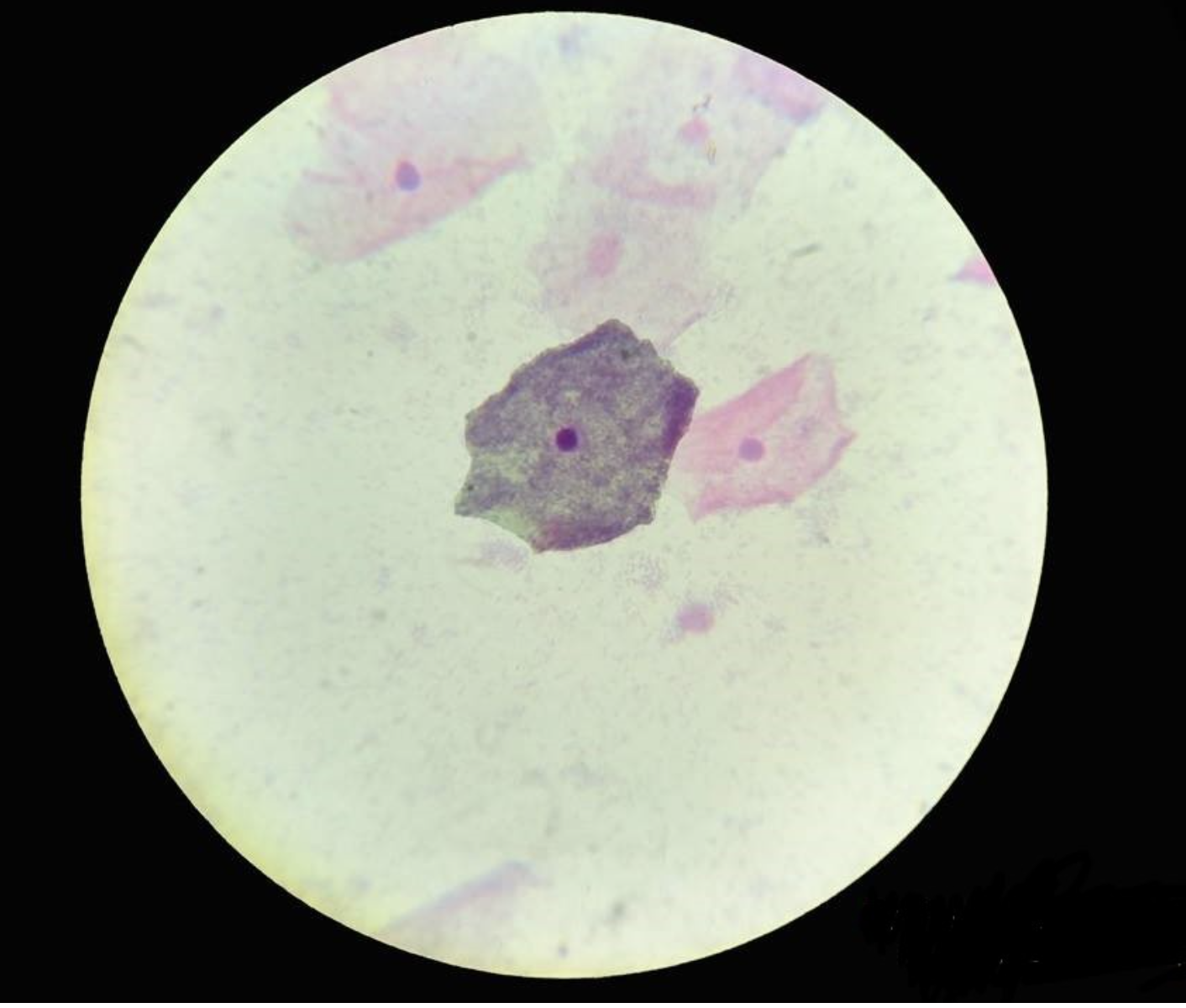
Image by Dr. Roshan Nasimudeen with Department of Pathology, Government Medical College, Kozikode is licensed under Creative Commons Attribution-Share Alike 3.0 Unported license. Reproduced from Wikimedia Commons
Image by Dr. Roshan Nasimudeen with Department of Pathology, Government Medical College, Kozikode is licensed under Creative Commons Attribution-Share Alike 3.0 Unported license. Reproduced from Wikimedia Commons
Elimination tool
0 XP
Press space to continue