Right heart failure (cor pulmonale) Quiz: Ace Your Exams
Get ready to dominate your medical and nursing exams by using our dynamic quizzes to elevate your knowledge and increase your confidence. Whether you're gearing up for the USMLE®, COMLEX®, or your next in-class assessment, Osmosis quizzes tackle key topics in pathology, diagnostics, and treatment approaches. By honing in on clinical readiness and decision-making, we make sure the knowledge you gain empowers you both in the classroom and in real-world practice. Jump in and supercharge your exam prep!
Learning videos
Flashcards
Expert reviewed
Spaced Repetition
Mobile app
Custom Quizzes
1 of 4
A 66-year-old man presents to the emergency department for evaluation of worsening shortness of breath for the past three weeks. The patient's partner called EMS when the patient collapsed after standing up from the couch. The patient has a past medical history of heart failure, hypertension, diabetes, and a 20 pack-year smoking history. Medications include aspirin, amlodipine, carvedilol, metformin, and furosemide. Temperature is 37°C (98.6°F), pulse is 130/min, respirations are 20/min, blood pressure is 76/54 mmHg, and oxygen saturation is 92% on room air. The patient is ill-appearing, diaphoretic, and tachypneic at rest. Cardiopulmonary examination reveals distended neck veins, distant heart sounds, and bibasilar rales. ECG is notable for low-voltage QRS complexes in all leads. A bedside ultrasound is performed, which is displayed below. One of the findings is a large pericardial effusion. Which of the following is the best initial step in management while waiting for emergency staff to collect procedure supplies?
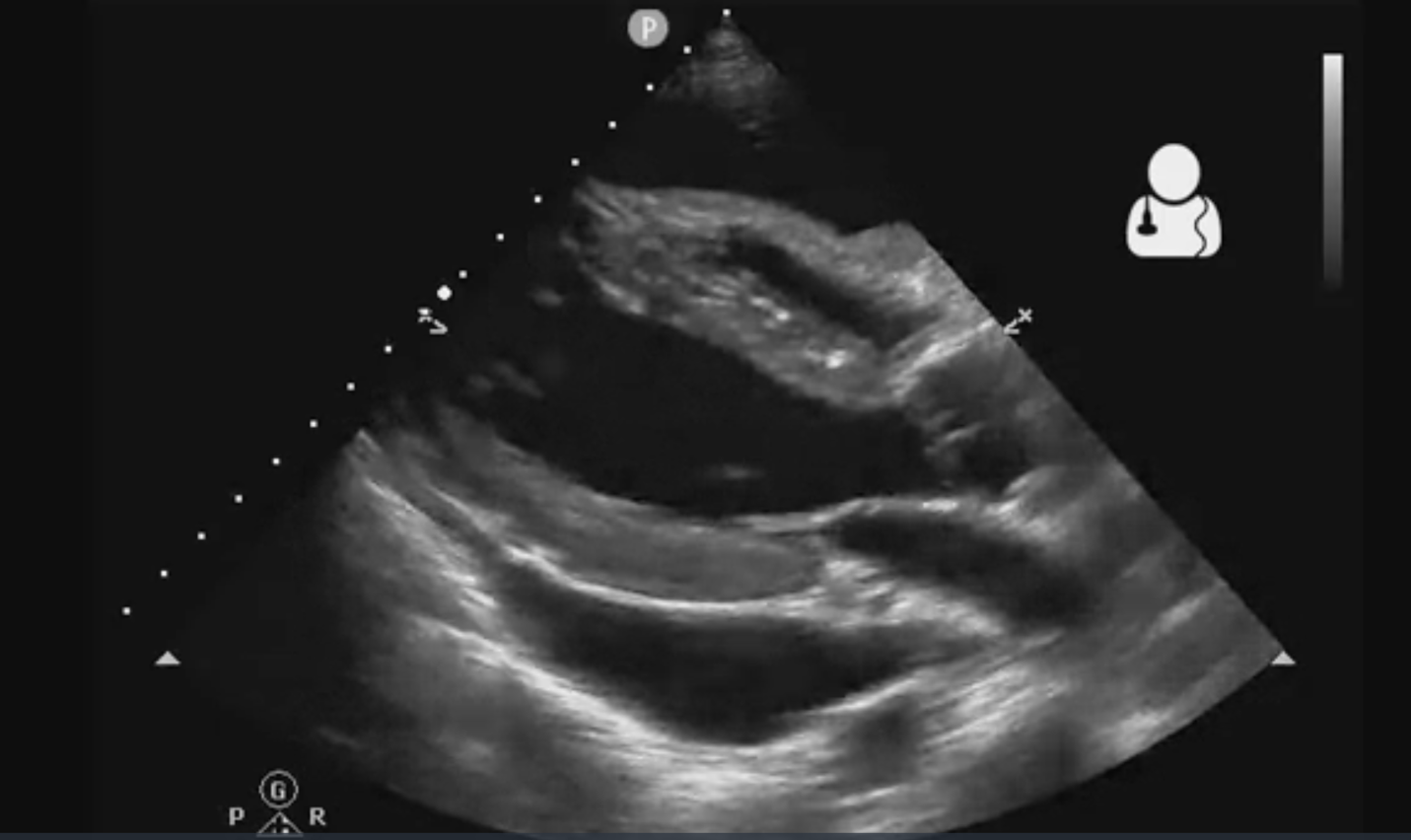
Reproduced from: Wikipedia
Reproduced from: Wikipedia
Elimination tool
0 XP
Press space to continue