Fall Risk Assessment

What Is It, When and How It’s Performed, and More

Author: Ashley Mauldin, MSN, APRN, FNP-BC, CNE
Editor: Alyssa Haag, MD
Editor: Ian Mannarino, MD, MBA
Editor: Kelsey LaFayette, DNP, ARNP, FNP-C
Illustrator: Abbey Richard, MSc
Modified: Feb 19, 2026

What is a fall risk assessment?

fall risk assessment is a type of evaluation completed by healthcare professionals (e.g., nurses, physicians, advanced practice providers) to identify individuals at risk for falling. Falls are a leading cause of injuries, especially in older adults, and can significantly decrease the ability of an individual to care for themselves, as well as their overall quality of life. By assessing fall risk and addressing any modifiable fall risk factors, healthcare professionals can help reduce the risk of falls occurring.  

Fall risk factors can include individual risk factors, like cognitive impairment, balance deficits, or certain medical conditions like Parkinson disease; and environmental risk factors, like inadequate lighting or tripping hazards in the home, like rugs. Use of certain medications, like opioid analgesics (e.g., morphine) or antihypertensives (e.g., metoprolol), may also increase the risk of falls.  

An infographic detailing the background of fall risk assessment.

When is a fall risk assessment performed?

A fall risk assessment is typically completed at any healthcare encounter, specifically when there is any change in health status, with the use of certain medications, and with a transfer to a different unit of care.  

How is a fall risk assessment performed?

fall risk assessment is performed by a healthcare professional and usually includes a physical examination, medication review, environmental and functional assessment, mental state and cognitive assessment, and a review of one’s medical history for previous falls or use of ambulatory devices.  

Fall risk assessment tools or questionnaires are often used to help guide the physical exam process and provide the healthcare professional with risk factors to consider. In some instances, a medical questionnaire can be completed by the patient to help the healthcare professional gather information on fall risk. Common fall risk assessment tools can include the Timed Up and Go test, which assesses mobility by having someone walk, turn around, and walk back; and the Stopping Elderly Accidents, Deaths, and Injuries, or STEADI, tool which is a toolkit with information to help healthcare providers assess for falls, provide education, and recommend follow-ups. 

Another common type of fall risk assessment tool that can be used is the 30-second chair-stand test. This test helps to evaluate leg strength and endurance. In the chair-stand test, the individual is sitting in a chair with arms crossed over the chest with feet flat on the floor. Then, they will be asked to stand up and sit down repeatedly for 30 seconds to determine if they need to use their arms to successfully stand. If the individual has to use their arms to safely stand, this can indicate a risk of falls.

Other components that can help assess for fall risk include vital sign measurement, which includes blood pressure, heart rate, pulse oximetry, and respirations; orthostatic vital signs, which are vital signs measurements while sitting, lying, and standing; the 4-stage balance test, which involves measuring balance in various standing positions; cardiac evaluations for heart rate, rhythm, or murmurs; neurologic examinations to test muscle tone, sensation, and proprioception; and visual acuity testing to evaluate for decreased vision. Finally, lab tests may be conducted, such as thyroid-stimulating hormone (TSH) levels, vitamin B12 levels, a complete blood count (CBC), or vitamin D levels. 
How are fall risk assessment results interpreted?

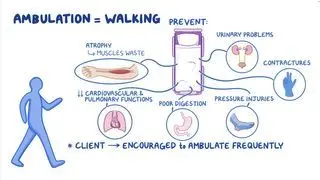
 The fall risk assessment results typically indicate that an individual has a low, moderate, or high risk of falling. Depending on the results of their fall risk assessment, the healthcare professional can implement different interventions to help prevent falls. For example, if an individual is at moderate risk of falling due to deficits in strength and balance, the healthcare professional may recommend exercising or even refer to physical therapy. For those at high risk of a fall due to orthostatic hypotension from medications, changes to the type or dose of medication may be recommended as well as educating the individual to change positions slowly and/or request assistance when getting out of a chair or bed. 

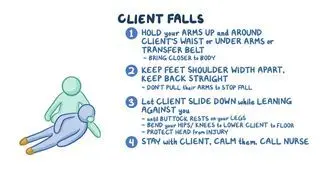
In an acute care setting, certain fall risk precautions can be implemented and include more frequent fall risk assessments; bed or chair alarms; visual cues for the healthcare team, like yellow socks to help identify those at high risk of falling; keeping the bed at the lowest position, with the wheels locked; using ambulation equipment, like gait belts; and providing fall risk prevention education to the individual and their family.  

What are the most important facts to know about fall risk assessments?

fall risk assessment is a type of evaluation completed by healthcare providers that helps to determine the likelihood that a fall will occur. It is performed at least yearly in those 65 and older, or anytime someone presents with an acute fall in primary care. In an acute care setting, a fall risk assessment is completed on admission, with any change in health status, and with a transfer to a different unit of care. It usually includes a physical examination, a medication review, an environmental and functional assessment, as well as a review of the medical history for previous falls. The fall risk assessment may indicate that an individual has a low, moderate, or high risk of falling, or that they have no risk of falling. Depending on the risk factors the individual has, the healthcare provider can implement different interventions to help prevent them from falling.  

Key Takeaways

Definition 

A fall risk assessment is a type of evaluation completed by healthcare professionals to identify individuals at risk for falling and address modifiable risk factors 

Fall Risk Factors 

- Individual, e.g.: 

     - Cognitive impairment 

     - Balance deficits  

     - Medical conditions (e.g., Parkinson disease) 

- Environmental, e.g.:  

     - Inadequate lighting  

     - Tripping hazards  

- Medications, e.g.:  

     - Opioids  

     - Antihypertensives  

When  

- Any healthcare encounter, especially when:  

     - Changes in health status  

     - Changes in medications  

     - Transfer to different unit of care 

How 

- Physical examination  

- Medication review  

- Environmental and functional assessment  

- Mental state and cognitive assessment  

- Review of medical history  

Tools 

- Standardized tools/questionnaires to guide evaluation 

- Patient-completed questionnaires may be used 

- Common tools: 

     - Timed Up and Go (TUG) test – assesses mobility (walk, turn, return) 

     - STEADI tool – toolkit for risk assessment, education, and follow-up 

     - 30-second chair-stand test  evaluates lower limb strength and endurance (use of arms suggests increased fall risk) 

Additional Helpful Components  

- Vital signs 

- Orthostatic vital signs (vital signs measurements while sitting, lying, and standing) 

- 4-stage balance test (balance measured in various standing positions) 

- Cardiac evaluation (rate, rhythm, murmurs) 

- Neurologic examination (tone, sensation, proprioception) 

- Visual acuity testing 

- Lab tests: TSH, vitamin B12, CBC, vitamin D 

Interpretation and Interventions 

- Low risk of falling 

- Moderate risk of falling 

- High risk of falling 

- In acute care setting: fall risk precautions 

     - More frequent fall risk assessments  

     - Bed or chair alarms  

     - Visual cues for healthcare team  

     - Keep bed at lowest position, with locked wheels  

     - Ambulation equipment (e.g., gait belts)  

     - Fall risk prevention education  

References


Casey CM, Parker EM, Winkler G, Liu X, Lambert GH, Eckstrom E. Lessons learned from implementing cdc’s STEADI falls prevention algorithm in primary care. The Gerontologist. 2016;57(4):gnw074. doi:https://doi.org/10.1093/geront/gnw074 


Centers for Disease Control and Prevention National Center for Injury Prevention and Control. https://www.cdc.gov/steadi/pdf/STEADI-Assessment-4Stage-508.pdf 


Morris R, O’Riordan S. Prevention of falls in hospital. Clinical Medicine. 2018;17(4):360-362. doi:https://doi.org/10.7861/clinmedicine.17-4-360 


Phelan EA, Mahoney JE, Voit JC, Stevens JA. Assessment and management of fall risk in primary care settings. Med Clin North Am. 2015;99(2):281-293. doi:10.1016/j.mcna.2014.11.004  


Which fall prevention practices do you want to use? www.ahrq.gov. https://www.ahrq.gov/patient-safety/settings/hospital/fall-prevention/toolkit/practices.html#:~:text=How%20often%20is%20the%20assessment