
Hydrocolloid Dressing · What Is It, Uses, and More

Published: Oct 17, 2025
Author: Lahav Constantini, MD
Editor: Anna Hernández, MD
Editor: Emily Miao, MD, PharmD
Editor: Kelsey LaFayette, DNP, ARNP, FNP-C
Editor: Arianna Succi, MD
Illustrator: Jessica Reynolds, MS
Copyeditor: David G. Walker
7-day free trial

Go deeper with Osmosis

Osmosis is a learning platform with videos, questions, and AI tools to help you master topics like this.

4.8 · 12,000+ reviews
Watch quick, visual videos
Practice with Qbank-style questions
Use AI to explain, quiz, and review
Study anytime with the mobile app
Start free trial

No credit card · Cancel anytime

What is a hydrocolloid dressing?

A hydrocolloid dressing is a special kind of wound dressing used in the treatment of mildly exuding wounds, like minor burns or bed sores. These dressings are waterproof, and unlike simpler dressings, they provide a moist and insulating environment to promote wound healing 

Hydrocolloid dressings have an inner layer of gel-forming agents called hydrocolloid particles, which include carboxymethylcellulose, gelatin, and pectin. This inner layer promotes wound healing by absorbing exudate, wound fluid containing white blood cells, and proteins. This feature provides a moist healing environment, which allows for faster healing and reduced scar formation 

The outside layer is waterproof and made of polyurethane foam or film, which shields the wound from bacteria, foreign bodies, and debris. Any bacteria and debris that might accumulate are trapped in the dressing and removed when the dressing is changed. In fact, these dressings facilitate wound care because they can be left in place for up to a week and, therefore, typically don’t need to be changed as often as other dressings unless they are malodorous, soiled, or saturated. In addition, they are easy to apply and allow for easy washing and bathing due to their waterproof nature. Because the dressing doesn’t adhere to the wound, its removal is mostly painless, making it particularly suitable for the pediatric population. Hydrocolloid dressing rarely causes skin irritation or itchiness.  

Learn deeper with Osmosis

Master this topic faster with videos, questions, and AI.

Used by 8M+ healthcare learners.

Start free trial

No credit card · Cancel anytime

What is an example of a hydrocolloid dressing?

Hydrocolloid dressings are available as sheets of various shapes and sizes and come in the form of powders, pastes, or granules, which can be used to fill deep wounds. Hydrocolloid wound dressings are made by several manufacturers, including DuoDerm and NU-DERM. 

What is a hydrocolloid dressing used for?

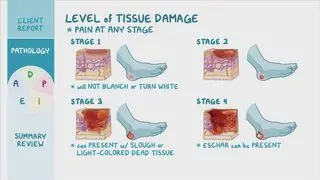
Hydrocolloid dressings are used in the treatment of non-infected, mildly exuding wounds, such as minor burns or pressure ulcers, also known as bed sores. Because these dressings are flexible, they can be used for difficult-to-dress areas, like the elbows, heels, or knees. Conversely, hydrocolloid dressings are not recommended for wounds with exposed bone or tendon as well as those with abundant drainage since they may be displaced. Although their ability to absorb high levels of exudate has improved over the years, other products such as foams and alginates are better suited for the treatment of highly exuding wounds. 

Key Takeaways

Definition
 

A hydrocolloid dressing is a special kind of wound dressing with an inner layer of hydrocolloid particles to absorb exudate and an outer, waterproof layer to protect the wound from bacteria, provide a moist and insulating environment, and promote wound healing.   

Example

- Sheets of various shapes and sizes  

- Powders, pastes, or granules (to fill deep wounds) 

Uses 

- Non-infected, mildly exuding wounds  

- Minor burns  

- Pressure ulcers (bed sores 

- Difficult-to-dress areas due to flexibility: elbows, heels, knees

- NOT recommended for:  

     - Exposed bone or tendon  

     - Abundant drainage  

Students say Osmosis is 100% worth it

Because Osmosis saves them time. Lowers stress. And actually helps them remember when it counts.

I used Osmosis to prepare for my first medical school licensing exam! Super helpful and interactive for people who may not do great with just pages of text info!

Cecilia Ruiz

Cecilia Ruiz

MD student

Sayan Misra

I have used Osmosis for about four years. Best thing I have ever used for my medical studies.

Sayan Misra

Sayan Misra

Med student

Osmosis videos are superior because they define simple concepts, tell a story with a clear progression, and provide context.

Jay Pate

Jay Pate

Dental student

References


Harding MM, Kwong J, Roberts D, Hagler D, Reinisch C. Lewis’s Medical-Surgical Nursing: Assessment and Management of Clinical Problems. 11th ed. Elsevier Health Sciences; 2019.


Hydrocolloid dressing. ScienceDirect. Accessed March 5, 2022. https://www.sciencedirect.com/topics/medicine-and-dentistry/hydrocolloid-dressing


Jin Y, Li J, Wu S, Zhou F. Comparison of polyurethane foam dressing and hydrocolloid dressing in patients with pressure ulcers: A randomized controlled trial protocol. Medicine (Baltimore). 2021;100(2):e24165. Accessed March 9, 2022. https://www.ncbi.nlm.nih.gov/pmc/articles/PMC7808478/


Suhng EA, Byun JY, Choi YW, Myung KB, Choi HY. A case of allergic contact dermatitis due to DuoDERM Extrathin®. Ann Dermatol. 2011;23(Suppl 3):S387–S389. doi:10.5021/ad.2011.23.S3.S387