Acute leukemia Quiz: Ace Your Exams
Get ready to dominate your medical and nursing exams by using our dynamic quizzes to elevate your knowledge and increase your confidence. Whether you're gearing up for the USMLE®, COMLEX®, or your next in-class assessment, Osmosis quizzes tackle key topics in pathology, diagnostics, and treatment approaches. By honing in on clinical readiness and decision-making, we make sure the knowledge you gain empowers you both in the classroom and in real-world practice. Jump in and supercharge your exam prep!
Learning videos
Flashcards
Expert reviewed
Spaced Repetition
Mobile app
Custom Quizzes
1 of 4
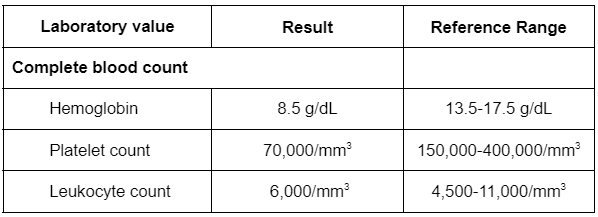
A 60-year-old man presents to the clinic because of progressive fatigue, fevers, and night sweats for the past 3 months. Past medical history is significant for 3 episodes of sinusitis in the last 6 months, which all resolved with the use of oral antibiotics. Temperature is 38.3°C (101°F), pulse is 105/min, respirations are 20/min, and blood pressure is 135/85 mmHg. Physical examination shows mucosal pallor and purpuric rashes on lower extremities. There is no lymphadenopathy.
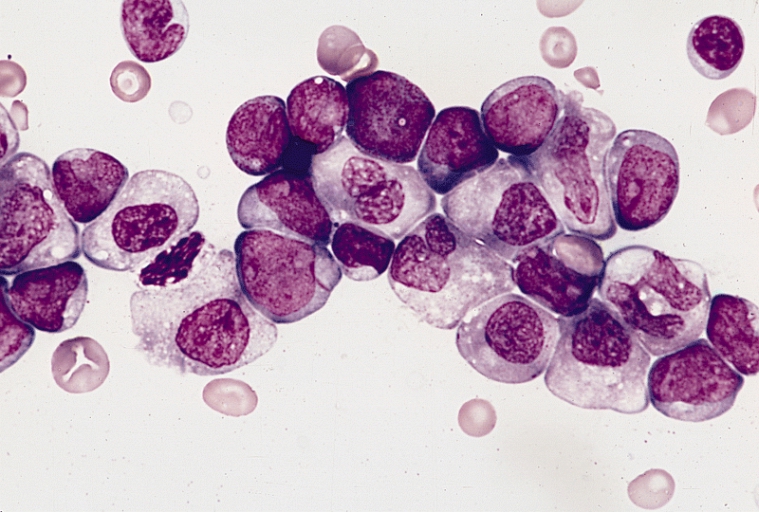
After appropriate workup, bone marrow biopsy reveals myeloblasts, as depicted in the following:
Reproduced from: Wikimedia Commons
Which of the following is the most likely diagnosis in this patient?
After appropriate workup, bone marrow biopsy reveals myeloblasts, as depicted in the following:
Reproduced from: Wikimedia Commons
Which of the following is the most likely diagnosis in this patient?
Elimination tool
0 XP
Press space to continue