Anatomy clinical correlates Quiz: Ace Your Exams
Get ready to dominate your medical and nursing exams by using our dynamic quizzes to elevate your knowledge and increase your confidence. Whether you're gearing up for the USMLE®, COMLEX®, or your next in-class assessment, Osmosis quizzes tackle key topics in pathology, diagnostics, and treatment approaches. By honing in on clinical readiness and decision-making, we make sure the knowledge you gain empowers you both in the classroom and in real-world practice. Jump in and supercharge your exam prep!
Learning videos
Flashcards
Expert reviewed
Spaced Repetition
Mobile app
Custom Quizzes
1 of 11
A 40-year-old woman is brought to the emergency department for evaluation of a generalized tonic-clonic seizure that lasted 30 seconds. The patient’s partner endorses increased difficulty with ambulation for the past several days. The patient had two instances where they lost control of their bladder without seizing. The patient does not take any medications. Vitals are within normal limits. The patient appears confused but is arousable. Neurological examination is significant for motor strength of 1/5 in the lower extremities bilaterally. Motor strength in the upper extremities is 5/5. MRI of the brain is shown below. Compression of which of the following areas is the most likely cause of this patient’s symptoms?
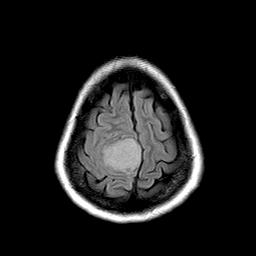
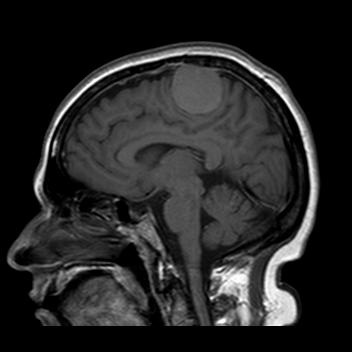
Reproduced from: Radiopaedia.org
Reproduced from: Radiopaedia.org
Elimination tool
0 XP
Press space to continue