Approach to atypical genitalia Quiz: Ace Your Exams
Get ready to dominate your medical and nursing exams by using our dynamic quizzes to elevate your knowledge and increase your confidence. Whether you're gearing up for the USMLE®, COMLEX®, or your next in-class assessment, Osmosis quizzes tackle key topics in pathology, diagnostics, and treatment approaches. By honing in on clinical readiness and decision-making, we make sure the knowledge you gain empowers you both in the classroom and in real-world practice. Jump in and supercharge your exam prep!
Learning videos
Flashcards
Expert reviewed
Spaced Repetition
Mobile app
Custom Quizzes
1 of 3
A 4-hour-old infant, delivered by vaginal delivery at 37 weeks’ gestation, is evaluated in the newborn nursery for atypical genitalia. The pregnancy and delivery were uncomplicated. There is no family history of consanguinity. The mother did not show signs of virilization prenatally and took only regular prenatal vitamins during the pregnancy. Family and surgical history are non-contributory. Temperature is 37°C (98.6°F), pulse is 150/min, respirations are 30/min, blood pressure is 64/36 mm Hg, and oxygen saturation is 97% on room air. On physical exam, there is a right-sided inguinal hernia, and the genitalia appear as shown below. Cardiac and pulmonary exams are unremarkable. 17-hydroxyprogesterone (17-OHP) is elevated before and after the adrenocorticotrophin (ACTH) stimulation test. Laboratory results one week after birth are shown below. A karyotype is confirmed as 46,XX. Which of the following is the most likely diagnosis?
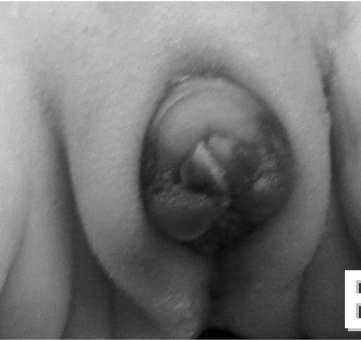
“Ambiguous genitalia” by Tantbirojn et al. Licensed under CC BY 2.0. Reproduced from Wikimedia
| Laboratory value | Results |
| Sodium | 133 mEq/L |
| Potassium | 6.5 mEq/L |
| Chloride | 103 mEq/L |
| Bicarbonate | 17 mEq/L |
| Glucose | 50 mg/dL |
“Ambiguous genitalia” by Tantbirojn et al. Licensed under CC BY 2.0. Reproduced from Wikimedia
Elimination tool
0 XP
Press space to continue