Coronary artery disease Quiz: Ace Your Exams
Get ready to dominate your medical and nursing exams by using our dynamic quizzes to elevate your knowledge and increase your confidence. Whether you're gearing up for the USMLE®, COMLEX®, or your next in-class assessment, Osmosis quizzes tackle key topics in pathology, diagnostics, and treatment approaches. By honing in on clinical readiness and decision-making, we make sure the knowledge you gain empowers you both in the classroom and in real-world practice. Jump in and supercharge your exam prep!
Learning videos
Flashcards
Expert reviewed
Spaced Repetition
Mobile app
Custom Quizzes
1 of 4
A 58-year-old man presents to the emergency department for evaluation of chest pain. The patient was working on his car earlier in the day when he noted substernal chest discomfort radiating down his left arm with associated nausea and vomiting. The patient reports that the pain has been persistent from onset. The patient has a past medical history of hypertension, diabetes, hyperlipidemia, CAD, and a twenty-pack-year smoking history. The patient is anxious and diaphoretic. Temperature is 37°C (98.6°F), blood pressure is 166/71 mmHg, pulse is 100/min, respiratory rate is 16/min, and oxygen saturation is 94% on room air. The rest of the physical examination is otherwise unremarkable. ECG is shown below. Troponin level comes back at 0.154 ng/mL (< 0.04ng/mL). Which of the following is the best next step in management?
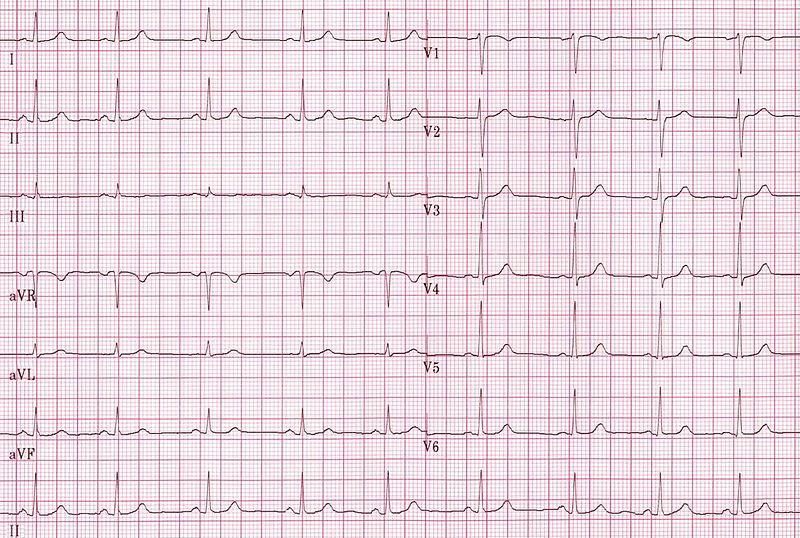
Reproduced from: Wikipedia
Reproduced from: Wikipedia
Elimination tool
0 XP
Press space to continue