Cyanotic congenital heart defects Quiz: Ace Your Exams
Get ready to dominate your medical and nursing exams by using our dynamic quizzes to elevate your knowledge and increase your confidence. Whether you're gearing up for the USMLE®, COMLEX®, or your next in-class assessment, Osmosis quizzes tackle key topics in pathology, diagnostics, and treatment approaches. By honing in on clinical readiness and decision-making, we make sure the knowledge you gain empowers you both in the classroom and in real-world practice. Jump in and supercharge your exam prep!
Learning videos
Flashcards
Expert reviewed
Spaced Repetition
Mobile app
Custom Quizzes
1 of 6
A 2-day-old male newborn is being evaluated in the neonatal intensive care unit for progressive cyanosis, breathing difficulty and poor feeding. He was born to a 22-year-old mother who received no prenatal care. Temperature is 37.0° C (98.6° F), pulse is 160/min, blood pressure is 87/55 mm Hg, and respiration rate is 55/min. On physical examination, no craniofacial deformities are seen. Central cyanosis is present, and cardiac auscultation reveals fixed splitting of the second heart sound (S2) over the left upper sternal border. Chest radiograph is obtained and shown below:
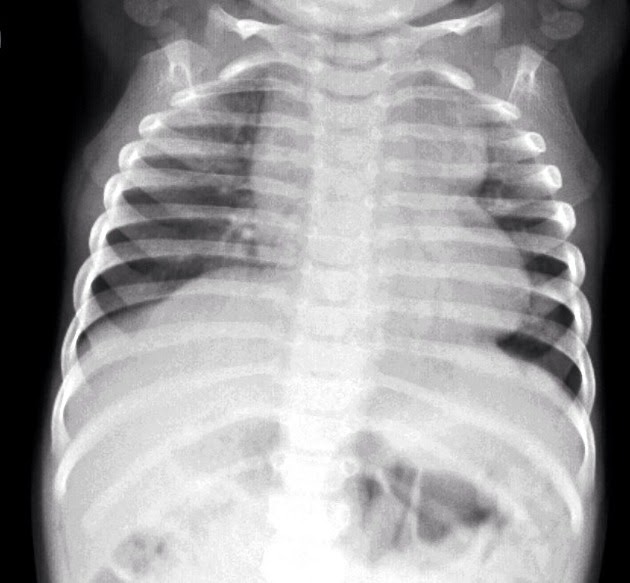
Reproduced from: Radiopaedia
Which of the following is the most likely diagnosis?
Reproduced from: Radiopaedia
Which of the following is the most likely diagnosis?
Elimination tool
0 XP
Press space to continue