Empyema Quiz: Ace Your Exams
Get ready to dominate your medical and nursing exams by using our dynamic quizzes to elevate your knowledge and increase your confidence. Whether you're gearing up for the USMLE®, COMLEX®, or your next in-class assessment, Osmosis quizzes tackle key topics in pathology, diagnostics, and treatment approaches. By honing in on clinical readiness and decision-making, we make sure the knowledge you gain empowers you both in the classroom and in real-world practice. Jump in and supercharge your exam prep!
Learning videos
Flashcards
Expert reviewed
Spaced Repetition
Mobile app
Custom Quizzes
1 of 3
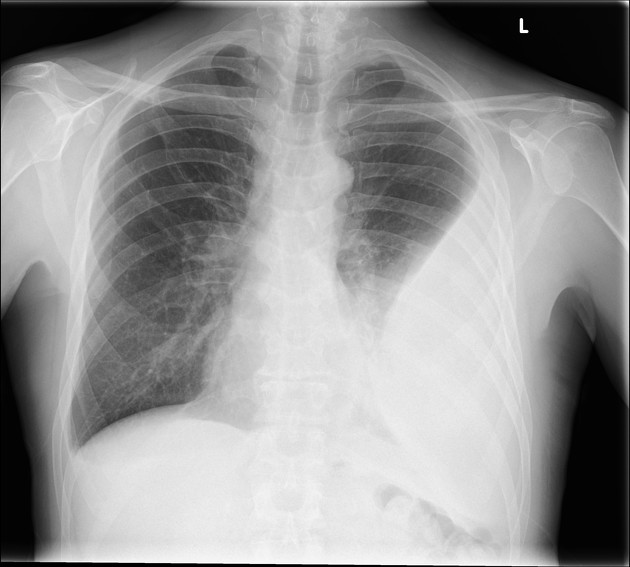
A 67-year-old woman is brought to the emergency department for fever and disorientation. The patient’s partner states that the patient has had a productive cough and fever for the past five days that was being treated with azithromycin without improvement. Past medical history is significant for hypertension, diabetes, and dermatomyositis. Current medications include amlodipine/hydrochlorothiazide/valsartan, insulin, and prednisolone. Upon examination, the patient appears uncomfortable and disoriented. Temperature is 38.8°C (101.8°F), heart rate is 110 bpm, respirations are 26/min, blood pressure is 105/50 mmHg, oxygen saturation is 96% on room air. She is oriented only to person. Chest auscultation reveals decreased breath sounds at the left base and dullness to percussion. Abdominal examination reveals multiple longitudinal stretch marks. Chest X-ray is shown below. Point of care ultrasound shows a loculated pleural effusion. Diagnostic thoracentesis is performed and shows frank pus. Pleural fluid analysis reveals pH of 7.12 and glucose of 39 mg/dl. The patient is admitted to the intensive care unit and intravenous antibiotics are started. Which of the following is the best next step in management?
Elimination tool
0 XP
Press space to continue