Neuromuscular junction disorders Quiz: Ace Your Exams
Get ready to dominate your medical and nursing exams by using our dynamic quizzes to elevate your knowledge and increase your confidence. Whether you're gearing up for the USMLE®, COMLEX®, or your next in-class assessment, Osmosis quizzes tackle key topics in pathology, diagnostics, and treatment approaches. By honing in on clinical readiness and decision-making, we make sure the knowledge you gain empowers you both in the classroom and in real-world practice. Jump in and supercharge your exam prep!
Learning videos
Flashcards
Expert reviewed
Spaced Repetition
Mobile app
Custom Quizzes
1 of 7
A 65-year-old man comes to his outpatient provider because of a chronic cough for the past 3 months. It is occasionally accompanied by flecks of blood-tinged sputum. Review of systems is significant for weakness in the hips and thighs bilaterally and 15 lbs (6.8 kg) weight loss. Past medical history is notable for hypertension. He only takes hydrochlorothiazide. Social history is notable for a 50-pack-year smoking history. In the office, his temperature is 37.0°C (98.6°F), pulse is 76/min and blood pressure is 157/85 mmHg. Pulmonary examination reveals expiratory wheezing on the left side in 5th intercostal space. A chest radiograph is ordered and reveals the following:
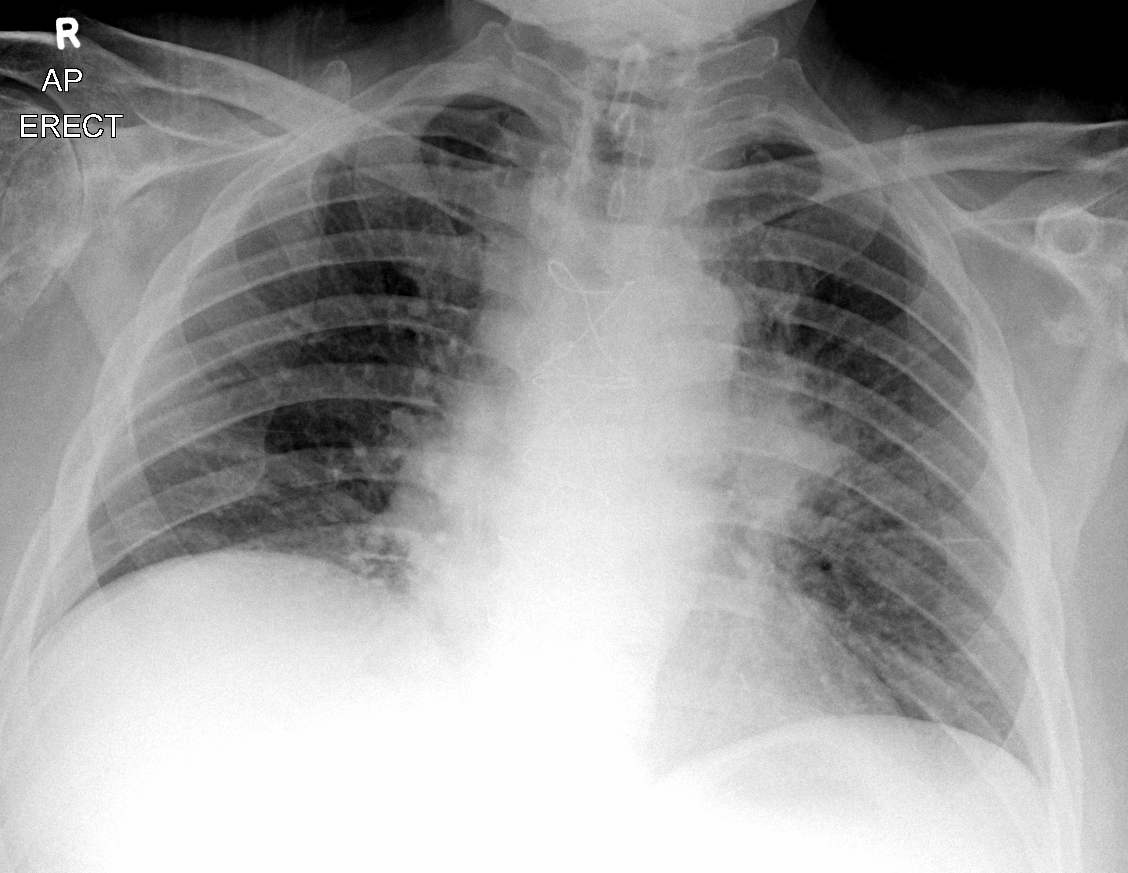
Reproduced from: Radiopaedia.org
Laboratory testing reveals a creatinine kinase level of 75 U/L. Which of the following additional examination findings will most likely be present in this patient?
Reproduced from: Radiopaedia.org
Laboratory testing reveals a creatinine kinase level of 75 U/L. Which of the following additional examination findings will most likely be present in this patient?
Elimination tool
0 XP
Press space to continue