Rapidly progressive glomerulonephritis Quiz: Ace Your Exams
Get ready to dominate your medical and nursing exams by using our dynamic quizzes to elevate your knowledge and increase your confidence. Whether you're gearing up for the USMLE®, COMLEX®, or your next in-class assessment, Osmosis quizzes tackle key topics in pathology, diagnostics, and treatment approaches. By honing in on clinical readiness and decision-making, we make sure the knowledge you gain empowers you both in the classroom and in real-world practice. Jump in and supercharge your exam prep!
Learning videos
Flashcards
Expert reviewed
Spaced Repetition
Mobile app
Custom Quizzes
1 of 5
A 50-year-old man comes to the emergency department with inability to urinate for the past 2 days. He also has noticed blood in his urine for the past week. The patient has had no pain with urination or myalgias. Review of the medical charts reveals multiple clinic visits for recurrent rhinosinusitis. Temperature is 38.2°C (100.8°F), pulse is 80/min, respirations are 20/min, and blood pressure is 160/95 mmHg. Physical examination shows 2+ peripheral pitting edema. There is no flank tenderness or tenderness on palpation of the lower abdomen. Laboratory results are as follows:
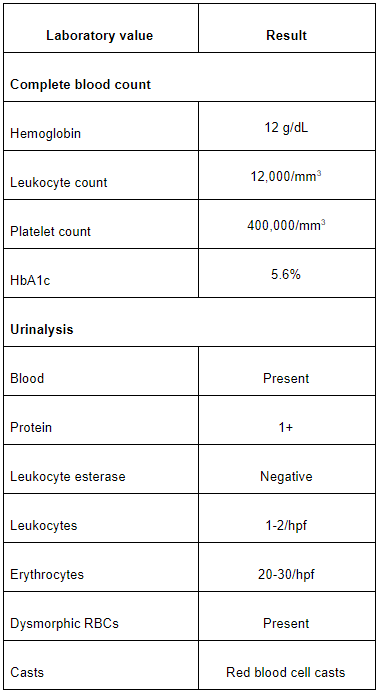
Serum creatinine is 4.0 mg/dL. Kidney biopsy is performed, and a light microscopy image is shown below:
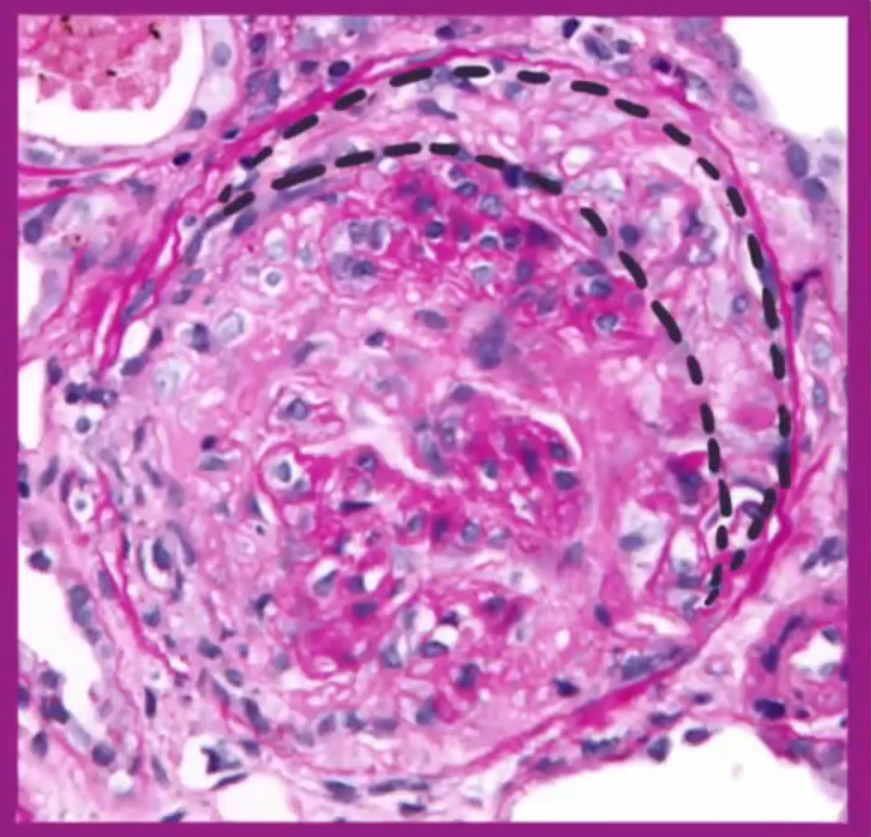
The area marked is mainly composed of which of the following?
Serum creatinine is 4.0 mg/dL. Kidney biopsy is performed, and a light microscopy image is shown below:
The area marked is mainly composed of which of the following?
Elimination tool
0 XP
Press space to continue