Shock Quiz: Ace Your Exams
Get ready to dominate your medical and nursing exams by using our dynamic quizzes to elevate your knowledge and increase your confidence. Whether you're gearing up for the USMLE®, COMLEX®, or your next in-class assessment, Osmosis quizzes tackle key topics in pathology, diagnostics, and treatment approaches. By honing in on clinical readiness and decision-making, we make sure the knowledge you gain empowers you both in the classroom and in real-world practice. Jump in and supercharge your exam prep!
Learning videos
Flashcards
Expert reviewed
Spaced Repetition
Mobile app
Custom Quizzes
1 of 8
A 52-year-old-male presents to the emergency department with increased work of breathing. He was walking to his car when he suddenly became short of breath. Past medical history includes diabetes, hypertension, and a twenty pack year smoking history. Temperature is 37.0°C (98.6°F), pulse is 121/min, respirations are 24/min, blood pressure is 87/60 mmHg, and O2 saturation is 93% on room air. On physical examination, the patient is in moderate respiratory distress, and has his left hand held over the sternum. Cardiopulmonary exam is notable for bilateral rales without gallops, rubs, or murmurs. Distal extremities are cool to the touch. The patient’s chest x-ray and electrocardiogram are demonstrated below:
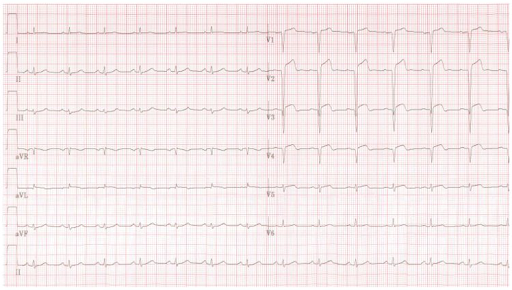
Image reproduced from Wikipedia
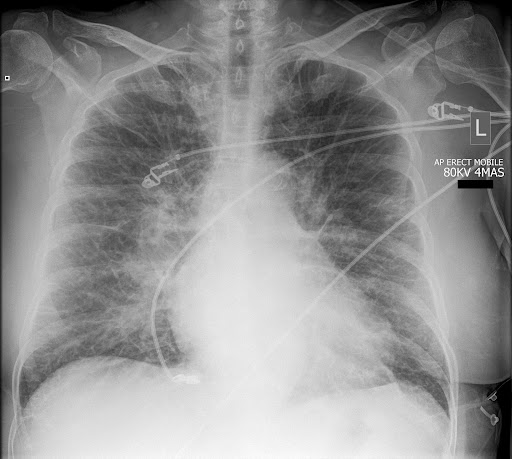
Image reproduced from Radiopaedia
Which of the following is the most likely etiology of this patient’s clinical findings?
Image reproduced from Wikipedia
Image reproduced from Radiopaedia
Which of the following is the most likely etiology of this patient’s clinical findings?
Elimination tool
0 XP
Press space to continue