Supraventricular tachycardia Quiz: Ace Your Exams
Get ready to dominate your medical and nursing exams by using our dynamic quizzes to elevate your knowledge and increase your confidence. Whether you're gearing up for the USMLE®, COMLEX®, or your next in-class assessment, Osmosis quizzes tackle key topics in pathology, diagnostics, and treatment approaches. By honing in on clinical readiness and decision-making, we make sure the knowledge you gain empowers you both in the classroom and in real-world practice. Jump in and supercharge your exam prep!
Learning videos
Flashcards
Expert reviewed
Spaced Repetition
Mobile app
Custom Quizzes
1 of 4
A 67-year-old man presents to the emergency department for evaluation of the acute onset of palpitations and lightheadedness. The patient's partner states he has been under tremendous stress this past week. She reports he has had poor sleep, increased caffeine intake and heavy alcohol use throughout the week. He has a past medical history of atrial fibrillation status post ablation. The patient has a history of alcohol use disorder and smokes 1-2 cigarettes per day. He does not take any daily medication. Temperature is 37°C (98.6°F), pulse is 170/min, respirations are 20/min, blood pressure is 76/54 mmHg, and oxygen saturation is 94% on room air. The patient appears pale, diaphoretic and is incoherent. Cardiopulmonary exam reveals a regular brisk tachycardic pulse. Lead II of the patient’s electrocardiogram (ECG) is shown below. Which of the following is the best next step in management?
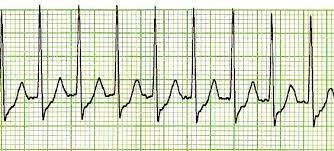
Reproduced from: Wikipedia
Reproduced from: Wikipedia
Elimination tool
0 XP
Press space to continue