Ventricular tachycardia Quiz: Ace Your Exams
Get ready to dominate your medical and nursing exams by using our dynamic quizzes to elevate your knowledge and increase your confidence. Whether you're gearing up for the USMLE®, COMLEX®, or your next in-class assessment, Osmosis quizzes tackle key topics in pathology, diagnostics, and treatment approaches. By honing in on clinical readiness and decision-making, we make sure the knowledge you gain empowers you both in the classroom and in real-world practice. Jump in and supercharge your exam prep!
Learning videos
Flashcards
Expert reviewed
Spaced Repetition
Mobile app
Custom Quizzes
1 of 4
A 40-year-old man is brought to the emergency department in cardiac arrest. He has no known medical history. CPR is in progress, and the cardiac monitor demonstrates polymorphic ventricular tachycardia. Defibrillation is successful, and there is return of spontaneous circulation. Temperature is 37 °C (98.6 °F), pulse is 70/min, blood pressure is 100/72 mmHg, respiratory rate is 16/min, and oxygen saturation is 100% on the ventilator. His examination and laboratory studies are unremarkable, including cardiac enzymes. Echocardiography shows no significant structural heart disease. An ECG shows ST changes in V1-3 without reciprocal changes. A portion of his ECG is shown below. Which of the following is the next best step in management?
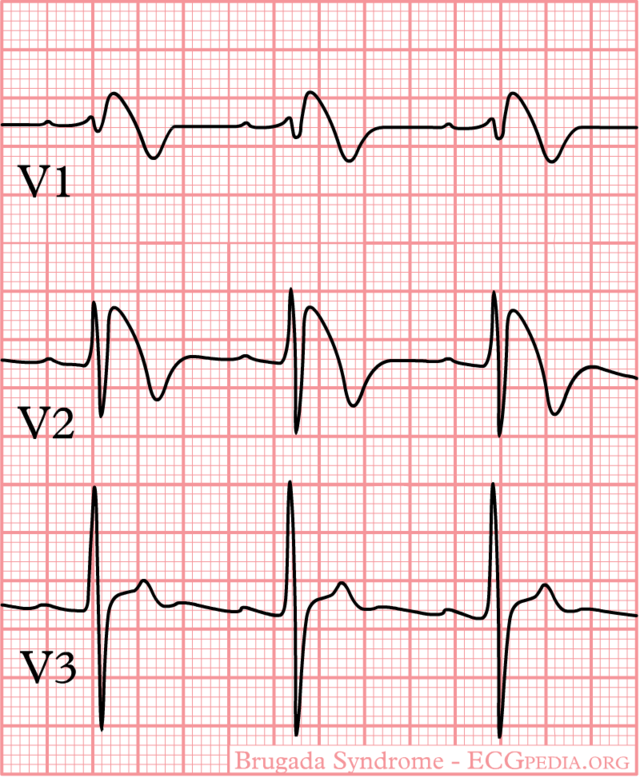
Wikimedia
Wikimedia
Elimination tool
0 XP
Press space to continue