Case study - Grief and loss: Nursing
Introduction0:00–0:47
Nurse Jamie works as a home health nurse, and is caring for Barbara, a 75-year-old female diagnosed with type 2 diabetes.
This is her first home health care visit for a wound on her left lower extremity that developed from sitting in her recliner for long periods of time.
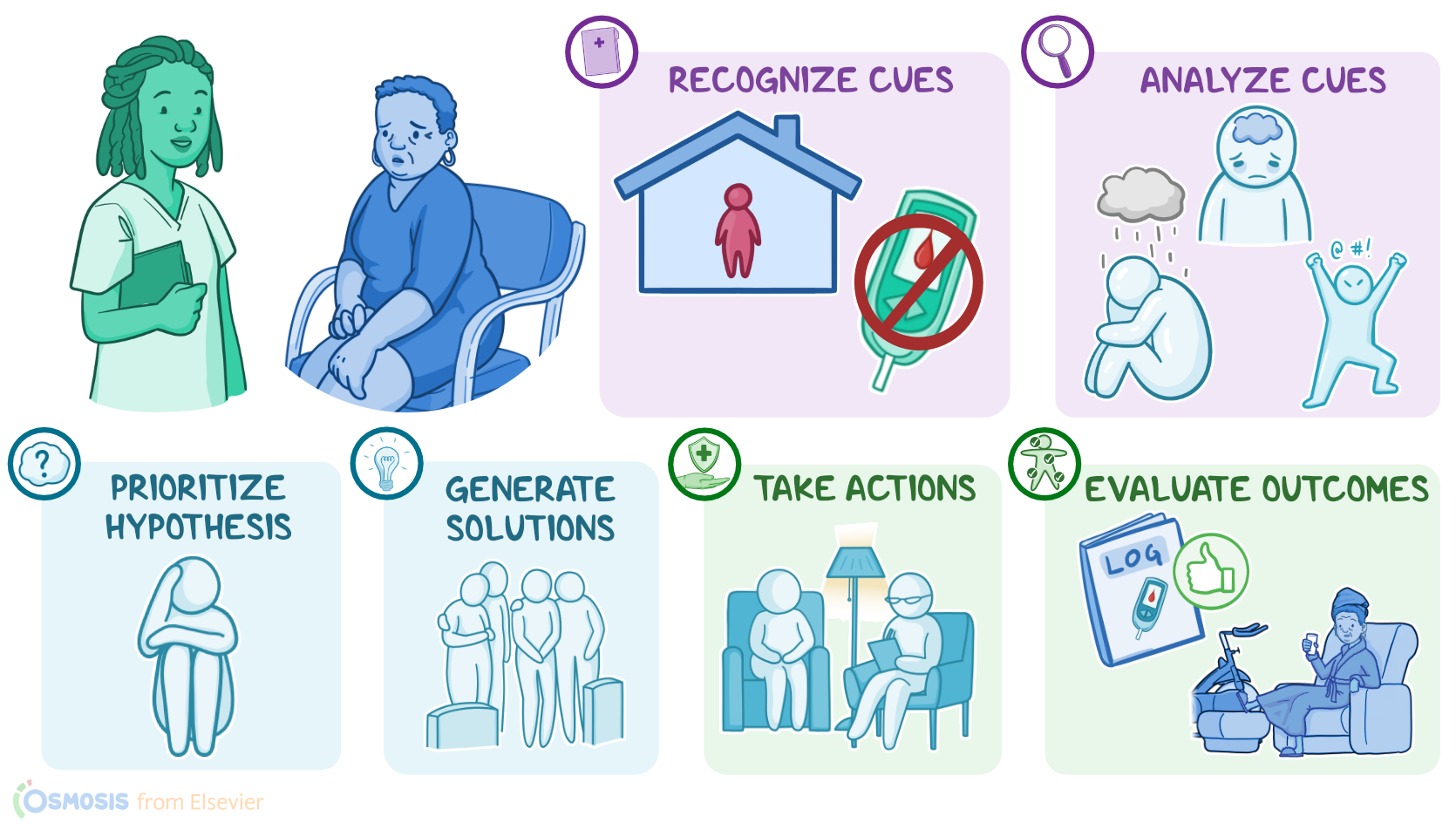
Before performing a focused assessment and a dressing change, Nurse Jamie completes an assessment that includes questions about Barbara’s home life and support system.Nurse Jamie will go through the steps of the Clinical Judgment Measurement Model to make clinical decisions about Barbara’s care by recognizing cues and analyzing cues, prioritizing hypotheses, generating solutions, taking action, and evaluating outcomes.First, Nurse Jamie recognizes important cues.
Recognizing and Analyzing Cues0:47–1:42
She notes that Barbara has lived alone since her husband died a year ago; so, Nurse Jamie performs a grief assessment and discovers that Barbara’s adult children live out of state, and she has few visitors.
Barbara shares she often dwells on missing her husband, feels sad most days, and lacks energy or motivation to do things she used to enjoy.
Additionally, she reveals she is not paying attention to her blood glucose levels like she used to.Next, Nurse Jamie analyzes these cues.
She recalls that after a loss of someone or something meaningful, a period of grief is normal and can present as sadness, anger, or regret, but varies for everyone.
Nurse Jamie also understands dysfunctional grief can lead to suicidal thoughts, so she gathers additional information to rule out thoughts of self-harm.Okay, so using the information gathered from Barbara’s grief assessment and medical history, Nurse Jamie identifies a priority hypothesis of dysfunctional grief.
Prioritizing Hypotheses, Generating Solutions, and Taking Action1:42–4:06
Then, she generates solutions to address Barbara’s grief, including promoting coping strategies and coordinating care with a multidisciplinary team.
Next, she establishes the desired outcome that within three weeks of intervening, Barbara will demonstrate positive coping mechanisms to deal with her grief.Nurse Jamie then takes action to implement these solutions.
Nurse Jamie discusses Barbara’s grief symptoms with her using therapeutic communication techniques like active listening, empathy, and genuineness.
Nurse Jamie: It seems that you’re having a difficult time dealing with the loss of your husband. Can you tell me more about that?
Barbara: Well, I suppose I am. I just don’t know how to go on through life without him.
Nurse Jamie: It’s difficult to adapt to life without a loved one. I'd like to help you come up with some coping strategies.
Would that be okay? Barbara: Yes, that would be fine.Nurse Jamie: Do you have friends or family you could reconnect with, or maybe restart some activities you used to enjoy?
Barbara: Well, I used to go to a quilting group, but I just haven’t gone back since my husband died. Nurse Jamie: It sounds like you enjoyed the quilting group.
Could you commit to asking a friend for a ride to this week’s meeting? Barbara: Well, I suppose it would be good to see them again.
Okay, I can do that. Nurse Jamie: Great.
What do you think about attending counseling? Many people with grief benefit from talking about it.
Barbara: Oh, well, I don’t know. Maybe that’s something I could try if you think it will help.Nurse Jamie: I will discuss placing a referral for counseling with your health care provider.
Let’s set one more goal, too. I’m concerned about how your grief is affecting your physical health.
Could you commit to restarting your routine for monitoring your blood glucose and choosing healthy foods this week? Barbara: I did feel a lot better when my diabetes was controlled.
I didn’t realize how much it had worsened until recently. So yes, I can do that.
Before leaving, Nurse Jamie reviews the goals she helped Barbara set and states she is looking forward to hearing how Barbara's week goes.
Nurse Jamie continues to see Barbara once each week for home health visits, and after three weeks she is ready to evaluate the outcome.
Evaluating Outcomes4:06–4:52
Barbara reports quilting with her friends regularly has given her something to look forward to, and she is enjoying the company of her friends again.
Nurse Jamie confirms that Barbara went to her first counseling appointment, and Barbara comments that the counselor had several helpful ideas that will help her to continue working through her grief.
Nurse Jamie also reviews the past month’s glucometer readings with Barbara, pointing out that her blood glucose values have improved.
With the desired outcome met, Nurse Jamie documents that Barbara is demonstrating positive ways of coping and is improving her ability to cope with her grief.Alright, as a quick recap….
Nurse Jamie recognized and analyzed cues related to Barbara’s dysfunctional grief, prioritized hypotheses, and generated solutions to address this problem.
Review4:52–5:19
Nurse Jamie took action to introduce coping strategies and involve a multidisciplinary team, and then she evaluated Barbara’s outcomes by comparing them to the expected outcome.
Since Barbara’s ability to cope with her grief had improved,
| CASE STUDY - GRIEF AND LOSS | ||
| KEY POINTS | NOTES | |
| INTRODUCTION |
| |
| RECOGNIZING AND ANALYZING CUES |
| |
| PRIORITIZING HYPOTHESES, GENERATING SOLUTIONS, AND TAKING ACTIONS |
| |
| EVALUATING OUTCOMES |
| |
- "Fundamentals of nursing (11th ed.)" Elsevier (2023)
- "Fundamentals of nursing (10th ed.)" Elsevier (2021)
- "Fundamentals of nursing: Active learning for collaborative practice. (3rd ed.)" Elsevier (2022)
No notes for this video yet
Try adding a note below