Case study - Somatic symptom disorder: Nursing
Introduction0:00–0:28
Nurse Heidi works in a primary care office and is caring for Katya, a 43-year-old with a history somatic symptom disorder.
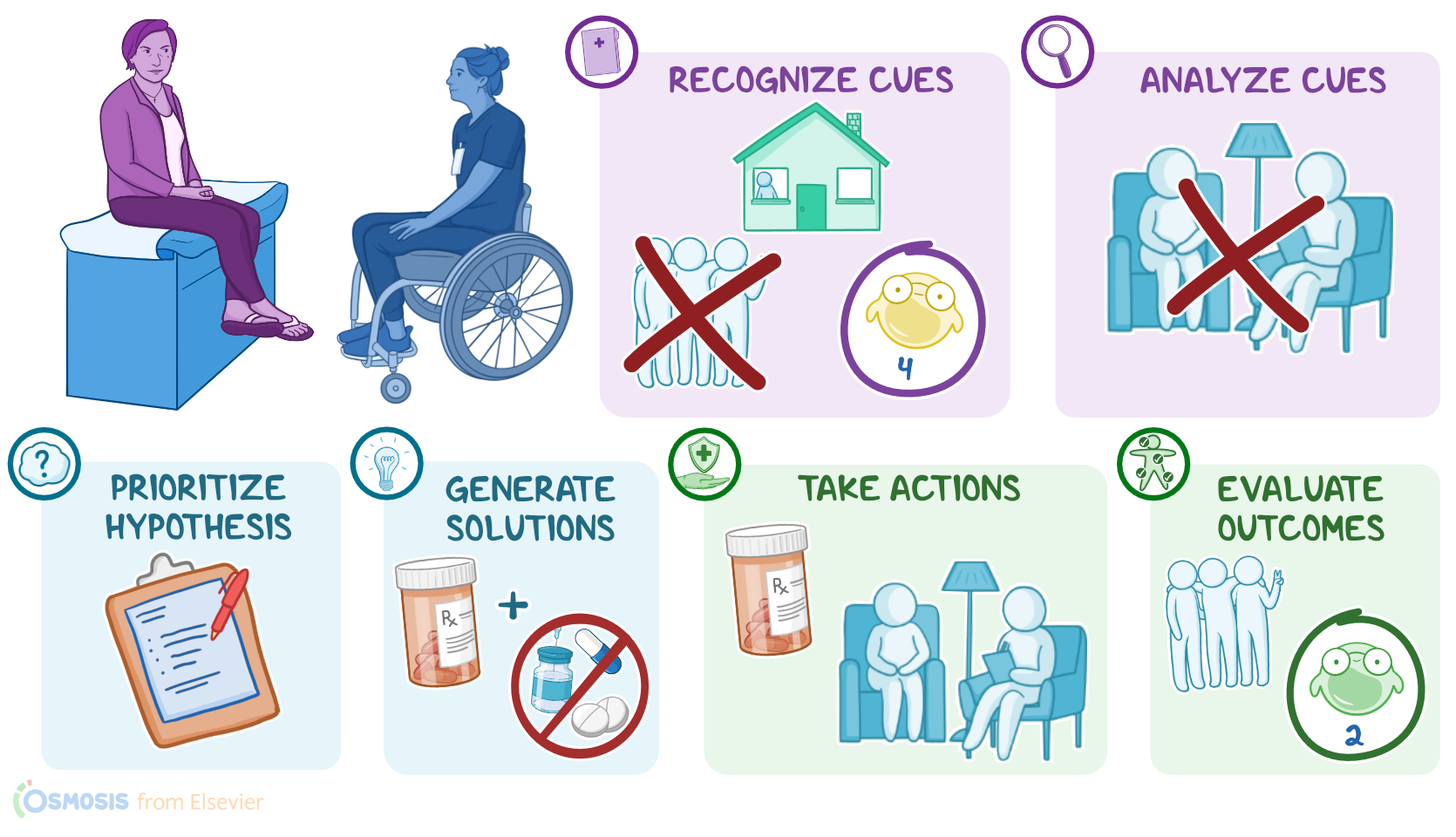
After introducing herself, Nurse Heidi goes through the steps of the Clinical Judgment Measurement Model to make clinical decisions about Katya’s care by recognizing and analyzing cues, prioritizing hypotheses, generating solutions, taking action, and evaluating outcomes.
First, Nurse Heidi recognizes important cues. She obtains Katya’s vital signs, which are temperature 98.6 F, or 37 C, heart rate 75 beats per minute, respirations 16 breaths per minute, and blood pressure 110/70 mmHg.
Recognizing and Analyzing Cues0:28–2:32
Katya also states she's having dull lower back pain, which comes and goes, that she rates at 4 out of 10 on a numeric pain scale.
Nurse Heidi then gathers additional information from Katya. Nurse Heidi: Katya, tell me about what brought you to the office today.
Katya: Well, same thing as in the past. I keep having back pain that comes and goes even though my health care provider ran several tests and told me nothing is wrong.
It never goes away, and I don’t know what to do. Nurse Heidi: Tell me about how this pain affects your daily life.
Katya: I’m not able to do things I used to love doing, like hanging out with my friends, because I’m always worried my pain will return.
So, I end up staying home alone all day instead. Nurse Heidi: That sounds difficult and isolating.
Next, Nurse Heidi analyzes the cues. She reviews the electronic health record, or EHR, and notes that Katya is diagnosed with somatic symptom disorder.
She also sees that the health care provider recommended counseling, but Katya declined. Nurse Heidi knows that patients with somatic symptom disorder experience physical symptoms that aren’t explained by any known physical or psychiatric conditions.
She also understands that patients with this disorder are unable to cope with their unpleasant emotions and instead, displace them into physical symptoms, like pain and weakness as well as cognitive symptoms, like persistent thoughts, worry, and anxiety.
Nurse Heidi realizes Katya needs support and resources to promote effective coping. Now, using the information she gathered, along with Katya’s medical history, Nurse Heidi chooses a priority hypothesis of ineffective coping.
Prioritizing Hypotheses, Generating Solutions, and Taking Action2:32–5:14
Then, she generates solutions to address Katya’s ineffective coping that will include both pharmacologic and nonpharmacologic interventions, and she establishes the expected outcome that after intervening, Katya will participate in strategies to effectively manage her symptoms by her one month follow-up appointment.
Nurse Heidi then takes action to implement these solutions. First, she speaks to the health care provider about her assessment findings, who then orders escitalopram and counseling for Katya.
After the health care provider speaks with Katya about the updated plan of care, Nurse Heidi reenters her room. Nurse Heidi: Katya, I want to talk with you about your health care provider’s recommendations and answer any questions you have.
Katya: Okay. Nurse Heidi: You’ve been prescribed a new medication called escitalopram.
This medication is a selective serotonin reuptake inhibitor, or SSRI, which is used to treat anxiety related to your symptoms.
Katya: Well, okay, but how is that supposed to help my back pain? That’s what I came here for, not anxiety!
Nurse Heidi: I understand your frustration. Sometimes anxiety can increase physical symptoms, like back pain.
By reducing your anxiety, it may also decrease your back pain. Katya: I guess I can try it.
Nurse Heidi: Good. Now, this medication usually takes three to four weeks of consistent use to notice results.
So be sure to take it every day as prescribed, even if you don't notice improvement right away. Katya: Okay.
I will. Nurse Heidi: Something else that can be helpful is talking to a counselor.
I know you’ve declined counseling in the past, but your health care provider thinks it can help you. What do you think?
Katya: I don’t know. I just don’t see how therapy could possibly help with back pain.
Nurse Heidi: I understand why you’d feel that way. Like the medication, the counselor can help you address the underlying anxiety that can be contributing to your pain.
Katya: Well, I’m still not sure about it, but I’m willing to try. Nurse Heidi: Great!
Before the end of the visit, Nurse Heidi ensures Katya’s outpatient counseling appointment is scheduled and her escitalopram prescription has been sent to the pharmacy.
One month later, Nurse Heidi evaluates the outcome of her actions at Katya’s follow-up appointment. She obtains Katya’s vital signs, which are temperature 98.2 F, or 36.8 C, heart rate 78 beats per minute, respirations 16 breaths per minute, and blood pressure 112/67 mmHg.
Evaluating Outcomes5:14–6:07
Katya also rates her back pain as 2 out of 10. Katya explains that her counselor is teaching her effective ways to deal with anxiety, and she thinks the escitalopram is starting to help.
She also states her back pain has improved and shares that, sometimes, she’s been able to go half the day without thinking about it.
Katya reports that she has plans to see her friends after the appointment today. Alright, as a quick recap…Nurse Heidi recognized and analyzed cues related to Katya’s ineffective coping, prioritized hypotheses, and generated solutions to address this problem.
Review6:07–6:37
Nurse Heidi then implemented pharmacologic and nonpharmacologic measures, evaluated Katya's outcomes, and compared them to the expected outcome.
Since Katya has successfully used strategies to manage her symptoms, Nurse Heidi determines that the plan of care was successful.
| CASE STUDY - SOMATIC SYMPTOM DISORDER | ||
| KEY POINTS | NOTES | |
| INTRODUCTION |
| |
| RECOGNIZING AND ANALYZING CUES |
| |
| PRIORITIZING HYPOTHESES, GENERATING SOLUTIONS, AND TAKING ACTIONS |
| |
| EVALUATING OUTCOMES |
| |
- " Varcarolis’s Canadian psychiatric mental health nursing. (3rd ed.)" Elsevier (2023)
- "Keltner’s psychiatric nursing. (9th ed.)" Elsevier (2023)
No notes for this video yet
Try adding a note below