Grief and loss: Nursing
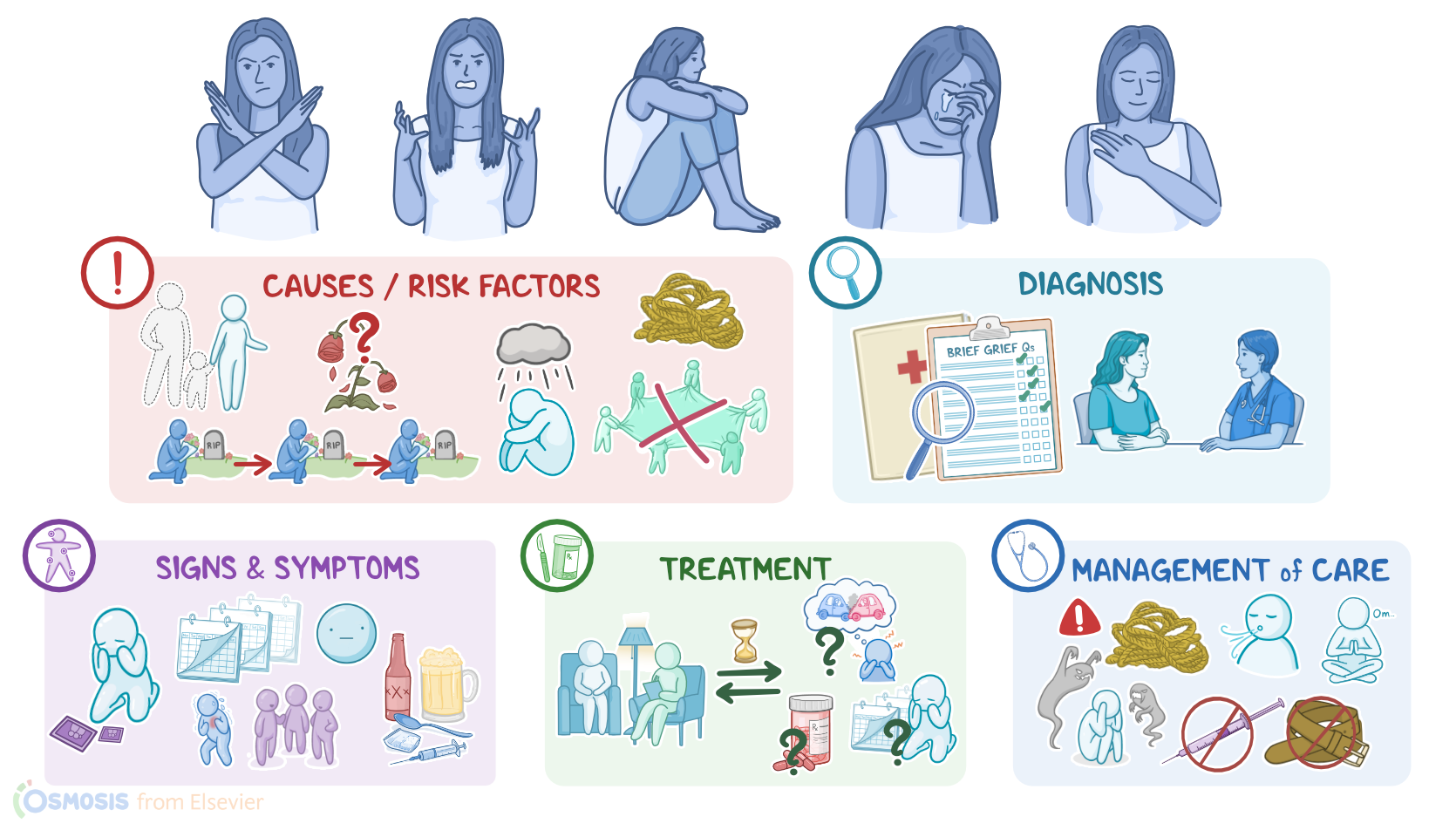
Grief is the natural emotional response to loss that occurs when something or someone that is loved is taken away. Mourning is the process during which a person adapts to loss and experiences grief; and bereavement includes grief and mourning and involves the time period in which a person adjusts to their life after loss. All right, although grieving is typically associated with the loss of a loved one, grief can happen after other meaningful losses, such as the loss of a partner to divorce, the loss of their childhood home, or the loss of one’s health, a job, or a lifelong dream. While it is true that each person grieves in their own unique way, there are a series of stages that are experienced while coping with loss, and these include denial, anger, bargaining, depression, and acceptance.
Right after experiencing a loss, clients may have a hard time accepting what has happened. Denial protects the client from feeling too many emotions at a time, and gives them a little time to adjust to the new reality. Once a client realizes the loss of a loved one, the reality of the situation begins to set in, bringing up more confusion, frustration, and pain. At this stage, clients might argue that what has happened is unfair, or try to place the blame on others. It’s also common to feel angry towards the one who has died for leaving too early, or angry at themselves for the things they did or didn’t do before their death. Next, bargaining occurs as an attempt to regain control. It’s common to go over and over the things that happened in the past and ask a lot of “what if” questions, wishing they could go back in time and change things in the hope they could have turned out differently.
After a while, the grieving client comes to terms with the certainty of death, and a sense of profound sadness and emptiness takes over. Often, the pain of loss can feel overwhelming, and depression may feel as if it will last forever. It is important to understand that this is not a sign of a mental health condition, but rather a natural response to grief. Gradually, typically within weeks or months, most clients find that the pain eases, and they are able to accept the reality of what has happened and begin to reorganize their life. Now, from a pathology standpoint, prolonged grief disorder is when a client has difficulty moving forward after a loss, and that affects their ability to carry on with their lives. Some clients may experience a grieving period that lasts longer than usual, while others experience exaggerated grief with intrusive thoughts, self-destructive behaviors, or suicidal ideation.
| GRIEF AND LOSS | ||
| KEY POINTS | NOTES | |
| DEFINITION |
| |
| PHYSIOLOGY |
| |
| CAUSES AND RISK FACTORS |
| |
| PATHOPHYSIOLOGY |
| |
| SIGNS AND SYMPTOMS |
| |
| DIAGNOSIS |
| |
| TREATMENT |
| |
| MANAGEMENT OF CARE |
| |
| PATIENT AND FAMILY TEACHING |
| |
No notes for this video yet
Try adding a note below