Research - Dissemination: Nursing
Introduction0:00–0:53
Nurse Jeong works in a large cardiac rehabilitation center and just completed a mixed-methods research study on the prevalence of depression in clients diagnosed with heart failure.
Through use of a quantitative survey, he found that depression occurred in 20% of the study’s participants. Nurse Jeong’s qualitative data supported his survey results by uncovering themes such as, “overwhelming fatigue” and “loss of independence.” Nurse Jeong brings the results of his study to the nurse researcher, Sonia, who says, “I see you’re now ready to share these important findings with the healthcare community!
I would be happy to help guide you in this process.” Nurse Jeong and Nurse Sonia will use what they know about disseminating research findings to communicate Nurse Jeong’s research findings with a larger audience.
Okay, so dissemination is when a researcher communicates the findings of their research with others. In nursing research, findings can be shared with physicians, policy makers, fellow researchers, community leaders, as well as other nurses, with the goal of enhancing knowledge and promoting quality care in a particular discipline.
Defining Research Ethics0:53–1:36
However, it usually takes some time before research findings will result in an actual effect on clinical practice. One way to disseminate research findings is through a research report, or a written description of a completed study.
By documenting study findings in a research report, nurses and other healthcare professionals can access and share this information efficiently and effectively.
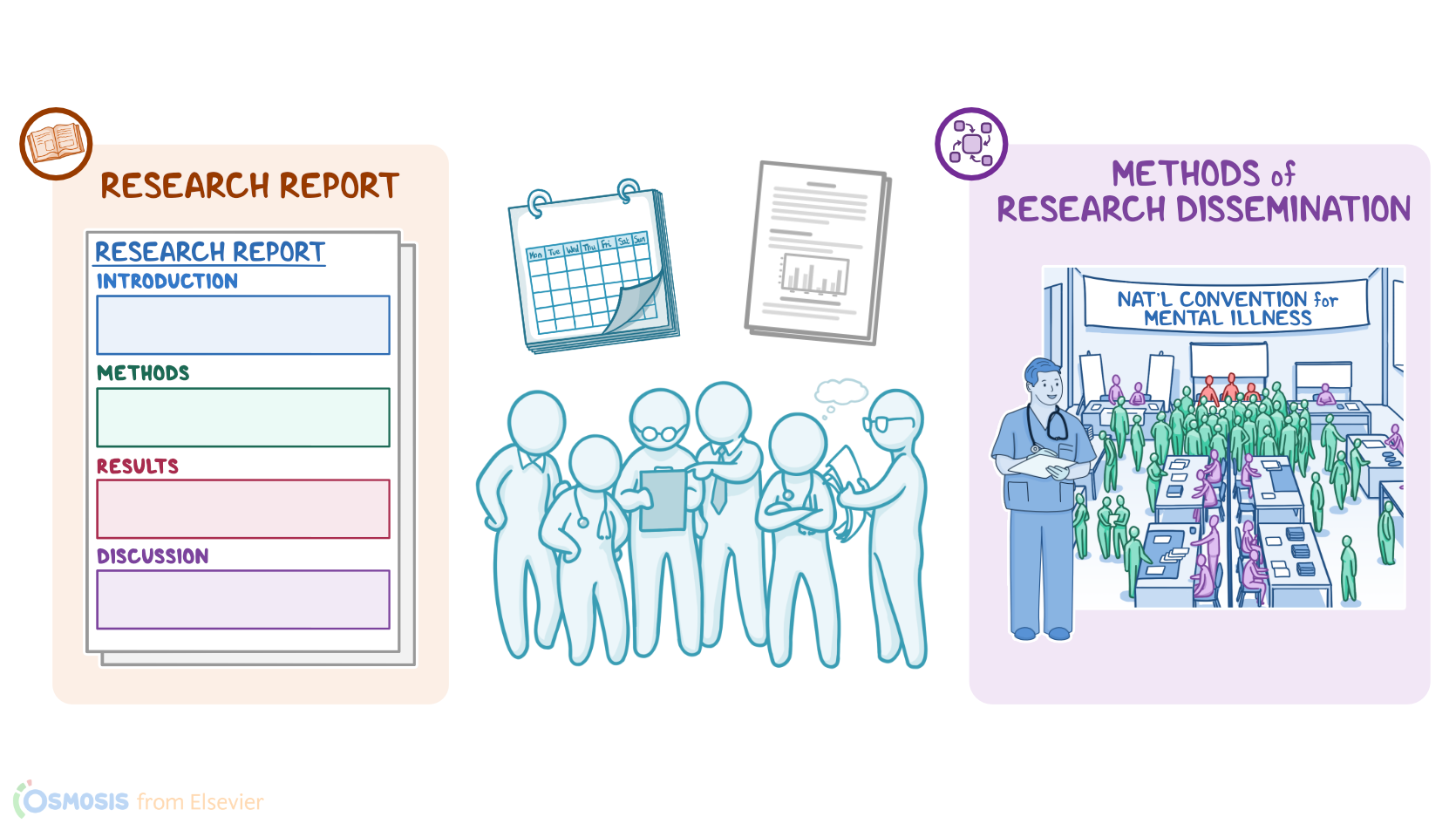
A research report generally contains four main sections: introduction, methods, results, and discussion. First, the introduction is where the background, significance and aim of the research question is identified along with any gaps in the existing literature.
Components of a Research Report1:36–3:04
For example, Nurse Jeong’s introduction included his research aim: to describe the prevalence of depression in clients with heart failure.
In addition, the introduction can also include the theoretical framework or conceptual definitions guiding the research.
The next is the methods section, which is where the overarching research design is described. Since Nurse Jeong performed a mixed-methods study, he described both the quantitative and qualitative methodology he used.
After the methods section comes the results. This section contains the description of the sample characteristics, such as age, gender, race, and ethnicity, sometimes depicted on graphs.
The findings of the data analysis will also be described in the results section.The last section of a research report is the discussion section.
This is where the researcher discusses their findings and identifies limitations they may have discovered. Implications for practice is another part of the discussion.
This is where Nurse Jeong talks about the impact of his research findings on clinical care, as well as recommendations for further research on the topic.
Okay, let’s check back in with Nurse Jeong who is ready to disseminate his findings with the healthcare community. Nurse Sonia suggests that Nurse Jeong communicates his research findings through a presentation or a publication.
Methods of Research Dissemination3:04–4:59
A presentation refers to a structured report which is shared either verbally or through a visual medium, such as a poster.
If Nurse Jeong chooses this strategy, he could present his findings during a staff meeting, an educational event, or even at a conference.
Nurses can also present study findings during clinical rounds at their facility, at organizational or professional meetings, through a podcast or webinar or through a media release from a hospital’s public relations department or a news source.
When giving a presentation, it’s important for the researcher to keep in mind the audience; so for example, Nurse Jeong might have a different presentation style at the National Convention for Mental Illness as opposed to the annual meeting for the American Heart Association.
Another way Nurse Jeong can disseminate his findings is through publication within a journal or a book. Publishing findings can reach a wider audience than through presentation alone.
The researcher should keep in mind that the basic style and grammatical requirements for each journal are different. So if Nurse Jeong plans to publish in the Journal of Cardiovascular Nursing, he needs to conform to the writing style prior to submitting.
As an example, some journals use APA style and others use AMA style. Other specifications to keep in mind are maximum number of pages, inclusion of key words, and overall format.
Also, the researcher should take measures to avoid plagiarism in both presentations and publications by citing when necessary and listing all references used.
In the end, Nurse Jeong and Nurse Sonia decide to present at a local conference as well as publish the results in a nursing journal.
Alright, as a quick recap… Dissemination is when a researcher communicates the findings of their research with others. Dissemination of research is crucial to inform client care for nurses and other members of the health care team.
Review4:59–5:29
One way to do this is through a research report, which is the written description of a completed study. The sections of a research report usually include an introduction, methods, results and discussion.
Nurses disseminate research findings through presentations at conferences and meetings as well as through publication within a journal
| RESEARCH - DISSEMINATION | ||
| KEY POINTS | MY NOTES | |
| INTRODUCTION |
| |
| DEFINITION |
| |
| COMPONENTS OF RESEARCH REPORT |
| |
| METHODS OF DISSEMINATION |
| |
No notes for this video yet
Try adding a note below