Sacrum counterstrain

Page created: March 04, 2021

Sacrum counterstrain

OMM

OMM

Biomechanics: Muscle contractions
Components of the osteopathic structural examination
Fryette laws
Trigger points
Diagnostic skills
Introduction to muscle energy
Introduction to counterstrain
Introduction to facilitated positional release
Introduction to myofascial release
Introduction to high velocity low amplitude (HVLA)
Diagnosing cervical somatic dysfunction
Spurling test
Cervical muscle energy treatment
Cervical spine counterstrain
Cervical spine HVLA
Still technique for the cervical spine
Cervical spine facilitated positional release
Cervical spine myofascial release
Other cervical spine treatments
Diagnosing thoracic spine somatic dysfunction
Thoracic muscle energy treatment
Thoracic spine counterstrain
Thoracic spine HVLA
Still technique for the thoracic spine
Thoracic spine facilitated positional release
Thoracic spine myofascial release
Other thoracic spine treatments
Diagnosing lumbar spine somatic dysfunction
Lumbar muscle energy treatment
Lumbar spine counterstrain
Lumbar spine HVLA
Still technique for the lumbar spine
Lumbar spine facilitated positional release
Lumbar spine myofascial release
Other lumbar spine treatments
Diagnosing sacral somatic dysfunction
Sacrum muscle energy treatment
Sacrum counterstrain
Sacrum myofascial release
Diagnosing pelvis somatic dysfunction
Pelvis muscle energy treatment
Pelvis counterstrain
Other pelvis treatments
Diagnosing lower limb somatic dysfunction
Special tests for the lower limb
Lower limb muscle energy treatment
Lower limb counterstrain
Lower limb HVLA
Lower limb myofascial release
Other lower limb treatments
Diagnosing upper limb somatic dysfunction
Special tests for the upper limb
Upper limb muscle energy treatment
Upper limb counterstrain
Upper limb HVLA
Upper limb myofascial release
Other upper limb treatments
Diagnosing rib somatic dysfunction
Muscle energy for rib somatic dysfunction
Rib counterstrain
Rib HVLA
Other rib treatments
Viscerosomatics and facilitation
General visceral techniques
Chapman points
Primary respiratory mechanism
Cranial osteopathy: Cranial nerves
Diagnosing cranial somatic dysfunction
Cranial treatments
Treatment of the lymphatics

Notes

Sacrum

Sacrum counterstrain

SACRAL (S)
TENDER POINTANATOMICAL POSITIONTREATMENT POSITION
S1Medial to PSIS at level of S1
Apply posterior to anterior pressure on opposite inferior lateral angle (ILA)
S2–S4Midline between first and second (S2) / second and third (S3) / third and fourth (S4) spinous tubercles along median sacral crest
Apply posterior to anterior pressure along median sacral crest between first and second (S2) or third and fourth (S4) spinous tubercle; S3 may be treated with either treatment position
S5About 1 cm medial and superior to ILAApply posterior to anterior pressure on opposite sacral base
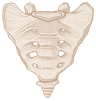
Figure 1. Locations of the sacral counterstrain tender points.
Author: Arman Israelyan, OMS-III
Editor: Matt Lipinski, DO
Illustrator: Jillian Dunbar
Editor: Robyn Hughes, MScBMC

Key Takeaways

Sacrum counterstrain is a technique used in osteopathic manipulative medicine to alleviate pain and discomfort in the sacrum and the surrounding tissues. It involves the application of gentle pressure to specific points on the sacrum to release tension and improve the range of motion in the area. It is used to treat a wide range of conditions, including sacroiliac joint pain, low back pain, and sciatica, and to improve overall spinal function and mobility.