Special tests for the lower limb
Definitions & Key takeaways
Many different special tests can be used to assess the lower limb, depending on the specific condition or injury being evaluated. Examples of some of these tests include: The FADIR (Flexion, Adduction, and Internal Rotation) test: This one is used to assess the hip joint for potential injury or dysfunction, such as hip impingement, labral tears, or hip joint capsule injury. Ober test: This test is used to evaluate the tightness and restriction in the iliotibial (IT) band in iliotibial band syndrome, a common overuse injury in runners and other athletes. Patrick or FABERE (Flexion, Abduction, External Rotation, and Extension) test: It is used to assess for dysfunction at the sacroiliac (SI) joint seen with osteoarthritis and iliopsoas spasms. Thomas test: This test is commonly used to assess for tightness or restriction in the hip flexors, seen in conditions such as hip flexor strains or iliopsoas tendonitis.
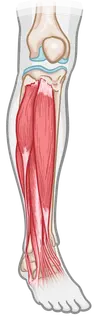
Lower limb
Special tests for the lower limb
FADIR test
Stand at the side of dysfunction and bring the hip into flexion, adduction and internal rotation.
This test assesses for a labral tear and early osteoarthritis. A positive test is indicated by pain.Ober test
This test assesses for hypertonicity / contraction of the iliotibial (IT) band or tensor fascia latae (TFL). The Ober test is positive If the hip remains abducted (does not fall toward midline).
Patrick (FABER(E)) test
With the patient supine, stand at the side of dysfunction and bring the hip into Flexion, ABduction, External Rotation, and Extension.
This test assesses for dysfunction at the sacroiliac (SI) joint. A positive test is indicated by pain, and is seen with osteoarthritis and iliopsoas spasms.Thomas test
With the patient supine and placing both knees at the edge of the table, instruct the patient to flex both hips by hugging their knees towards the chest. Next, the patient will straighten out one leg and lower it to the table.
This test assesses for hypertonicity of the iliopsoas muscles. A test is positive if the thigh on the table cannot stay flat against the table and raises up (creating a space between the posterior knee and table) as the other leg is raised.Trendelenburg test
Stand behind the patient and watch them stand on each leg.
This test evaluates for gluteus medius weakness. The Trendelenburg test is positive when the pelvis drops to the side of the raised leg, indicating a weakness on the side of the stance (planted) leg.Apley distraction and compression tests
With the patient lying prone, flex their knee to 90º and gently kneel on their posterior thigh to better isolate their knee and leg.
The Apley distraction test is performed by pulling the leg toward the ceiling, while adding internal or external rotation. This test assesses for dysfunction of a collateral ligament. Laxity or pain in the joint indicates a positive test. This test can help determine which side is affected, but should be used in conjunction with other tests.The Apley compression test is performed by exerting a downward pressure on the heel toward the knee, while adding internal or external rotation. This test assesses for dysfunction (e.g., tear) of a meniscus. Clicking or pain in the joint indicates a positive test. This test can help determine which side is affected, but should be used in conjunction with other tests.
Ballottement test
Apply downward pressure to the patella.
This test assesses for an effusion of the knee joint. With a positive test, the patella is “floating” and ballottement results in a boggy sensation on palpation.Anterior drawer test
With the patient supine, flex the patient’s knee to 90º and place their foot flat on the table. Stabilize the ankle with your hip and pull the proximal tibia anteriorly (toward you).
This test assesses for a tear of the anterior cruciate ligament (ACL). Joint laxity indicates a positive test.Posterior drawer test
With the patient supine, flex the patient’s knee to 90º and place their foot flat on the table. Stabilize the ankle with your hip and push the proximal tibia posteriorly (away from you).
This test assesses for a tear of the posterior cruciate ligament (PCL). Joint laxity indicates a positive test.Lachman test
With the patient supine, flex their knee to 30º, then stabilize the distal femur with one hand and pull the proximal tibia anteriorly with the other hand.
This test assesses for a tear of the anterior cruciate ligament (ACL). Joint laxity indicates a positive test.McMurray test
With the patient lying supine, flex the hip to 60–90º and flex their knee to 90º. Gently grasp the knee with one hand and their heel with your other hand.
Externally rotate the tibia, exert a valgus stress on the medial joint line, and finish with extension of the knee. This assesses for dysfunction of the medial meniscus.
Internally rotate the tibia, exert a varus stress on the lateral joint line, and finish with extension of the knee. This assesses for dysfunction of the lateral meniscus.
Pain or clicking indicates a positive test.
Patellar grind test
With the patient supine and the knee flexed to 10–20º, grasp the distal thigh and proximal patella, apply anterior to posterior pressure on the patella, and instruct the patient to contract the quadriceps muscle. This can also be performed in a passive manner (without quadriceps contraction) by rocking the patella across the femoral condyles.
This test assesses for chondromalacia of the patella (patellofemoral syndrome). Pain or a significant grinding sensation indicates a positive test.Varus / Valgus test
Flex the patient’s knee to 15–30º. Grasp at both ends of the tibia and exert a varus or valgus force on the knee.
The varus test assesses for a tear of the lateral collateral ligament (LCL).
The valgus test assesses for a tear of the medial collateral ligament (MCL).
Gapping or laxity of the joint indicates a positive test.
Anterior drawer test
With the patient seated or supine, place the ankle in neutral or slight plantarflexion, then stabilize the distal tibia and pull the foot anteriorly (toward you).
This test assesses for dysfunction of the anterior talofibular ligament. Joint laxity indicates a positive test.Morton squeeze test
Squeeze the foot and apply pressure (anteriorly and posteriorly) between the 3rd and 4th metatarsals.
This test assesses for the presence of a Morton neuroma. Pain indicates a positive test.Thompson test
With the patient lying prone, flex the knee to 90º and squeeze the calf muscle, which normally results in plantarflexion. This can also be performed in the same manner with the knee fully extended.
This test assesses for Achilles tendon rupture. Absence of plantarflexion indicates a positive test.No notes for this video yet
Try adding a note below