Poisoning: Nursing process (ADPIE)
Revisores de contenido
Colaboradores/as
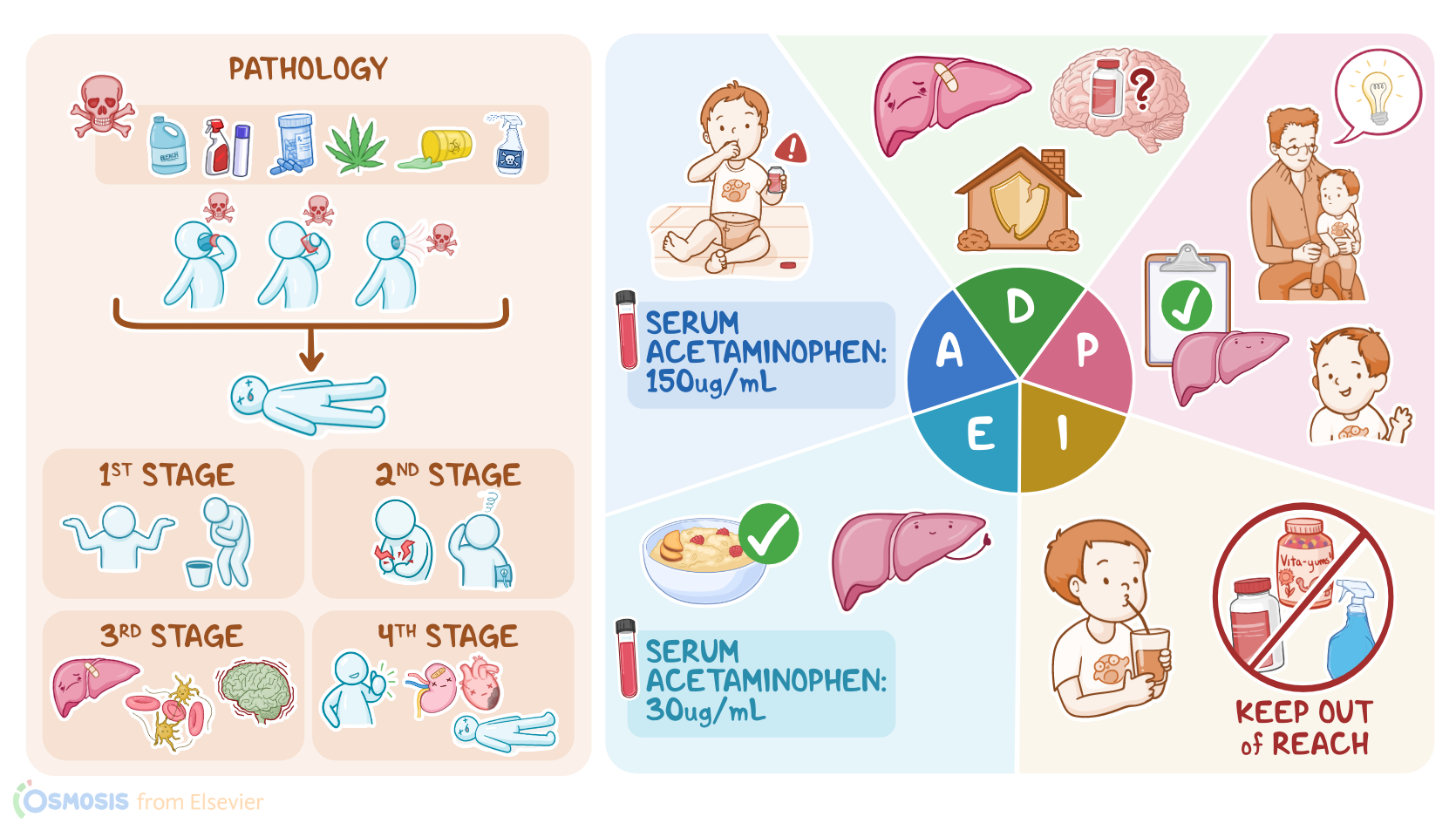
Gabriel Hernandez is an 18 month old male who was brought to the emergency department, or ED, by his father.
Mr. Hernandez stated that he put Gabriel down for a nap in his room, and about an hour later he found Gabriel sitting in the kitchen with an empty bottle of children’s acetaminophen in his hand.
The 120mL bottle was previously about three-fourths full.
Mr. Hernandez immediately called the poison control hotline and was instructed to bring Gabriel to the ED.
Poisoning occurs when a person eats, drinks, or breathes in a harmful substance that can cause illness or death.
Poisoning can be intentional or purposeful, which is most common in clients who are suffering from a terminal illness or mental health issues; and unintentional or accidental, which typically occurs when a client is accidentally exposed to a chemical spill or aerosolized toxin, or when they ingest a substance without knowing it is dangerous, or finally, when they accidentally overdose on their prescribed medications.
This may occur when a client forgets that they already took their daily dose, or they take two medication brands that contain the same active ingredient.
Most cases of accidental poisoning involve children who ingest over-the-counter medications for pain, fever, cough, and cold and flu.
The most common ones include acetaminophen, since it is found in many over-the-counter products, and its maximum daily adult dose is only 4 grams; as well as NSAIDs, like ibuprofen; and cough syrups.
Other important causes of accidental poisoning include ingestion of supplements, like multivitamins or iron; as well as cleaning and disinfectant chemicals, such as bleach, soap solution, and window cleaners.
Less commonly, children might ingest essential oils or plants, like mushrooms, tobacco, or marijuana.
Now, there are some risk factors that can increase the risk of poisoning.
The first one are extremes of age, since toddlers are more likely to put unknown objects in their mouth to learn and explore; while older clients are more likely to have memory conditions, such as dementia.
The next risk factor involves use of medications in a manner other than prescribed.
Another risk factor includes mental health conditions like depression or suicidal thoughts; as well as risky behavior, such as excessive alcohol use.
| POISONING | ||
| KEY POINTS | NOTES | |
| PATIENT REPORT |
| |
| PATHOPHYSIOLOGY |
| |
| DIAGNOSIS AND TREATMENT |
| |
| ASSESSMENT |
| |
| NURSING DIAGNOSES |
| |
| PLANNING |
| |
| IMPLEMENTATION |
| |
| EVALUATION |
| |
Aún no hay notas para este video
Intenta agregar una nota a continuación