Research - Critical appraisal: Nursing
Nurse Greg works in an oncology unit where several clients have asked him about the connection between diet and cancer. He’s been working with a dietician who told him that she has seen great results in reducing incidence rates of hypertension and diabetes in clients who follow a plant-based diet.This gives Nurse Greg an idea. He wonders, “Will a plant-based diet also be effective in reducing incidence rates of cancer?” He decides to review the literature to better understand how plant-based diets affect cancer rates. He completes a literature search and is now moving on to the next step which is critical appraisal of the literature.
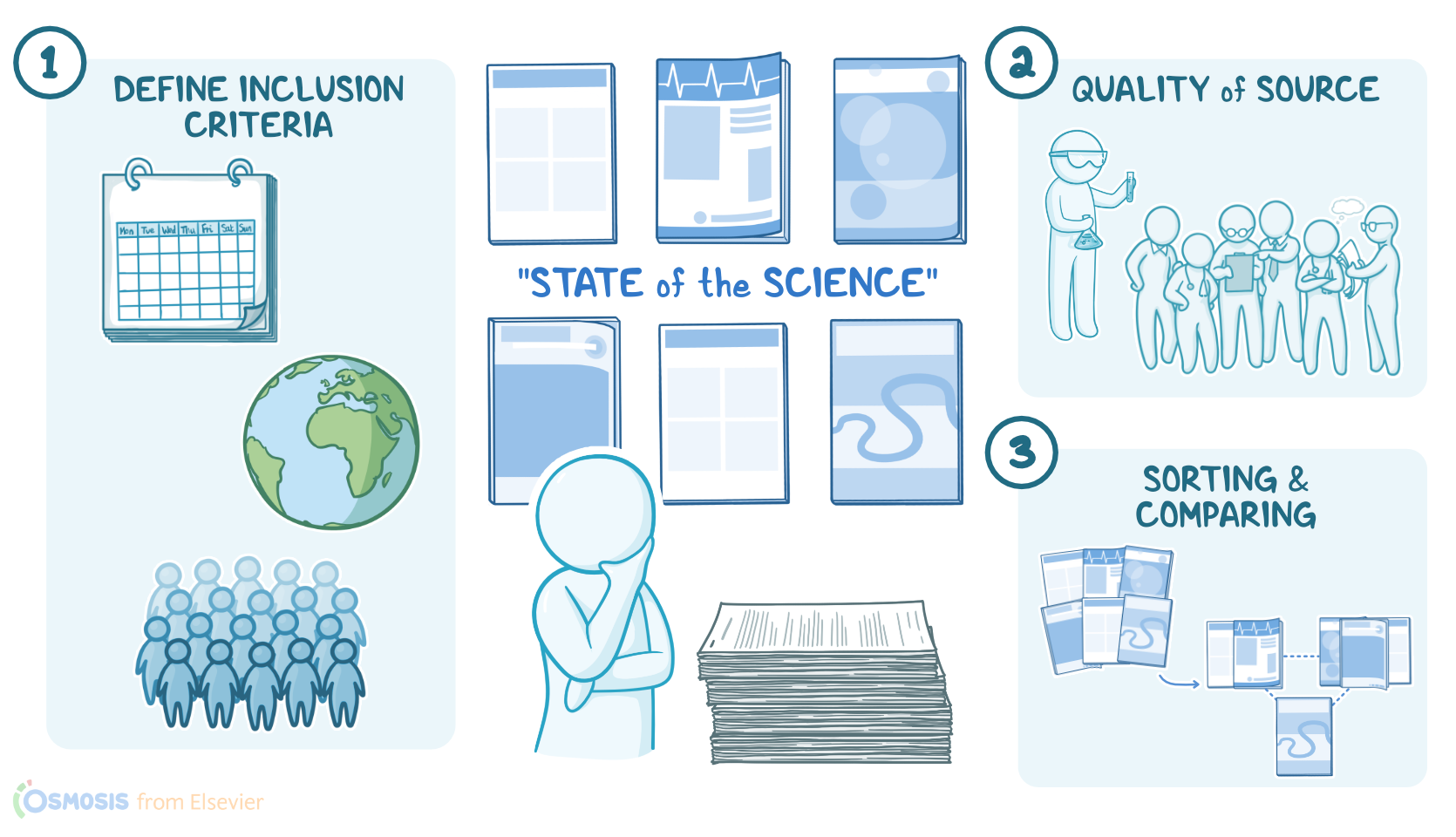
A literature review is when a researcher compiles all of the literature that currently exists on a topic. This is sometimes called the “state of the science.” Once the literature search is complete, the researcher must critically appraise each of the sources. This is an organized, step-by-step process that evaluates each source using standardized criteria. It is an important step in research because it helps the researcher understand what is known about a topic and if that information is reliable. To do a critical appraisal, the researcher will choose criteria to judge both the content and quality of each source.
First comes appraising for content, also known as inclusion criteria, which includes things like topic, year of publication, or even the type of source. Usually, the researcher will exclude sources that do not meet their inclusion criteria before analyzing the sources for quality. This saves time, because eliminating sources means there are less to evaluate for quality later. For example, Nurse Greg found 100 sources about plant-based diets and cancer during his search so he needs to determine if those sources match the criteria of what he is studying. He decided to exclude all sources older than five years because the data they contain might be outdated. That leaves him with 50 sources. Then, he excluded any source that did not originate from his geographical area of South America because other geographical locations may have different plant-based sources available to them. So now, after applying his inclusion criteria, Nurse Greg is left with 25 sources.
After applying the content criteria, the researcher should begin to assess criteria related to quality. The quality of the source helps to determine if the steps in the research process were followed, if the research plan was rigorous, if there were no significant study limitations, and if the findings were statistically significant. One way to evaluate the quality of a source is to check if it is peer-reviewed. If a source is peer-reviewed, it means that experts in the field have evaluated the study and determined it is accurate and meets professional standards of research.
Additionally, to help in the quality review process, the researcher can ask themselves some key questions when appraising a source:
| CRITICAL APPRAISAL | ||
| KEY POINTS | NOTES | |
| INTRODUCTION |
| |
| CRITICAL APPRAISAL |
| |
Aún no hay notas para este video
Intenta agregar una nota a continuación