Tonsillitis: Nursing process (ADPIE)
Video summary
Tonsillitis is a common condition in which the tonsils, two small glands located in the back of the throat, become inflamed and swollen due to a viral or bacterial infection. Symptoms can include sore throat, difficulty swallowing, fever, swollen lymph nodes, and sometimes white patches on the tonsils. Treatment for tonsillitis depends on the underlying cause and severity of the symptoms, but may include rest, pain relievers, antibiotics, or, in some cases, surgery to remove the tonsils.
Mason Taylor is a 22-year-old male college student who presents to the college health clinic with a two-week history of a sore throat and a subsequent decrease in oral intake due to pain with swallowing. He reports a very painful sore throat, fatigue and feeling feverish.
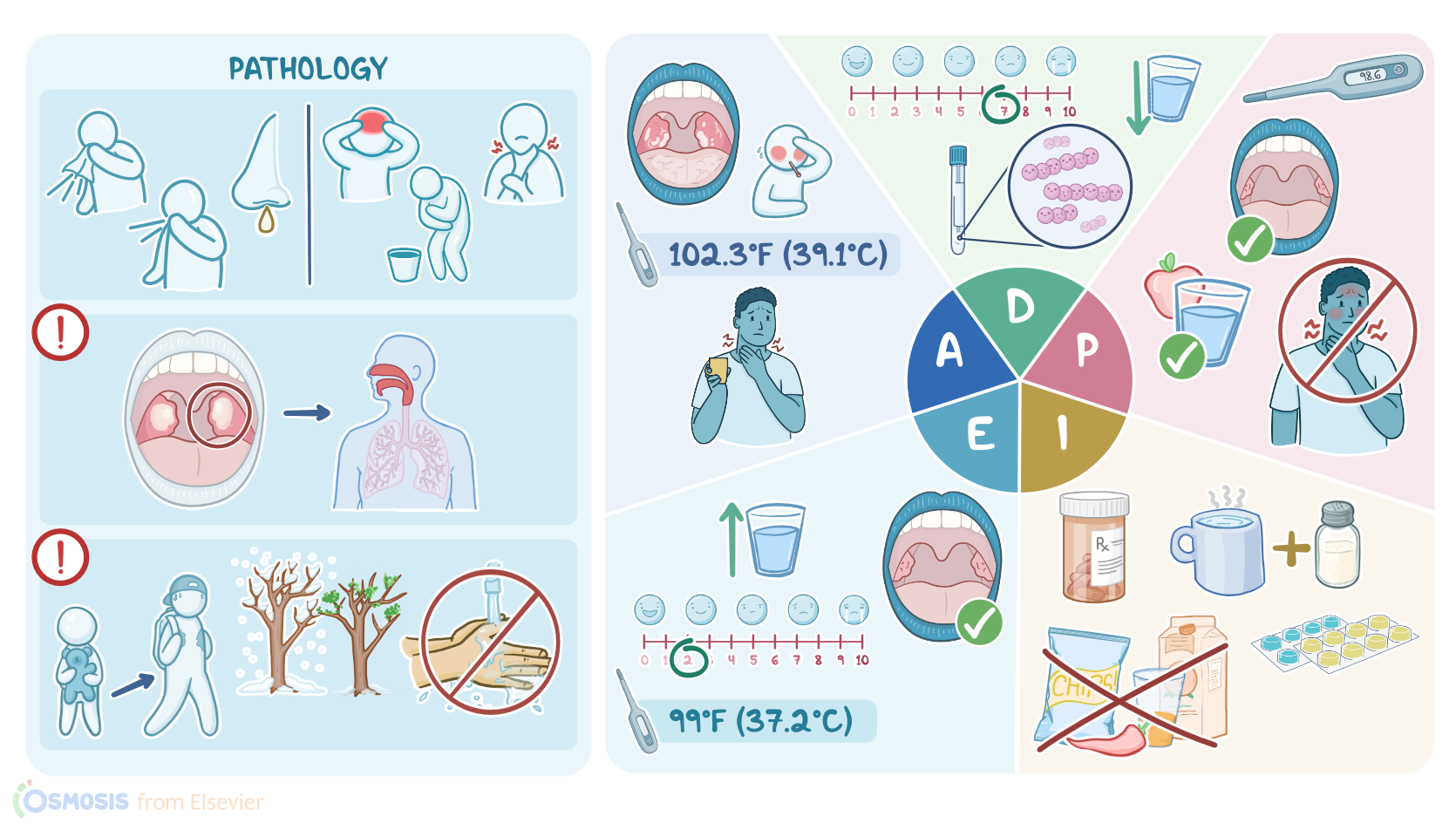
Tonsillitis is an inflammation of the palatine tonsils, which are two lymphoid organs located in the oropharynx. Tonsillitis is sometimes accompanied by adenoiditis, which refers to inflammation of adenoid tonsils in the nasopharynx, as well as pharyngitis, which is an inflammation of the throat or pharynx.
Tonsillitis is most often caused by a viral infection. Common viruses that cause tonsillitis include rhinovirus, adenovirus, and respiratory syncytial virus, or RSV. Other important viral causes of tonsillitis include coronaviruses, human immunodeficiency virus or HIV, and Epstein-Barr virus or EBV, which causes infectious mononucleosis.
On the flip side, one of the most common causes of tonsillitis is bacterial infection from group A streptococcus. This is why bacterial tonsillitis is commonly referred to as strep throat.
Now, the main risk factor for tonsillitis is being between the age of 5 and 15 years of age. Other risk factors include being in crowded environments where pathogens can be transmitted from person to person, and not practicing good hand hygiene. In addition, tonsillitis occurs more commonly during winter and early spring. Finally, clients who don’t get properly treated for bacterial tonsillitis, like those who don’t complete an antibiotic course, are more likely to develop it again later.
Now, symptoms of tonsillitis depend on the underlying cause. Symptoms of viral tonsillitis include a low grade fever, cough, rhinorrhea or runny nose, and sneezing. On the other hand, bacterial tonsillitis tends to present with more severe symptoms, such as a high grade fever, sore throat, as well as dysphagia or difficulty swallowing, and odynophagia or painful swallowing. Some clients may also experience headache, nausea, and vomiting.
| TONSILLITIS | ||
| KEY POINTS | NOTES | |
| PATIENT REPORT |
| |
| PATHOPHYSIOLOGY |
| |
| DIAGNOSIS AND TREATMENT |
| |
| ASSESSMENT |
| |
| NURSING DIAGNOSES |
| |
| PLANNING |
| |
| IMPLEMENTATION |
| |
| EVALUATION |
| |
- "Twenty-year observational study of pediatric tonsillitis and tonsillectomy" Archives of Disease in Childhood (2022)
- "Helicobacter pylori, laryngopharyngeal reflux and chronic tonsillitis" American Journal of Otolaryngology (2023)
- "Complications of peritonsillar abscess" Annals of Clinical Microbiology and Antimicrobials (2020)
- "Harrison’s Principles of Internal Medicine, 21st edition" McGraw Hill / Medical (2022)
- "Adenoid hypertrophy in children: a narrative review of pathogenesis and clinical relevance" BMJ Pediatric Open (2023)
- "Current indications for tonsillectomy and adenoidectomy" Journal of the American Board of Family Medicine (2020)
- "Robbins & Kumar Basic Pathology, 11th edition" Elsevier (2022)
Aún no hay notas para este video
Intenta agregar una nota a continuación