Osmosis video - Antiarrhythmics: Nursing pharmacology
00:00 / 00:00
Video Summary of Antiarrhythmics: Nursing pharmacology
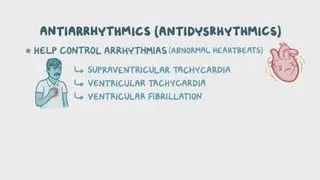
Antiarrhythmic drugs are used to prevent and treat abnormal and irregular heart rhythms (arrhythmias). These drugs are classified into four major classes based on their physiological effect on the heart muscle.
First, there is Class I antiarrhythmics, which are sodium channel blockers. It includes drugs like quinidine and procainamide. Class I antiarrhythmics are subdivided into three smaller groups: class 1A, class 1B, and class 1C. Next comes class II antiarrhythmics which are beta-blockers. They include drugs like propranolol and esmolol. Class III antiarrhythmics consist of potassium channel blockers like amiodarone; and class IV antiarrhythmics which are calcium channel blockers, consisting of drugs like verapamil and diltiazem.