Osmosis video - Intraoral biopsy techniques
00:00 / 00:00

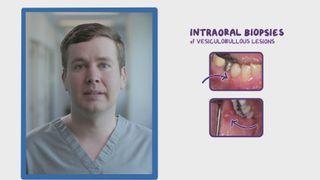
Video Summary of Intraoral biopsy techniques
Intraoral biopsy techniques can be classified into two groups: those that use a sharp instrument to obtain tissue samples and those that use a suction device. The two most common techniques in the first group are the paring biopsy and the incisional biopsy. In the pairing biopsy, a sharp knife or scalpel is used to cut away a small piece of tissue from the surface of a lesion. In the incisional biopsy, an incision is made in the lesion and a sample of tissue is removed.
The second group of intraoral biopsy techniques uses a suction device to obtain tissue samples. The most common technique in this group is called curettage. Curettage involves the use of a small, spoon-shaped instrument to scrape away a sample of tissue from the surface of a lesion.
Intraoral biopsy is generally considered to be a safe procedure. However, there are a few potential risks associated with this type of procedure. These risks include bleeding, infection, and damage to surrounding tissues.