Osmosis video - Legionella pneumophila (Legionnaires disease and Pontiac fever)
00:00 / 00:00

Video Summary of Legionella pneumophila (Legionnaires disease and Pontiac fever)
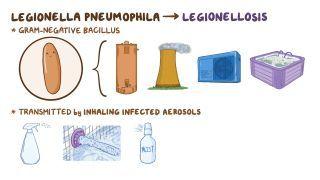
Legionella pneumophila is a Gram-negative rod-shaped bacteria that can be found in many water systems, such as hot water tanks, cooling towers, large air conditioning systems, or hot tubs. It is typically transmitted by inhaling infected aerosols, like contaminated water sprays, jets, or mists, and causes a disease called legionellosis with two distinct forms.
First, there is Legionnaires' disease which causes severe pneumonia with high-grade fever. It can also cause some gastrointestinal symptoms such as vomiting and diarrhea and neurological symptoms such as headache and confusion. The second form is Pontiac fever, which is a much milder disease without pneumonia, but with some flu-like symptoms.
Legionella pneumophila is diagnosed by identifying Legionella in a culture from respiratory tract secretions and using a urinary antigen test. Legionnaires' disease is treated with macrolides and fluoroquinolone antibiotics, whereas Pontiac fever may resolve spontaneously.