Osmosis video - Neurodevelopmental disorders: Clinical
Learn deeper with Osmosis
Master this topic faster with videos, questions, and AI.
Used by 8M+ healthcare learners.
No credit card · Cancel anytime
00:00 / 00:00
Video Summary of Neurodevelopmental disorders: Clinical
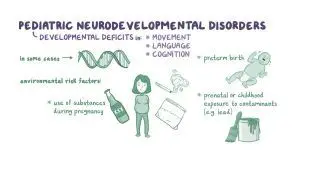
Neurodevelopmental disorders are a group of conditions that affect the development and function of the brain and nervous system. These disorders can affect the way a person thinks, learns, communicates, and behaves, and they often have an impact on other aspects of a person's daily life.
Examples of neurodevelopmental disorders include:
Autism spectrum disorder: This is a complex disorder that affects communication and social interaction. People with autism may also have repetitive behaviors or interests, and they may have difficulty with sensory processing. Attention deficit hyperactivity disorder (ADHD): This disorder is characterized by difficulty paying attention, impulsivity, and hyperactivity. It can affect a person's ability to focus, follow instructions, and complete tasks. Cerebral palsy: This is a group of conditions that affect movement and muscle tone. It results from damage to the brain before or during birth or early childhood. Speech sound disorder: It is associated with difficulty in producing the sounds involved in speech, which interferes with intelligibility or prevents delivering a message. Intellectual disability: It is characterized by deficits in intellectual functions, such as reasoning, problem-solving, or planning. individuals with intellectual disability fail to achieve independence and social responsibility as expected for their developmental age.