Osmosis video - Parathyroid conditions and calcium imbalance: Clinical
00:00 / 00:00
Video Summary of Parathyroid conditions and calcium imbalance: Clinical
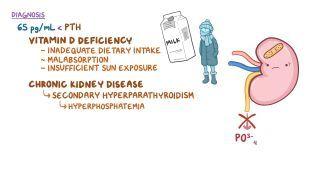
The parathyroid glands are four small glands in the neck that produce parathyroid hormone (PTH), which plays a major role in regulating calcium in the body. High levels of PTH lead to hyperparathyroidism, whereas low levels can lead to hypoparathyroidism. Hyperparathyroidism leads to an increase in blood calcium levels, resulting in symptoms like fatigue, muscle weakness, bone pain, osteoporosis, and kidney stones.
Hypoparathyroidism leads to a decrease in blood calcium levels. This can cause symptoms like tingling in the fingers and toes, muscle cramps, and seizures. Hyperparathyroidism is treated by surgically removing the overactive parathyroid gland; whereas in hypoparathyroidism, calcium and vitamin D supplementation, and hormone replacement therapy can help manage the symptoms.