Osmosis video - Personality disorders: Clinical
Learn deeper with Osmosis
Master this topic faster with videos, questions, and AI.
Used by 8M+ healthcare learners.
No credit card · Cancel anytime
00:00 / 00:00
Video Summary of Personality disorders: Clinical
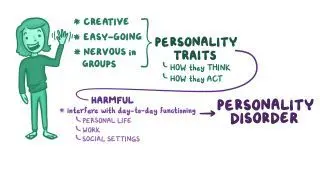
Personality disorders are a group of mental health conditions that affect a person's thoughts, emotions, and behaviors. They are grouped into clusters A, B, and C. Cluster A personality disorders include paranoid personality disorder, schizoid personality disorder, and schizotypal personality disorder. Paranoid personality disorder is characterized by feelings of distrust and suspiciousness which make individuals think that everything people do is malevolent. In schizoid personality disorder, there’s detachment from social relationships and a limited expression of emotions, whereas schizotypal personality disorder presents with social and interpersonal deficits that cause discomfort and eccentric behavior.
In cluster B we have antisocial personality disorder, borderline personality disorder, histrionic personality disorder, and narcissistic personality disorder. In antisocial personality disorder, individuals show disregard for and violation of the rights of others. In Borderline personality disorder there’s instability in relationships, self-image, and affect, as well as impulsivity. Histrionic personality disorder is characterized by emotionality and attention-seeking; and in narcissistic personality disorder, people present with grandiosity, a need for admiration, and a lack of empathy.
Cluster C personality disorders consist of avoidant personality disorder, dependent personality disorder, and obsessive-compulsive personality disorder. Avoidant personality disorder is characterized by social inhibition, feelings of inadequacy, and hypersensitivity to negative evaluation. In Dependent personality disorder, there’s an excessive need to be taken care of, leading to submissive and clinging behavior and fears of separation. Lastly, obsessive-compulsive personality disorder is characterized by excessive preoccupation with orderliness, perfectionism, and control, at the expense of efficiency.