Osmosis video - Postoperative evaluation: Clinical
00:00 / 00:00
Video Summary of Postoperative evaluation: Clinical
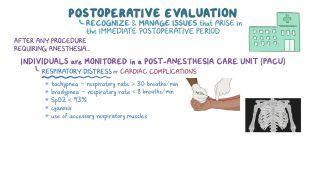
Postoperative evaluation is a critical part of the care of surgical patients. It serves to ensure that patients are recovering as expected and identify any potential complications on time. Postoperative evaluation starts at the post-anesthesia care unit to assess the airway patency, respiratory rate, peripheral oxygen saturation or SpO2, heart rate, blood pressure, mental status, temperature, and the presence of pain, nausea, or vomiting.
Intake and output - like fluid administration, urine output, bleeding, and wound drainage - are calculated to evaluate postoperative hydration status. In addition, an electrocardiogram is done. The main postoperative complications include nausea and vomiting, respiratory insufficiency, cardiovascular complications, urinary retention, paralytic ileus, and temperature derangements (hypothermia and hyperthermia).