Osmosis video - Premature rupture of membranes: Clinical
Learn deeper with Osmosis
Master this topic faster with videos, questions, and AI.
Used by 8M+ healthcare learners.
No credit card · Cancel anytime
00:00 / 00:00
Video Summary of Premature rupture of membranes: Clinical
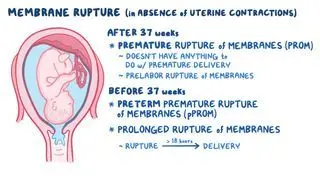
Premature rupture of membranes (PROM) is when chorioamniotic membranes rupture in the absence of uterine contractions, after 37 weeks of gestation. If that happens before 37 weeks, that’s called preterm premature rupture of membranes, or pPROM. PROM can result in a variety of complications, including infection, placental abruption, and umbilical cord prolapse.
The management of PROM depends on the gestational age and the risk of infection. After 37 weeks, delivery is indicated, and antibiotics like ampicillin are given at the time of delivery in GBS (Group B Streptococcus) positive individuals. Between 34 and 37 weeks, it’s also usually safer to deliver the fetus even if it’s considered preterm. Between 24 and 34 weeks, when labor is not imminent, antibiotic prophylaxis is also done, antenatal corticosteroids are given to help the fetal lungs mature, and tocolytics are given for 48 hours. Immediate delivery is indicated between 24 and 34 weeks when there are signs of intrauterine infection if there’s placental abruption or cord prolapse.