Osmosis video - Protein synthesis inhibitors: Aminoglycosides
00:00 / 00:00
More Videos

04:07
Mechanisms of antibiotic resistance
10:46
Antimetabolites: Sulfonamides and trimethoprim
15:13
Antituberculosis medications
15:07
Cell wall synthesis inhibitors: Cephalosporins
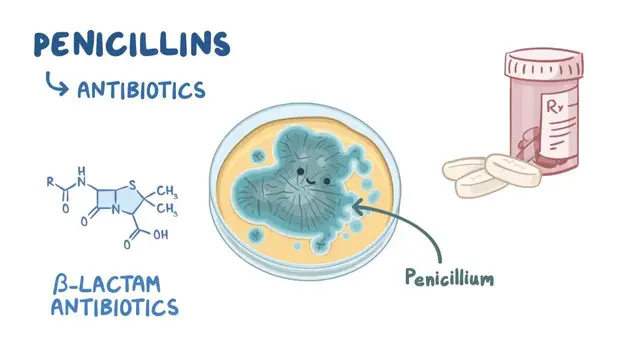
13:49
Cell wall synthesis inhibitors: Penicillins
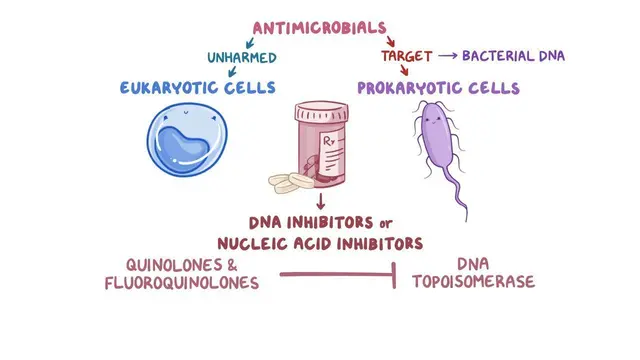
07:11
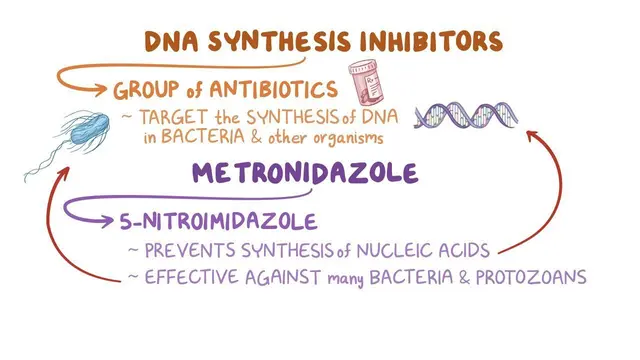
DNA synthesis inhibitors: Fluoroquinolones
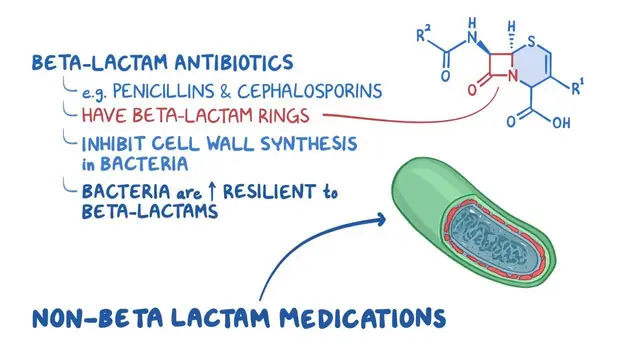
05:24
DNA synthesis inhibitors: Metronidazole
15:09
Miscellaneous cell wall synthesis inhibitors
16:32
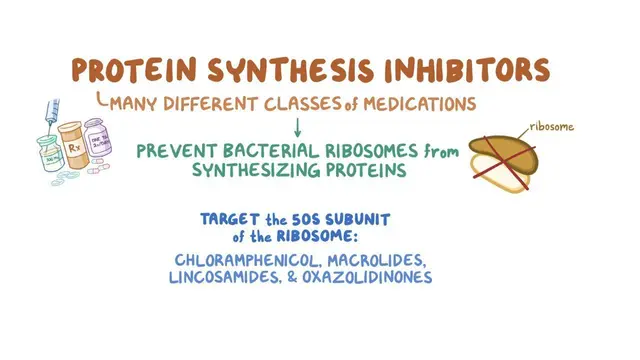
Miscellaneous protein synthesis inhibitors
11:25
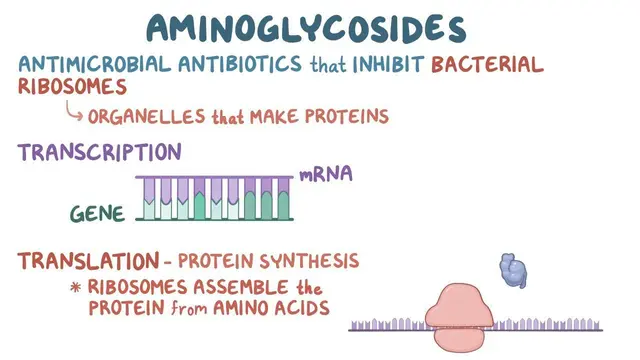
Protein synthesis inhibitors: Aminoglycosides
10:45
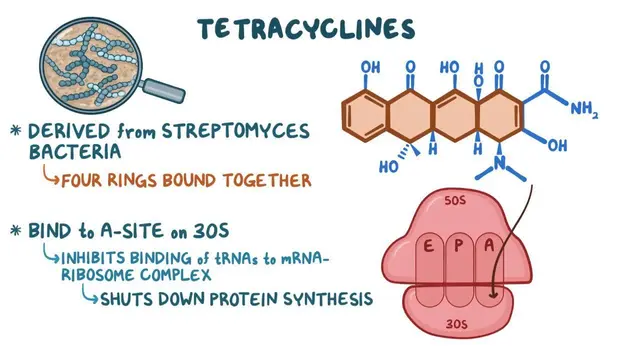
Protein synthesis inhibitors: Tetracyclines
Video Summary of Protein synthesis inhibitors: Aminoglycosides
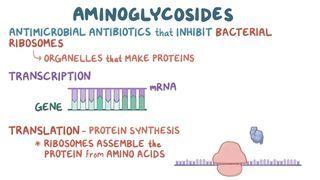
Aminoglycosides are a class of antibiotics that inhibit bacterial protein synthesis by binding to the 30S subunit of their ribosomes. This binding disrupts proofreading in bacterial protein synthesis, leading to the production of non-functional or truncated proteins. Examples of the aminoglycoside family include amikacin, gentamicin, neomycin, streptomycin, and tobramycin. Alone, aminoglycosides are effective against Gram-negative aerobic bacteria, but could also treat Gram-positive bacteria if combined with a cell wall synthesis inhibitor, like a beta-lactam antibiotic, or with vancomycin. Notable adverse drug reactions include nephrotoxicity, ototoxicity, neuromuscular blockade, nausea, and allergic reaction.