Osmosis video - Respiratory system: Structure and function
Learn deeper with Osmosis
Master this topic faster with videos, questions, and AI.
Used by 8M+ healthcare learners.
No credit card · Cancel anytime
00:00 / 00:00
Video Summary of Respiratory system: Structure and function
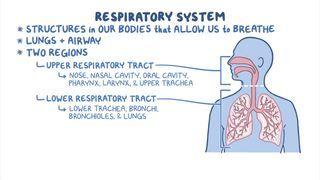
The respiratory system consists of the lungs and the structures that make up the airway. Air enters through either the nose or the mouth, making its way to the pharynx and then the larynx, followed by the trachea, where it branches off to the left and right bronchi, which divide off in the lungs into smaller bronchioles that end in clusters of alveoli.
The respiratory system specifically functions in respiration, which involves two processes: ventilation, which is the mechanical process of moving air into and out of the lungs, and gas exchange, which is the process by which inhaled oxygen enters the blood from the alveoli, and carbon dioxide exits the blood into the alveoli to be exhaled.
There are some important muscles involved in ventilation. The first is the diaphragm, which is the dome-shaped muscle at the base of the chest that separates the chest and abdominal cavities. There are also intercostal muscles, the muscles between our ribs, which aid in the expansion and retraction of the chest walls, supporting the diaphragm during ventilation.