Osmosis video - Vasculitis: Pathology review
00:00 / 00:00
Video Summary of Vasculitis: Pathology review
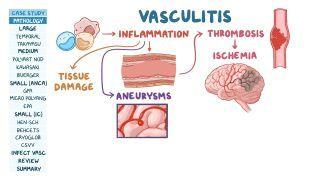
Vasculitis is a condition in which there is inflammation of the blood vessels, typically caused by immune-mediated damage to the endothelial cells. The inflammation can affect blood vessels of different sizes, ranging from small capillaries to larger arteries and veins. There are many different types of vasculitis, which can affect various parts of the body, including the skin, joints, and internal organs.
Common types of vasculitis include giant cell arteritis, takayasu arteritis, polyarteritis nodosa, kawasaki disease, wegener's granulomatosis, churg-Strauss syndrome, henoch-Schonlein purpura, etc. Symptoms vary depending on the type and location of the vasculitis, but may include fever, fatigue, weight loss, joint pain, skin rashes, and organ dysfunction. Treatment for vasculitis may involve medications to suppress the immune system and reduce inflammation, such as corticosteroids.