Osmosis video - Zoonotic Influenzas
00:00 / 00:00
Video Summary of Zoonotic Influenzas
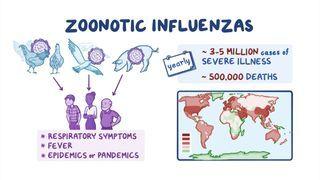
Zoonotic influenza refers to the influenza viruses circulating in animals, and are also able to infect humans. These viruses can cause respiratory infections that range from mild to severe, and in some cases, they can lead to deadly pandemics. The most well-known zoonotic influenza virus is the H5N1 virus, also known as avian influenza or bird flu, which is primarily found in birds, but can occasionally infect humans who come into close contact with infected birds.
Other examples of zoonotic influenza viruses include swine flu (H1N1), which can be transmitted from pigs to humans, and the recently emerged COVID-19 virus, which is believed to have originated from bats. The prevention of zoonotic influenza transmission to humans includes careful monitoring of animal populations, avoiding contact with sick animals or their feces, and practicing good hygiene, such as frequent hand washing.