
Death Rattle · What It Is, Causes, Treatment, and More

Published: Sep 23, 2025
Author: Ali Syed, PharmD
Editor: Alyssa Haag, MD
Editor: Lily Guo, MD
Editor: Kelsey LaFayette, DNP, ARNP, FNP-C
Editor: Maria Giulia Boemi, MD
Illustrator: Jessica Reynolds, MS
Copyeditor: David G. Walker
7-day free trial

Go deeper with Osmosis

Osmosis is a learning platform with videos, questions, and AI tools to help you master topics like this.

4.8 · 12,000+ reviews
Watch quick, visual videos
Practice with Qbank-style questions
Use AI to explain, quiz, and review
Study anytime with the mobile app
Start free trial

No credit card · Cancel anytime

What is a death rattle?

Death rattle is a colloquial term, also known as terminal respiratory secretions, that describes a distinctive sound that comes from the back of the throat of an individual as they transition to the final stage of the dying process. The death rattle can be characterized by soft, wet, crackling, moan-like snoring or gurgling sounds.  

Learn deeper with Osmosis

Master this topic faster with videos, questions, and AI.

Used by 8M+ healthcare learners.

Start free trial

No credit card · Cancel anytime

What causes a death rattle?

A death rattle is caused by the build-up of fluids, such as saliva, mucus, and bronchial secretions, in the throat and upper airways. As an individual becomes weaker, loses consciousness, and experiences slowed breathing, the ability to clear the throat and upper airways by swallowing or coughing becomes compromised. A wet rattling sound subsequently occurs as the individual attempts to inhale and exhale through the accumulated secretions.  While hearing the death rattle can be distressing for loved ones, it’s important to note that it does not cause pain or discomfort for the affected individual. 

What are the signs and symptoms of a death rattle?

Signs and symptoms of a death rattle include increased bronchial secretions, accumulation of saliva in the throat, shortness of breath, and rapid chest movements. Breathing may become irregular and appear labored. Symptoms typically appear anywhere from 24-48 hours before death occurs; however, the timeline can vary.  

How is a death rattle diagnosed and treated?

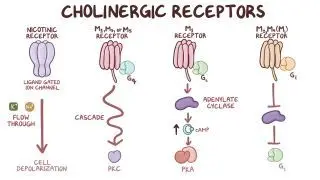
A death rattle is diagnosed clinically, using history and physical assessment findings. It may be managed using non-pharmacologic and/or pharmacologic treatments. Members of the healthcare team, caregivers, and/or family members may remove secretions around the mouth and provide mouth care, such as gently moistening the mouth with mouth swabs. Additionally, it may help to reposition the individual on their side and elevate their head to help secretions drain. Intake of oral fluids may be reduced, and anticholinergic medications (e.g., atropine, glycopyrronium or scopolamine) may be used to decrease the production of secretions. Some studies have found that using hyoscine butylbromide, an anticholinergic medication, can potentially prevent death rattle. 

What are the most important facts to know about a death rattle?

Death rattle is a colloquial term, also known as terminal respiratory secretions, that refers to the distinctive sounds that can come from the back of the throat of an individual as they transition into the final stage of the dying process. A death rattle is caused by the build-up of fluids in the throat and upper airways. Signs and symptoms of a death rattle include increased bronchial secretions, accumulation of saliva in the throat, shortness of breath, and rapid chest movements. A death rattle may be diagnosed clinically and managed using non-pharmacological and/or pharmacological treatments. 

Key Takeaways

Definition 

Soft, wet, crackling, moan-like snoring or gurgling sounds coming from the back of a person’s throat as they transition to the final stage of dying. 

Causes

- Build-up of fluids in the throat and upper airways 

- Ability to clear the throat and upper airways becomes compromised 

- Sound results from attempts to breathe through accumulated secretions 

Signs and Symptoms 

- Bronchial secretions 

- Accumulation of saliva in the throat 

- Shortness of breath 

- Rapid chest movements 

- Irregular, appear labored breathing 

- Typically 24-48 hours before death 

Diagnosis and Treatment 

- History 

- Physical assessment 

- Removal of secretions and oral care 

- Repositioning and head elevation 

- Reduce oral fluid intake 

- Anticholinergic medications to reduce secretions 

Students say Osmosis is 100% worth it

Because Osmosis saves them time. Lowers stress. And actually helps them remember when it counts.

I used Osmosis to prepare for my first medical school licensing exam! Super helpful and interactive for people who may not do great with just pages of text info!

Cecilia Ruiz

Cecilia Ruiz

MD student

Sayan Misra

I have used Osmosis for about four years. Best thing I have ever used for my medical studies.

Sayan Misra

Sayan Misra

Med student

Osmosis videos are superior because they define simple concepts, tell a story with a clear progression, and provide context.

Jay Pate

Jay Pate

Dental student

References


Biesbrouck T, Jennes DA, Van Den Noortgate N, De Roo ML. Pharmacological treatment of pain, dyspnea, death rattle, fever, nausea, and vomiting in the last days of life in older people: A systematic review. Palliative Medicine. 2024;38(10). doi:https://doi.org/10.1177/02692163241286648 


Lokker ME, Zuylen L van, Rijt CCD van der, Heide A van der. Prevalence, impact, and treatment of death rattle: A systematic review. Journal of Pain and Symptom Management. 2014;47(1):105-122. doi:https://doi.org/10.1016/j.jpainsymman.2013.03.011 


Moons L, De Roo ML, Deschodt M, Oldenburger E. Death rattle: Current experiences and non-pharmacological management-a narrative review. Ann Palliat Med. 2024;13(1):150-161. doi:10.21037/apm-23-507 


van Esch HJ, Lokker ME, Rietjens J, van Zuylen L, van der Rijt CCD, van der Heide A. Understanding relatives' experience of death rattle. BMC Psychol. 2020;8(1):62. Published 2020 Jun 12. doi:10.1186/s40359-020-00431-3