
Lithotomy Position · What Is It and It Uses

Published: Nov 21, 2025
Author: Nikol Natalia Armata, MD
Editor: Alyssa Haag, MD
Editor: Emily Miao, PharmD
Editor: Kelsey LaFayette, DNP, ARNP, FNP-C
Illustrator: Jessica Reynolds, MS
Copyeditor: David G. Walker
7-day free trial

Go deeper with Osmosis

Osmosis is a learning platform with videos, questions, and AI tools to help you master topics like this.

4.8 · 12,000+ reviews
Watch quick, visual videos
Practice with Qbank-style questions
Use AI to explain, quiz, and review
Study anytime with the mobile app
Start free trial

No credit card · Cancel anytime

What is the lithotomy position?

The lithotomy position refers to a specific positioning of the body for the purposes of surgical procedures or certain medical examinations. The individual lies in a supine position with the legs abducted at about 30 to 45 degrees from the midline. The examination table is specifically designed to support the hips and knees, which are usually flexed at about 90 degrees using stirrups or boot-like leg holders. The lithotomy position allows better access to certain anatomical locations, like the pelvic and perineal organs.   

Learn deeper with Osmosis

Master this topic faster with videos, questions, and AI.

Used by 8M+ healthcare learners.

Start free trial

No credit card · Cancel anytime

What is the lithotomy position used for?

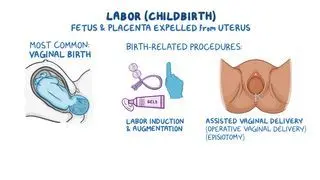
The lithotomy position is commonly used during gynecologic, rectal, and urologic examinations or surgeries. The positioning facilitates access to specific anatomical structures, such as the organs of the urinary and reproductive system as well as the rectum and anus. For example, the lithotomy position is the preferred position for childbirth, gynecological examination, pap smear or vaginal ultrasound 

Additionally, lithotomy is a common position selected in urethral surgeries, colon surgeries, and removal of bladder stones. The surgical removal of rectal or prostate tumors may also be performed in the lithotomy position.  

What are the risks of the lithotomy position?

When positioned on the examination table for a long time, especially when positioning exceeds 2 hours, caution should be taken regarding possible consequences.  

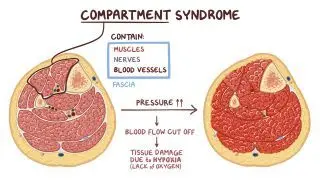
Nerve compression, especially of the femoral nerve or the common peroneal nerveis the most common side effect of the lithotomy position. Injury of the peroneal nerve may occur as the peroneal nerve is positioned around the head of the fibula, which rests against the leg support while in the lithotomy position. Therefore, lower extremity padding is typically used in order to prevent nerve injury. Improper positioning or inadequate padding can result in peroneal nerve palsy, manifesting as foot drop or sensory disturbances. To reduce this risk, caution should be taken at the positioning of the legs with adequate padding of the lower extremities and stirrups to prevent any muscular injury or inadequate perfusion of the lower extremities, especially in prolonged procedures. This may also lead to acute compartment syndrome of the lower extremities. Risk factors associated with compartment syndrome are related to venous obstruction in the lower extremities and may include leg fixation or elevation of the legs above the level of the heart for a long period of time. 

In addition, hemodynamic changes (i.e., increase of venous return to the heart and consequently increased cardiac output) may occur if the examination table is positioned at an angle with the feet elevated above the head (i.e., Trendelenburg position). This positioning during prolonged surgeries and in individuals with multiple comorbidities, especially of the cardiovascular system, may cause pulmonary edema and exhaustion of the heart muscle. 

Key Takeaways

Definition 

The lithotomy position refers to a specific positioning of the body for the purposes of surgical procedures or certain medical examinations.  

Position 

- Supine position  

- Legs abducted at 30 to 45 degrees from midline  

- Hips and knees flexed at about 90 degrees with stirrups or leg holders  

Uses  
 

- Gynecologic examination and childbirth  

- Rectal examination  

- Urologic examination  

- Surgery  

     - Urethral surgery  

     - Colon surgery  

     - Removal of bladder stones  

     - Removal of prostate or rectal tumors  

Risks 

- When positioning exceeds 2 hours, risks of:  

     - Nerve compression (femoral nerve, common peroneal nerve 

          - Prevention: lower extremity padding  

     - Peroneal nerve palsy (from improper positioning or inadequate padding)  

          - Foot drop, sensory disturbances  

          - Prevention: adequate padding, stirrups 

     - Compartment syndrome (from venous obstruction of lower extremities 

          - Risk factors: leg fixation, elevation above the level of the heart for a long time  

Students say Osmosis is 100% worth it

Because Osmosis saves them time. Lowers stress. And actually helps them remember when it counts.

I used Osmosis to prepare for my first medical school licensing exam! Super helpful and interactive for people who may not do great with just pages of text info!

Cecilia Ruiz

Cecilia Ruiz

MD student

Sayan Misra

I have used Osmosis for about four years. Best thing I have ever used for my medical studies.

Sayan Misra

Sayan Misra

Med student

Osmosis videos are superior because they define simple concepts, tell a story with a clear progression, and provide context.

Jay Pate

Jay Pate

Dental student

References


Karkenny AJ, Mendelis JR, Geller DS, Gomez JA. The role of intraoperative navigation in orthopaedic surgery. J Am Acad Orthop Surg. 2019;27(19):e849-e858. doi:10.5435/JAAOS-D-18-00478


Katz S, Arish N, Rokach A, Zaltzman Y, Marcus EL. The effect of body position on pulmonary function: a systematic review. BMC Pulm Med. 2018;18(1):159. Published 2018 Oct 11. doi:10.1186/s12890-018-0723-4


Stornelli N, Wydra FB, Mitchell JJ, Stahel PF, Fabbri S. The dangers of lithotomy positioning in the operating room: case report of bilateral lower extremity compartment syndrome after a 90-minutes surgical procedure. Patient Safety in Surgery. 2016;10(1). doi:https://doi.org/10.1186/s13037-016-0106-9‌


Tollefson MK, Boorjian SA, Leibovich BC. Chapter 20 - Complications of the incision and patient positioning. ScienceDirect. Published January 1, 2010. https://www.sciencedirect.com/science/article/pii/B9781416045724000200