

Hansen JT. Netter’s Clinical Anatomy. 5th ed. Elsevier - Health Sciences Division; 2022.
Standring S. Gray’s Anatomy: The Anatomical Basis of Clinical Practice. Elsevier Health Sciences; 2020.
Go deeper with Osmosis
Osmosis is a learning platform with videos, questions, and AI tools to help you master topics like this.
No credit card required
Learn deeper with Osmosis
Master this topic faster with videos, questions, and AI.
Used by 8M+ healthcare learners.
No credit card required
The midaxillary line originates in the axilla, or armpit, and passes vertically downwards. It is located between the anterior axillary line (i.e., front of the armpit) and the posterior axillary line (i.e., back of the armpit).
Within the armpit, the axillary line is located between the anterior axillary fold, formed by the muscles of the chest (i.e., pectoralis), and the posterior axillary fold, formed by two major muscles of the upper back, the latissimus dorsi and teres major. From there, it passes over the lateral thoracic wall and continues down the flank of the abdomen. In thin individuals, it runs just lateral to the midclavicular line and anterior to the scapular line.
Definition | The midaxillary line is an imaginary line running through an individual’s torso and abdomen, separating the body into the anterior and posterior halves. |
Location | - Originates in the axilla (armpit) - Passes vertically downwards - Passes over the lateral thoracic wall - Continues down the flank of the abdomen - Between the anterior axillary line (front of the armpit) and the posterior axillary line (back of the armpit) |
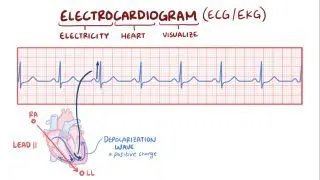
Function | - Reference point for procedures - Paracentesis - Placement of electrocardiogram (ECG) leads - Landmark for: - Determining liver size - Imaging - Describe location of findings |
Because Osmosis saves them time. Lowers stress. And actually helps them remember when it counts.
I used Osmosis to prepare for my first medical school licensing exam! Super helpful and interactive for people who may not do great with just pages of text info!"

Cecilia Ruiz
MD student

I have used Osmosis for about four years. Best thing I have ever used for my medical studies."

Sayan Misra
Med student
Osmosis videos are superior because they define simple concepts, tell a story with a clear progression, and provide context."

Jay Pate
Dental student
Hansen JT. Netter’s Clinical Anatomy. 5th ed. Elsevier - Health Sciences Division; 2022.
Standring S. Gray’s Anatomy: The Anatomical Basis of Clinical Practice. Elsevier Health Sciences; 2020.