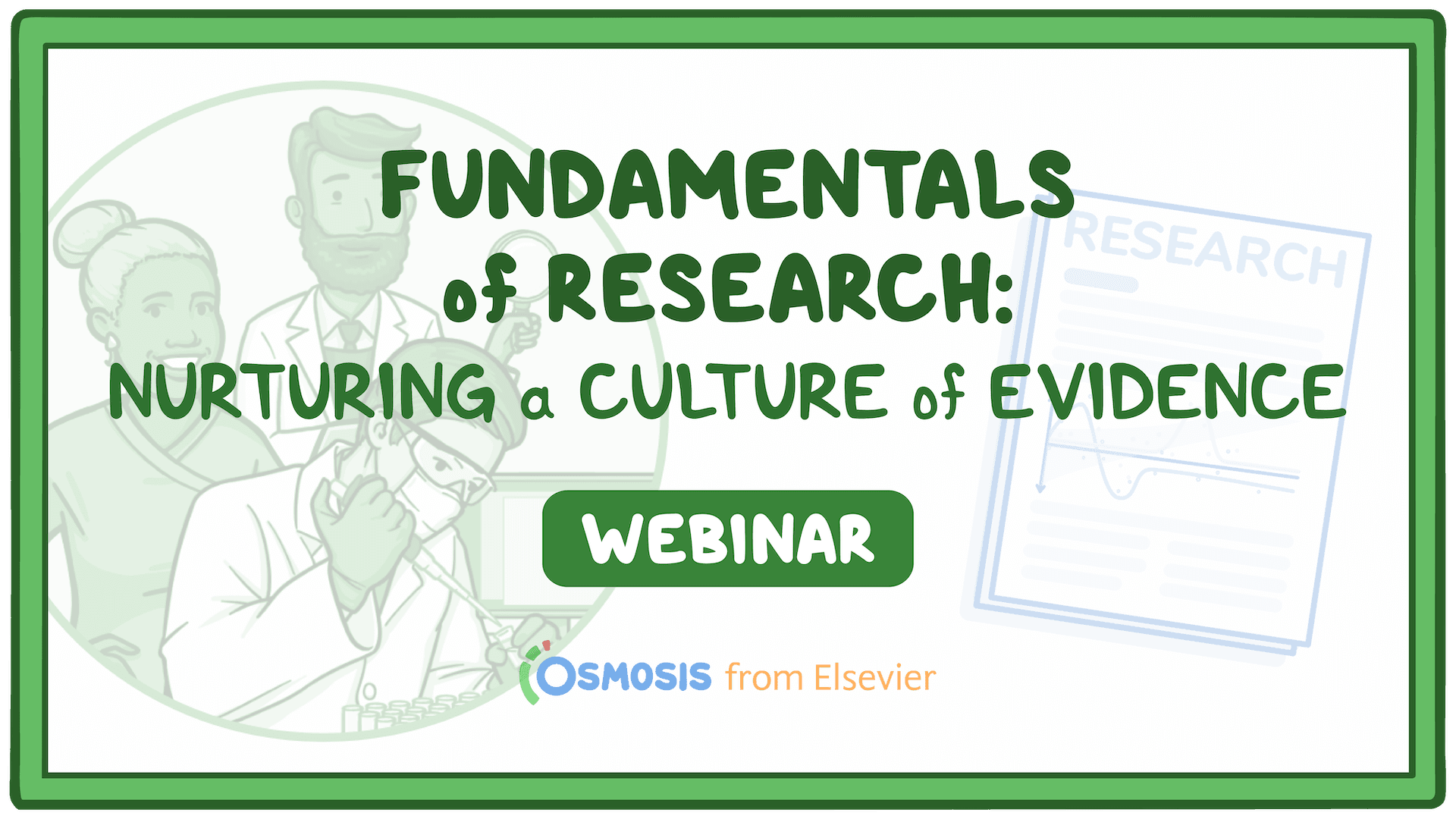
Fundamentals of Research: Nurturing a Culture of Evidence
July 16, 2025
Watch on Demand
Dr. Ximena Alvira shares how to master clinical research basics and evidence-based practice for better patient care, healthcare quality and safety. To help you get the most from this webinar, here are three questions to consider while you are watching this on-demand video. What research question or problem in my field genuinely interests me, and is it meaningful enough to investigate further? How can I critically evaluate the quality and reliability of the research I read before applying it to practice or building on it? What is one realistic first step I can take to begin engaging in research, given my current skills, time, and resources?
Transcript
So again, my name is ??Ximena Alvira??. I am a medical doctor by background, with a doctorate in neuroscience, and I work as a medical writer. I have been working at Elsevier for 12 years, and I am very happy to support the global medical education team. I work in clinical solutions, very closely with this wonderful team, and I have occasionally collaborated on training and educational sessions, which I find both inspiring and a great pleasure.
Some people are still joining, but I do not want to delay us because we have a full schedule. The main objective of todays session, as the title suggests, is to provide an overview of what a research project or process entails.
Why is this important? Because sometimes when we have an idea we want to investigate, we reach the end of the process and realize we missed something, or that we could have approached it differently. We might also realize we could have done something better to differentiate our work from the vast amount of knowledge being published every minute. Ultimately, we want to create an impact in society. Whether we are in medicine, nursing, physiotherapy, or pharmacology, we are all contributing to healthcare, so understanding the full process is essential.
I also want to instill the idea that all of us need to engage in research. Research shapes our future. Everything we know in healthcare comes from research, and we need to foster a healthy, ethical, and transparent research culture in our institutions.
Starting a research project can feel daunting. Many people wonder where to begin, what is worth investigating, and how the process works. It can feel fragmented, as if different pieces of knowledge are disconnected. My goal is to present it as a cohesive process that you can understand and apply.
We cannot escape research. It is necessary. The COVID pandemic demonstrated how critical research is. There was a massive increase in scientific output because we faced an unknown situation. Every type of research, from simple case reports to randomized controlled trials, became valuable. This showed us that we must be prepared and that everyone can contribute ideas and meaningful research.
Healthcare today is based on evidence-based practice, a concept defined by Sackett in 1996. This involves using the best available evidence, incorporating patient preferences and values, and applying clinical expertise. To practice evidence-based medicine, we need evidence, and that evidence should also come from us.
We must not rely solely on existing knowledge. We should contribute to it, especially because healthcare contexts vary across countries and settings. Common sense alone is not enough when dealing with human life. Evidence is essential.
History shows why this matters. In the past, harmful practices were widely accepted due to lack of evidence. Today, we see how research has revealed long-term consequences, such as the links between sugar consumption, obesity, and chronic disease. Research evolves from initial observations to large cohort studies, eventually influencing public health policies.
This illustrates the cycle of knowledge. Observations lead to hypotheses, which lead to studies, and eventually to clinical applications. Basic research plays a critical role in generating ideas that later translate into clinical practice.
We are also seeing a rapid increase in scientific publications. This growth brings challenges. Every minute, multiple research abstracts are uploaded to databases like Medline. There are not enough reviewers to thoroughly evaluate all of them. This leads to issues such as predatory journals, paper mills, and flawed studies that may take years to retract.
Misconduct in research is a serious issue. It includes problems like poor study design, failure to disclose conflicts of interest, and duplicate publication. These issues can harm patients and damage scientific credibility.
One well-known example is the now-retracted study linking vaccines to autism. Although it was later disproven, it caused widespread fear, reduced vaccination rates, and had lasting public health consequences. This demonstrates how research can directly impact society, especially when misrepresented.
We must understand both good and bad research practices. Integrity and accountability are essential. Retractions are far more damaging than rejections, and they can significantly affect a researchers career.
To navigate this, we need a clear understanding of the research process. I view it as a cycle, similar to evidence-based practice. It starts with observation, followed by forming a research question, searching for existing evidence, critically appraising that evidence, and deciding whether to apply it or conduct new research.
The research process continues with designing a study, collecting and analyzing data, writing a manuscript, and publishing findings. Importantly, each study often leads to new questions, continuing the cycle.
A key step is identifying a meaningful research topic. Your topic should align with your interests, your institutions priorities, and real healthcare needs. Motivation is important, whether it comes from the topic itself or the methodology you are using.
You must also identify a research gap. This requires reviewing existing literature and determining what has not yet been answered. Databases such as PubMed, Scopus, Cochrane, and others can help with this process.
Critical appraisal is another essential skill. Not all research is reliable. Tools like CASP and Joanna Briggs Institute checklists can help evaluate study quality. You should also be aware of different types of bias and how they affect research outcomes.
Formulating a strong research question is crucial. It should not be too broad or too narrow. Frameworks like PICO, SPIDER, and FINER can help structure your question and ensure it is feasible, interesting, ethical, and relevant.
Choosing the right study design is equally important. Not all questions require randomized controlled trials. The best design depends on the question, available resources, and ethical considerations.
Finally, the study protocol is the backbone of your research. It outlines every step of your study and ensures consistency and transparency. Tools like SPIRIT for interventional studies and SPIRIT-SERVE for observational studies can guide protocol development.
In summary, research is a continuous cycle that transforms questions into knowledge and knowledge into meaningful change. It requires careful planning, ethical responsibility, and critical thinking at every step.
Thank you so much for your attention and thoughtful questions. I hope this session has provided useful insights into the research process. Remember, research may not immediately translate into practice, but it will have an impact over time.
Helping current and future clinicians focus, learn, retain, and thrive. Learn more.
Event recordings
The Mind-Body Connection: Integrating Mental Health into Primary & Specialty Care
October 20, 2026
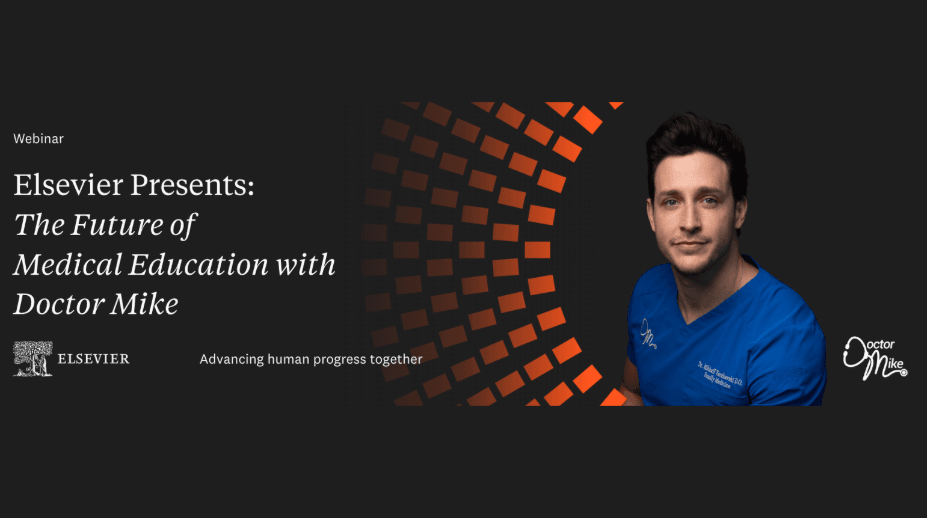
The Future of Education with Dr. Mike
September 29, 2026
What You Need to Know About Using Social Media as a Health Care Student
August 13, 2026
Transition Strategies for New Nursing Graduates
July 9, 2026
Delivering Better Virtual Care: Improving Your Telehealth Skills
June 18, 2026