Case study - Generalized anxiety disorder (GAD): Nursing
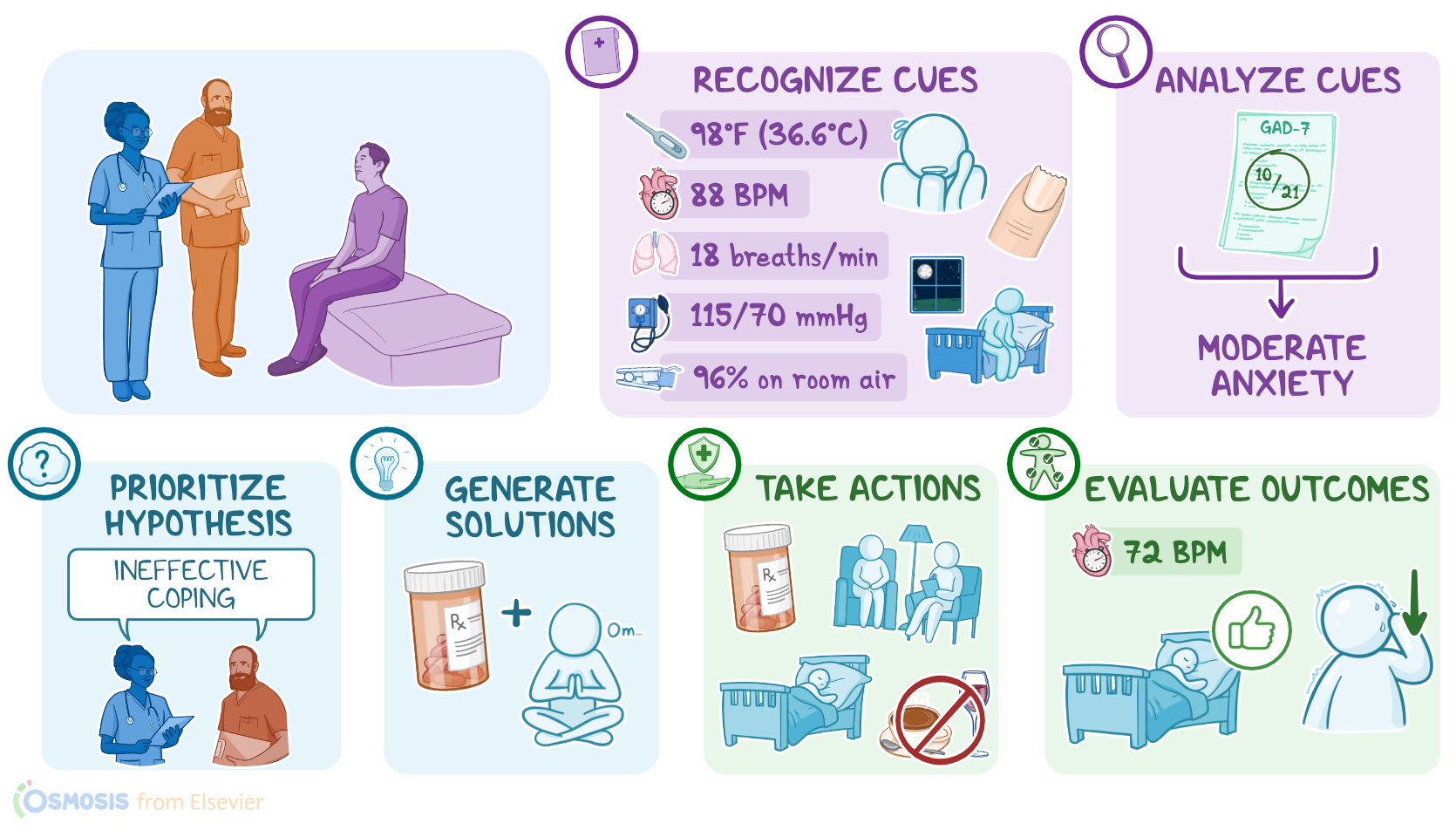
Nurse Aziza works in a primary care office and is caring for Clarence, a 25-year-old who presents with anxiety. Nurse Aziza, in collaboration with the registered nurse, RN Michael, go through the steps of the Clinical Judgment Measurement Model to make clinical decisions about Clarence’s care by recognizing and analyzing cues, prioritizing hypotheses, generating solutions, taking action, and evaluating outcomes.
First, nurse Aziza recognizes important cues, including Clarence’s vital signs which are temperature 98 F or 36.6 C, heart rate 88 beats per minute, respirations 18 breaths per minute, blood pressure 115/70 mmHg, and oxygen saturation 96 percent on room air. She notes that Clarence is biting his nails and appears restless. Nurse Aziza gathers more information from Clarence about his symptoms.
Nurse Aziz: Hi Clarence, tell me how you’re feeling.
Clarence: I'm having trouble sleeping lately. I’m worrying about everything, and I can’t seem to relax.
Nurse Aziza: That sounds stressful. Have you had any major changes in your life recently?
Clarence: Yeah, I lost my job two weeks ago.
Nurse Aziz: I’m sorry to hear that, but you’re in the right place and we’re here to support you.
Next Nurse Aziza analyzes these clues. She reviews the electronic health record, or EHR, and notes that RN Michael administered the Generalized Anxiety Disorder 7-item screening tool, known as GAD-7, and Clarence had a score of ten out of 21, indicating moderate anxiety.
Nurse Aziza knows that one of the major findings associated with GAD is excessive worry. Although the exact cause of GAD isn’t known, it’s thought to be caused by an imbalance of the neurotransmitters, where serotonin system activity is low and noradrenergic system activity is elevated. This imbalance can cause symptoms of restlessness, difficulty concentrating, and impaired sleep. She also knows GAD can be brought on by stressful events or life changes, like losing a job. Nurse Aziza recognizes that Clarence needs help managing his anxiety.
Next using the information, she has gathered along with Clarence’s medical history, Nurse Aziza discusses her findings with RN Michael, and they choose a priority hypothesis of ineffective coping.
Then, they generate solutions to address Clarence’s anxiety that will include pharmacologic and nonpharmacologic interventions; and they establish the expected outcome that after intervening, Clarence will report feeling less worried and have improved sleep by his 2-week follow-up appointment.
| CASE STUDY - GENERALIZED ANXIETY DISORDER (GAD) | ||
| KEY POINTS | MY NOTES | |
| INTRODUCTION |
| |
| RECOGNIZING AND ANALYZING CUES |
| |
| PRIORITIZING HYPOTHESES, GENERATING SOLUTIONS, AND TAKING ACTION |
| |
| EVALUATING OUTCOMES |
| |
- "Foundations of mental health care. (8th ed.)" Elsevier (2023)
- "General anxiety disorder-7 questionnaire as a marker of low socioeconomic status and inequity" Journal of Affective Disorders (2022)
No notes for this video yet
Try adding a note below