Child maltreatment: Nursing
Child maltreatment refers to physical, sexual, or psychological abuse or neglect committed by another individual such as a parent or other caregiver. Abuse refers to any act that causes harm or significant risk of harm to a child; whereas neglect is the failure to provide the basic needs of a child.
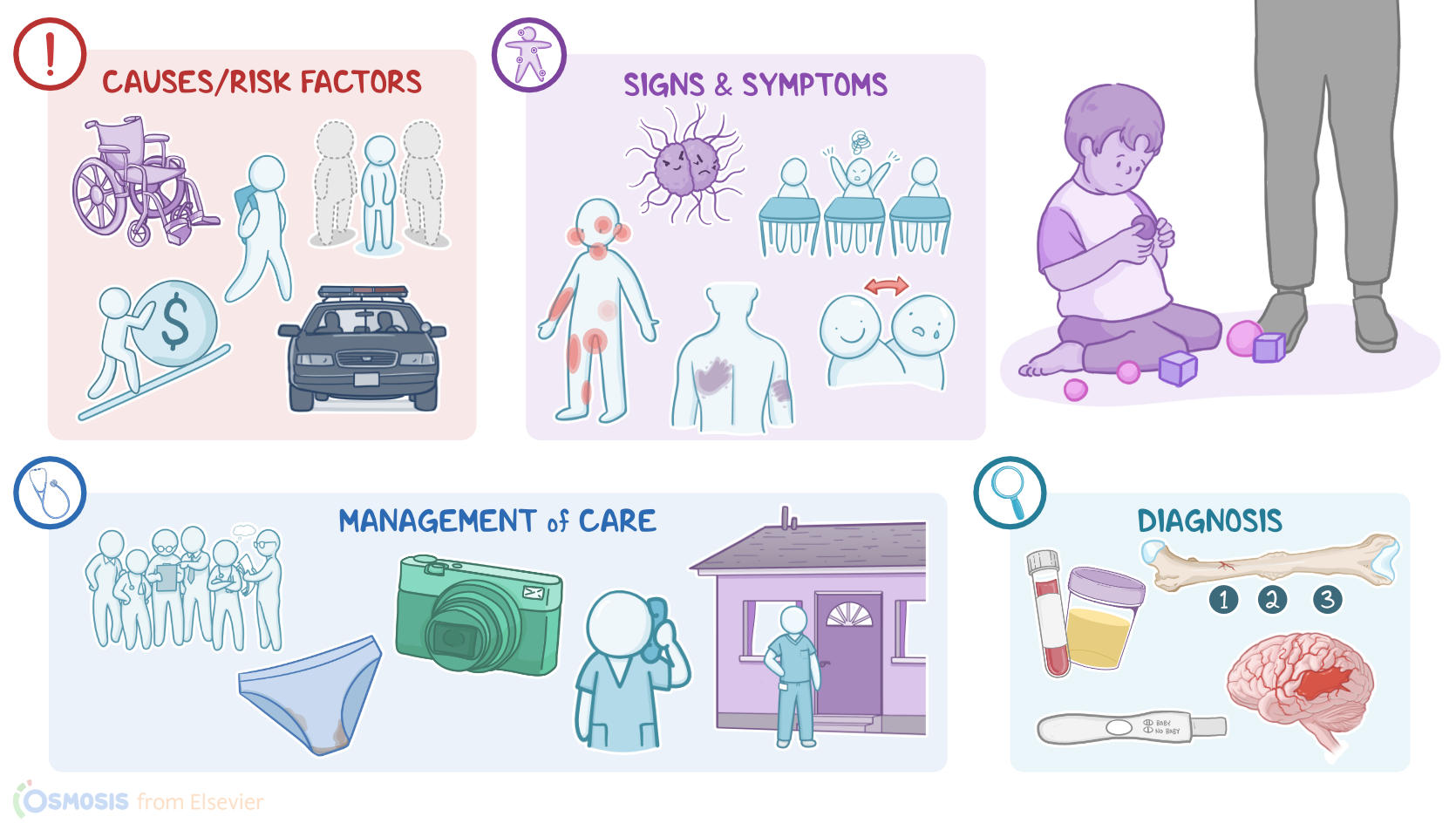
Now, risk factors for child maltreatment can be related to the child or the abuser. Factors related to the child include prematurity, and the presence of physical, psychological, or cognitive disabilities. Child maltreatment is also more common in children of younger age, if the child has behavioral problems, or if the child is unplanned or unwanted.
Now, regarding the factors related to the caregiver, important risk factors include low self-esteem, poor impulse control, young age, low educational achievement, poor social support, mental illness, such as depression, anxiety and substance misuse, or and when there is a biologically unrelated adult male living in the household.
Social factors that increase the risk of child maltreatment include stressful situations such as poverty, unemployment, eviction, or involvement with law enforcement. In addition, parents or caregivers who have experienced child abuse or domestic violence are more likely to be abusive.
Alright, now, there are several types of child maltreatment, including physical, emotional or psychological, sexual, and medical maltreatment. First, physical refers to any intentional physical injury that can result in injuries such as fractures, burns, bites, internal bleeding, or even death. In infants, a particular manifestation of physical abuse is shaken baby syndrome, where violent shaking of a baby is so traumatic that it causes subdural hemorrhage; that can lead to cerebral edema and death. Physical neglect is the failure to provide a child with food, shelter, and supervision. Physical neglect can also be manifested in abandonment, where the child is left alone, and the location of the parents or caregivers is unknown.
| CHILD MALTREATMENT | ||
| KEY POINTS | NOTES | |
| DEFINITION |
| |
| CAUSES AND RISK FACTORS |
| |
| PATHOPHYSIOLOGY |
| |
| SIGNS AND SYMPTOMS |
| |
| DIAGNOSIS |
| |
| TREATMENT |
| |
| MANAGEMENT OF CARE |
| |
| PATIENT AND FAMILY TEACHING |
| |
No notes for this video yet
Try adding a note below