Chronic disease: Nursing
Introduction0:00–1:07
Home health Nurse Svetlana is visiting a client named Betsy who was recently diagnosed with type 2 diabetes. Upon arrival, Nurse Svetlana notices that Betsy is sitting alone in her kitchen with her pajamas on even though it is 2 o'clock in the afternoon.
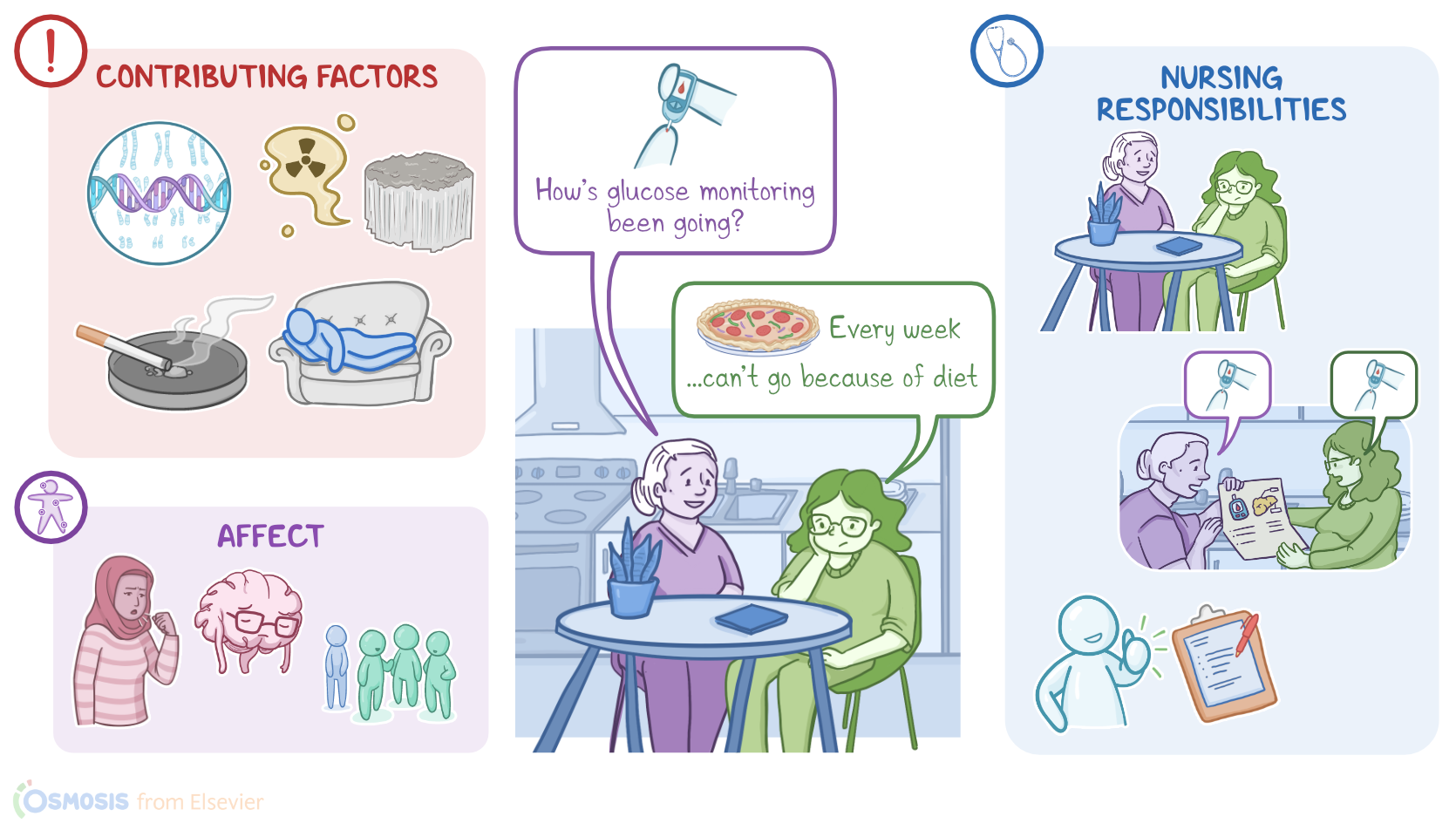
Nurse Svetlana says, “Betsy, I’ve come to see how you’ve been managing your diabetes at home. How’s it been going?” Betsy responds, “I feel fine, but I didn’t realize how much this would change my life.” Nurse Svetlana sits down while Betsy describes the challenges she’s facing, including checking her own blood glucose and feeling isolated from her friends.
Betsy continues, “My friends and I used to get pizza every week but now I can’t go because of my new diet.” Nurse Svetlana empathizes with Betsy, and reassures her that although there are many physical and emotional implications associated with a diabetes diagnosis, they’ll work together to address them.Nurse Svetlana will use what she knows about the nature of chronic disease to support Betsy in managing her diabetes diagnosis.
Defining Chronic Disease and Illness1:07–2:06
So, chronic disease is a biomedical condition lasting at least one year which requires consistent medical care. Examples of chronic diseases are hypertension, asthma, and diabetes.
The rapidly growing population of older adults in the United States is resulting in more chronic illness. It’s estimated that 60 percent of all adults in the United States have at least one chronic disease and 40 percent have two or more chronic diseases.
In fact, chronic disease is the leading cause of death and disability, adding up trillions of dollars in health care costs every year!
On the other hand, chronic illness refers to the client’s personal experience of living with a chronic disease. For example, clients diagnosed with Alzheimer disease may experience fear or loss of independence.
Therefore, nurses must consider the complex needs of clients with chronic disease as well as the numerous factors that play a role in chronic disease.
Factors Associated with Chronic Disease2:06–2:58
Now, understanding the factors that contribute to chronic disease better enables nurses to support their clients. Some of the most common factors leading to chronic disease are genetics and family history, environment, and lifestyle.
First, clients can inherit genetic mutations from their parents that directly cause a chronic disease, like cystic fibrosis or sickle cell anemia.
Other clients with a family history of asthma may have an increased chance for also developing this condition. Next, environmental factors, such as exposure to toxins, can lead to the development of chronic disease.
As an example, a client who breathed in asbestos at work is at a higher risk of developing mesothelioma. Lastly, some lifestyle factors can lead to chronic disease as well.
For instance, smoking cigarettes increases the risk of lung cancer or a sedentary lifestyle can contribute to obesity. All right, now let’s explore how clients are affected by chronic diseases both physically and emotionally.
Effects of Chronic Disease2:58–4:01
The physical effects of chronic disease vary depending on the severity of the disease as well as the required treatments.
For example, one client with chronic obstructive pulmonary disease, or COPD, may need to take two medications per day to manage their disease, whereas another client with COPD may need supplemental oxygen and several oral and nebulized medications to maintain their respiratory function.
While physical effects of chronic disease vary, it’s important to remember that chronic disease also can take an emotional toll on clients.
Chronic disease can affect psychological health, sexuality, and spirituality as well as sociability, like how Betsy reports feeling lonely and overwhelmed following her diabetes diagnosis.
Regardless of the diagnosis, each client will have a unique physical and psychological experience with their chronic disease which requires the nurse to perform individualized client care.Okay, so caring for clients with chronic disease requires the nurse to perform assessments, provide self-management education, and promote autonomy.
The Nurse Role in Chronic Disease4:01–6:47
Assessment is where the nurse examines the impact of the disease on the client, identifying key information such as prevalence and severity of symptoms, as well as how the disease affects their daily life.
When talking to a client, it’s important for the nurse to encourage them to share information about what they are thinking and feeling by using open-ended language like, “Tell me about how you’re feeling today.” Next, the nurse should teach the client the information they need so they can manage their disease successfully, such as how to self-monitor blood pressure for a client with hypertension, or how to use a rescue inhaler for a client with asthma.
One effective teaching technique is the “teach back” method, where the nurse demonstrates how to do something and then the client repeats the skill back to the nurse.
The nurse will also play a role in promoting the client’s autonomy in managing their disease, by encouraging independence while also assisting them to lower the physical and emotional impact of chronic disease management.
Permanent lifestyle modifications can be challenging for clients to do on their own, and individual factors such as finances, social support, and physical limitations, as well as motivation and values can impact a client’s ability to make these needed lifestyle modifications.
This can create barriers to treatment and impair their ability to manage their disease successfully. For example, a client who is unable to drive might view driving to physical therapy as a barrier to treatment.
To address this, the nurse can assist the client in overcoming this barrier to disease management by referring them to a social worker, so transportation resources can be located.
So let’s check back in with Nurse Svetlana who has just completed Betsy’s physical and psychosocial assessment. Although Betsy’s blood glucose is within normal limits, Nurse Svetlana notes that Betsy feels overwhelmed by the self-management required for diabetes, and she feels isolated from her friends.
To address these feelings, Nurse Svetlana reviews Betsy’s diabetes self-management plan, and encourages Betsy to perform a “teach back” of a blood glucose check.
Nurse Svetlana also discusses the diabetic diet with Betsy. Then, together they look at the menu from the restaurant her friends typically go to and select several menu items that are low in carbohydrates that Betsy can order during her next night out.
Betsy says, “Thank you Nurse Svetlana. I feel like I’m better equipped to manage my diabetes after this meeting.” Nurse Svetlana reminds Betsy that she’ll be back for a visit the following week and lets her know she did a great job.All right, as a quick recap… Chronic disease is a biomedical condition lasting at least one year, which requires consistent medical care.
Summary6:47–7:23
This differs from chronic illness which refers to the client’s personal experience of living with a chronic disease. Factors that contribute to chronic disease are genetics and family history, environment, and lifestyle.
Chronic disease can affect clients physically and emotionally. The nurse's responsibility when caring for clients with chronic disease is complex and requires the nurse to perform assessments, provide self-management education, and promote autonomy.
| CHRONIC DISEASE | ||
| KEY POINTS | NOTES | |
| CHRONIC DISEASE |
| |
| CHRONIC ILLNESS |
| |
| RISK FACTORS |
| |
| SIGNS AND SYMPTOMS |
| |
| NURSING CARE AND MANAGEMENT |
| |
No notes for this video yet
Try adding a note below