Complete blood count (CBC) - Hemoglobin and hematocrit: Nursing

Complete blood count (CBC) - Hemoglobin and hematocrit: Nursing

Watch later

Watch later

Infection prevention and control - Precautions and personal protective equipment (PPE): Nursing skills
Urinary tract infections (UTIs): Nursing process (ADPIE)
Modes of infectious disease transmission
Epstein-Barr virus (Infectious mononucleosis)
Pneumonia
Wound healing
Palliative and hospice care: Nursing
Postoperative care: Nursing
Biology of cancer: Nursing
Biliary atresia: Nursing
Cholecystitis: Nursing
Cholelithiasis: Nursing
Colorectal cancer: Nursing
Diarrhea: Nursing
Diverticular disease: Nursing
Esophageal cancer: Nursing
Gastric cancer: Nursing
Hepatitis: Nursing
Inflammatory bowel disease - Crohn disease and ulcerative colitis: Nursing
Intestinal obstruction: Nursing
Irritable bowel syndrome (IBS): Nursing
Jaundice: Nursing
Laryngeal cancer: Nursing
Liver cancer: Nursing
Pancreatic cancer: Nursing
Esophageal atresia and tracheoesophageal fistula: Nursing
Geriatric considerations - Gastrointestinal: Nursing
Hirschsprung disease: Nursing
Hyperemesis gravidarum: Nursing
Necrotizing enterocolitis: Nursing
Omphalocele and gastroschisis: Nursing
Appendicitis: Nursing process (ADPIE)
Celiac disease: Nursing process (ADPIE)
Cirrhosis: Nursing process (ADPIE)
Gastroesophageal reflux disease (GERD): Nursing process (ADPIE)
Hiatal hernia: Nursing process (ADPIE)
Pancreatitis: Nursing process (ADPIE)
Peptic ulcer disease (PUD): Nursing process (ADPIE)
Antacids: Nursing pharmacology
Antidiarrheals: Nursing pharmacology
Antiemetics: Nursing pharmacology
Antispasmodics (GI): Nursing pharmacology
Gallstone-dissolving agents: Nursing pharmacology
Gastric mucosal protective agents: Nursing pharmacology
Histamine H2 antagonists: Nursing pharmacology
Laxatives: Nursing pharmacology
Medications for hepatic encephalopathy: Nursing pharmacology
Pancreatic enzyme replacements: Nursing pharmacology
Proton pump inhibitors (PPIs): Nursing pharmacology
Treatment for Helicobacter pylori: Nursing pharmacology
Weight loss medications: Nursing pharmacology
Bladder tumors: Nursing
Chronic kidney disease (CKD): Nursing
Dialysis care: Nursing
Epididymitis: Nursing
Glomerulonephritis: Nursing
Nephrotic syndrome: Nursing
Polycystic kidney disease (PKD): Nursing
Prostate cancer: Nursing
Pyelonephritis: Nursing
Renal and urinary calculi: Nursing
Renal cancer: Nursing
Testicular cancer: Nursing
Urinary retention: Nursing
Bladder exstrophy: Nursing
Circumcision: Nursing
Cryptorchidism: Nursing
Enuresis: Nursing
Geriatric considerations - Urinary: Nursing
Hypospadias and epispadias: Nursing
Acute kidney injury (AKI): Nursing process (ADPIE)
Benign prostatic hyperplasia (BPH): Nursing process (ADPIE)
Urinary incontinence - Stress: Nursing process (ADPIE)
Antispasmodics (GU): Nursing pharmacology
Cholinergic therapy (GU): Nursing pharmacology
Diuretics - Osmotic and carbonic anhydrase inhibitors: Nursing pharmacology
Diuretics - Thiazide, thiazide-like, loop, and potassium-sparing diuretics: Nursing pharmacology
Anemia - Aplastic: Nursing
Anemia - Iron-deficiency: Nursing
Anemia - Macrocytic: Nursing
Arterial blood gas (ABG) - Overview: Nursing
Arterial blood gas (ABG) - Metabolic acidosis: Nursing
Arterial blood gas (ABG) - Metabolic alkalosis: Nursing
Arterial blood gas (ABG) - Respiratory acidosis: Nursing
Arterial blood gas (ABG) - Respiratory alkalosis: Nursing
Blood cultures: Nursing
Cardiac biomarkers - Creatine kinase (CK): Nursing
Cardiac biomarkers - Troponin: Nursing
Coagulation studies - Partial thromboplastin time (PTT): Nursing
Complete blood count (CBC) - Hemoglobin and hematocrit: Nursing
Complete blood count (CBC) - Platelets: Nursing
Complete blood count (CBC) - Red blood cells (RBC): Nursing
Complete blood count (CBC) - White blood cells (WBC) and differential: Nursing
Complete metabolic panel (CMP) - Blood urea nitrogen (BUN) and creatinine (Cr): Nursing
Complete metabolic panel (CMP) - Chloride: Nursing
Complete metabolic panel (CMP) - Estimated glomerular filtration rate (eGFR): Nursing
Complete metabolic panel (CMP) - Glucose: Nursing
Complete metabolic panel (CMP) - Liver function tests (LFT): Nursing
Complete metabolic panel (CMP) - Potassium: Nursing
Complete metabolic panel (CMP) - Sodium: Nursing
Complete metabolic panel (CMP) - Total protein: Nursing
Disseminated intravascular coagulation (DIC): Nursing
Multiple myeloma: Nursing
Neutropenia: Nursing
Polycythemia: Nursing
Thalassemia: Nursing
Thrombocytopenia: Nursing
Leukemia: Nursing process (ADPIE)
Anticoagulants - Direct thrombin and factor Xa inhibitors: Nursing pharmacology
Anticoagulants - Heparin: Nursing pharmacology
Anticoagulants - Warfarin: Nursing pharmacology
Antihyperlipidemics - Bile acid sequestrants and cholesterol absorption inhibitors: Nursing pharmacology
Antihyperlipidemics - Fibrates: Nursing pharmacology
Antihyperlipidemics - Miscellaneous: Nursing pharmacology
Antihyperlipidemics - Statins: Nursing pharmacology
Antiplatelet agents: Nursing pharmacology
Blood products: Nursing pharmacology
Hematopoietic growth factors: Nursing pharmacology
Hemostatics: Nursing pharmacology
Iron preparations: Nursing pharmacology
Thrombolytics: Nursing pharmacology
Autoimmunity: Nursing
Human immunodeficiency virus (HIV) and acquired immunodeficiency syndrome (AIDS): Nursing
Hypersensitivity reactions - Type I: Nursing
Hypersensitivity reactions - Type II: Nursing
Hypersensitivity reactions - Type III: Nursing
Hypersensitivity reactions - Type IV: Nursing
Immune response - Adaptive: Nursing
Immune response - Innate: Nursing
Immunodeficiency disorders - Primary: Nursing
Immunodeficiency disorders - Secondary: Nursing
Inflammatory process: Nursing
Scleroderma: Nursing
Shock - Anaphylactic: Nursing
Sjögren syndrome: Nursing
Systemic lupus erythematosus (SLE): Nursing
Toxic shock syndrome (TSS): Nursing
Erythema infectiosum (Fifth disease): Nursing
Fever: Nursing
Infectious mononucleosis: Nursing
Mumps (Parotitis): Nursing
Neonatal sepsis: Nursing
Pertussis: Nursing
Poliomyelitis: Nursing
Postpartum infections: Nursing
Roseola (Exanthem subitum): Nursing
Rubella (German measles): Nursing
Rubeola (Measles): Nursing
Smallpox: Nursing
Zika virus: Nursing
Anaphylaxis: Nursing process (ADPIE)
Lyme disease: Nursing process (ADPIE)
Rheumatoid arthritis (RA): Nursing process (ADPIE)
Antirejection immunosuppressants: Nursing pharmacology
Biologic agents: Nursing pharmacology
Disease-modifying therapy for multiple sclerosis: Nursing pharmacology
Immunoglobulins: Nursing pharmacology
Immunomodulators: Nursing pharmacology
Immunosuppressants for autoimmune diseases: Nursing pharmacology
Non-biologic disease-modifying antirheumatic drug (DMARD) therapy: Nursing pharmacology
Vaccines: Nursing pharmacology
Acne: Nursing
Animal and snake bites: Nursing
Burn injury: Nursing
Cutaneous fungal infections: Nursing
Erysipelas and cellulitis: Nursing
Folliculitis, carbuncles, and furuncles: Nursing
Herpes simplex virus (HSV): Nursing
Herpes zoster: Nursing
Impetigo: Nursing
Insect stings and bites: Nursing
Pediculosis and scabies: Nursing
Psoriasis: Nursing
Rocky Mountain spotted fever (RMSF): Nursing
Skin cancer - Basal cell carcinoma, squamous cell carcinoma, and melanoma: Nursing
Urticaria: Nursing
Geriatric considerations - Integumentary: Nursing
Atopic dermatitis: Nursing process (ADPIE)
Frostbite: Nursing process (ADPIE)
Methicillin-resistant Staphylococcus aureus (MRSA): Nursing process (ADPIE)
Pressure injury: Nursing process (ADPIE)
Antibiotics - Topical: Nursing pharmacology
Antifungals - Topical: Nursing pharmacology
Corticosteroids - Topical: Nursing pharmacology
Debridement agents: Nursing pharmacology
Keratolytics: Nursing pharmacology
Medications for acne vulgaris: Nursing pharmacology
Osteoarthritis: Nursing
Osteomyelitis: Nursing
Osteoporosis: Nursing
Hip fractures: Nursing
Developmental dysplasia of the hip: Nursing
Acute compartment syndrome: Nursing process (ADPIE)
Fractures: Nursing process (ADPIE)
Gout: Nursing process (ADPIE)
Musculoskeletal injuries: Nursing process (ADPIE)
Buerger disease: Nursing
Raynaud phenomenon: Nursing
Peripheral arterial disease (PAD): Nursing process (ADPIE)
Peripheral venous disease (PVD): Nursing process (ADPIE)
Atelectasis: Nursing
Geriatric considerations - Respiratory: Nursing
Venous thromboembolism (VTE): Nursing process (ADPIE)
Asthma: Nursing process (ADPIE)
Bacterial pneumonia: Nursing process (ADPIE)
Bronchiolitis and respiratory syncytial virus (RSV): Nursing process (ADPIE)
Carbon monoxide poisoning: Nursing process (ADPIE)
Chronic obstructive pulmonary disease (COPD): Nursing process (ADPIE)
Epiglottitis: Nursing process (ADPIE)
Foreign body aspiration and upper airway obstruction: Nursing process (ADPIE)
Laryngotracheobronchitis (LTB) and croup: Nursing process (ADPIE)
Smoke inhalation injury: Nursing process (ADPIE)
Papulosquamous and inflammatory skin disorders: Pathology review

Notes

HEMOGLOBIN AND HEMATOCRIT

KEY POINTS
NOTES
PHYSIOLOGY
  • Hemoglobin (Hgb) and hematocrit (Hct) indirectly measure red blood cells (RBCs)
  • Hgb
    • Iron-containing protein in RBCs
    • Adult males
      • 14.0-18.0 g/dL (140-180 g/L)
    • Adult females
      • 12.0-15.0 g/dL (120-150 g/L)
  • Hct
    • Percentage of packed RBCs
    • Adult males
      • 41-51%
    • Adult females
      • 36-45%

PATHOLOGY
  • Hgb and Hct increase
    • Increased number RBCs
    • Decreased fluid in blood
  • Hgb and Hct decrease
    • Blood loss
    • Decreased RBC production
    • Increased RBC destruction
    • Fluid overload

INDICATIONS
  • Signs or symptoms of low or high RBCs
  • Recovering from surgery
  • After acute hemorrhage or hemolysis
  • Screening for anemia


NURSING IMPLICATIONS
  • Goals of care
    • Address underlying cause
    • Monitor levels
  • Collect venous sample
  • Gently invert tube
  • Deliver promptly to lab
  • Institute fall precautions
  • Ensure dietary referral
  • Report to HCP
    • Signs of shock
    • Critical Hgb or Hct level
  • Initiate fluid and salt restrictions as indicated
  • Administer IV fluids and electrolyte replacements as prescribed
  • Review medication history

Transcript

Watch video only

A client comes to the outpatient clinic and reports feeling fatigued, weak, and is experiencing frequent palpitations. On assessment, the client’s skin and mucous membranes look pale and their extremities feel cold. Based on these findings, a complete blood count, or CBC, is ordered to check their hemoglobin and hematocrit.

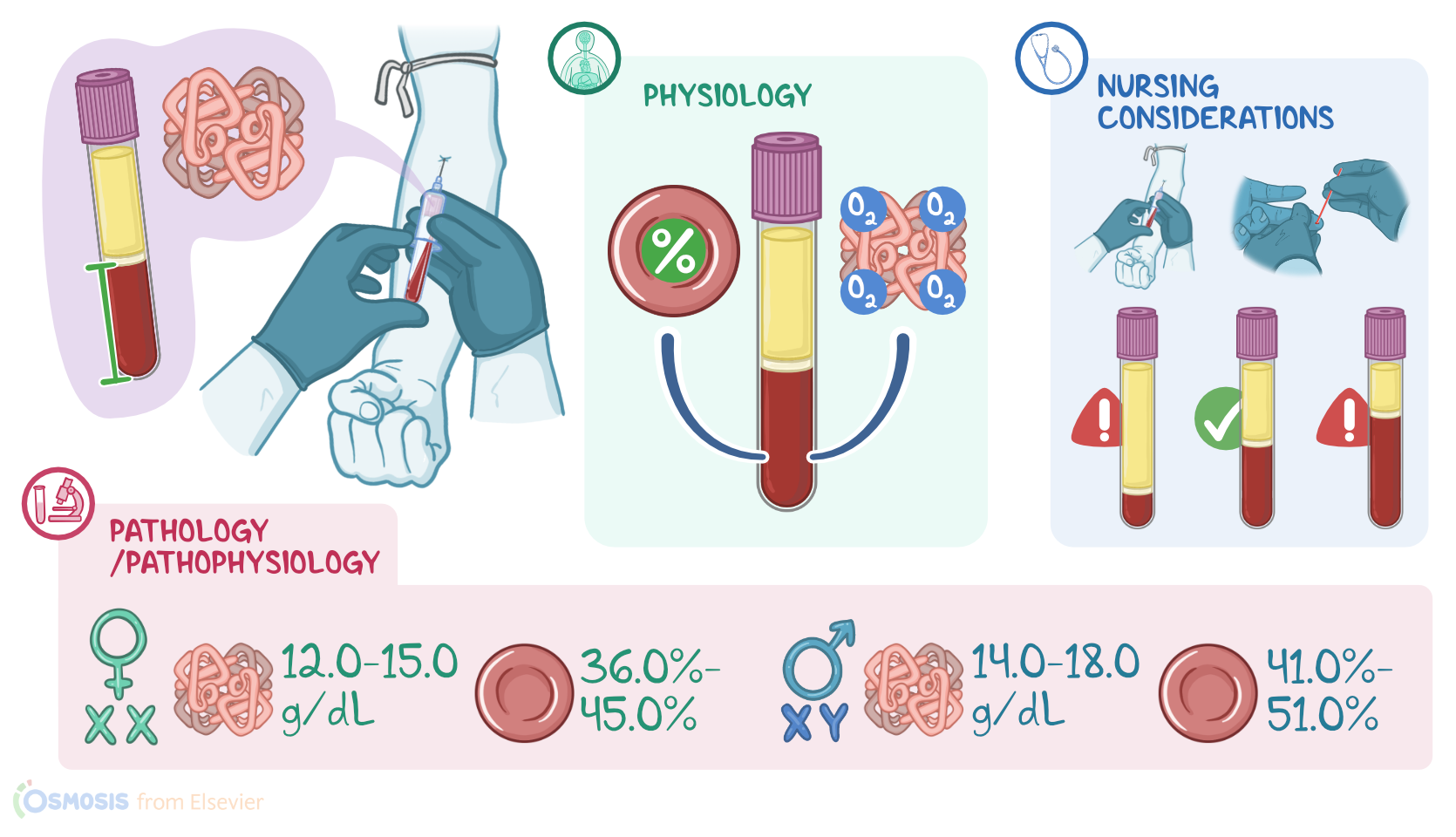
Now, hemoglobin, abbreviated as Hgb or Hb, and hematocrit abbreviated as Hct or sometimes Crit, are usually measured as part of a CBC, and they provide an indirect way to measure red blood cells or RBCs. Hemoglobin is an iron-containing protein found in RBCs, which allows them to carry oxygen from the lungs to peripheral tissues. The hematocrit represents the percentage of packed RBCs, also referred to as the Packed Cell Volume or PVC, in whole blood, that’s obtained after centrifuging part of the sample to allow for complete sedimentation of the RBCs.

The normal values of hemoglobin and hematocrit differ between the sexes. This is because in females, RBC production is stimulated by erythropoietin only, while in males, androgens provide additional stimulation for RBC production. So, in adult males, hemoglobin normally ranges from 14.0 to 18.0 g/dL, while in adult females it normally ranges from 12.0 to 15.0 g/dL. Hematocrit in males ranges from 41.0% to 51.0%, while in females it ranges from 36.0% to 45.0%.

Typically, the hematocrit will be about three times the value of hemoglobin. As an example, if a client’s hemoglobin is 14.0 g/dL, their expected hematocrit would be about 42%.

Alright, there are certain conditions that can alter a client’s hemoglobin and hematocrit.

When the number of RBCs increases, like in polycythemia vera, a condition where the bone marrow produces too many RBCs, hemoglobin also increases. These additional cells also increase the percentage of RBCs, which means that the hematocrit will go up as well.

Alternatively if the amount of fluid in the blood decreases, like with dehydration, the concentration of RBCs increases, and the hemoglobin and hematocrit will also increase.

In contrast, low levels can be caused by chronic blood loss due to conditions like peptic ulcer disease or heavy menstrual bleeding; decreased RBC production caused by certain hemoglobinopathies; or  increased RBC destruction, which can happen with certain autoimmune disorders.

Another way hemoglobin and hematocrit can decrease is from fluid overload, where excess intravascular fluid dilutes the blood, causing a relative decrease in RBCs, and is referred to as dilutional anemia.

This occurs during pregnancy, where blood plasma increases more in relation to RBCs, in which case it’s referred to as physiological anemia of pregnancy.

Now, a client’s hemoglobin and hematocrit will be measured when there are signs or symptoms of low or high RBCs. If RBCs are low, signs and symptoms can include fatigue, weakness, pallor, cold extremities, tachycardia, palpitations, and chest pain.

On the other hand, symptoms of increased RBCs can include fatigue, dizziness, frequent nose bleeds, and itching after a warm shower.

Additionally, there are other scenarios where hemoglobin and hematocrit are measured.  It can be used to assess a client recovering from surgery, as well as after an acute hemorrhage or episode of hemolysis. Finally, hemoglobin and hematocrit are measured to screen clients who are at risk for anemia.

Alright, let’s look at the nursing implications for a client with an altered hemoglobin or hematocrit. Your priority goals of care are to address the underlying cause, and to monitor your client’s hemoglobin and hematocrit levels.

First, collect a sample by venipuncture using a lavender-topped tube. This tube contains the anticoagulant EDTA to help prevent clotting of the sample.