Complete metabolic panel (CMP) - Liver function tests (LFT): Nursing
Content Reviewers
Contributors
A 24-year-old male client is seen in the emergency department, with a report of weakness, nausea, vomiting, and fever. On assessment, he has abdominal pain in the upper right quadrant of his abdomen, along with scleral icterus. When asked about recent travel, he states he returned from a trip to South America two weeks ago. Based on these findings, liver function tests are ordered.
Now, liver function tests, or LFTs, are a set of tests that check the health of the liver by measuring the enzymes and other substances made by the liver. First up, is alkaline phosphatase, or ALP for short, which is an enzyme found mostly in liver cells, which are called hepatocytes, as well as in bone cells, and the placenta. Next, is alanine aminotransferase, also known as ALT; and aspartate aminotransferase, also known as AST. Both ALT and AST can be found in the liver, kidneys, heart, and skeletal muscle.
Another enzyme is gamma-glutamyl transferase, or GGT, which is mostly present in the liver. Finally, there’s bilirubin, which is a product of the breakdown of hemoglobin found in red blood cells. This type of bilirubin is referred to as unconjugated or indirect bilirubin. Once it reaches the liver, bilirubin is converted into conjugated or direct bilirubin and eliminated through the bile. Total bilirubin is a measurement of both conjugated and unconjugated bilirubin.
Now, LFTs can be drawn on their own as a liver panel, or as part of a complete metabolic panel. The normal value of ALP ranges from 30 to 120 units/L; ALT ranges from 4 to 36 units/L; AST ranges from 0 to 35 units/L; and GGT ranges from 8 to 38 units/L. These ranges can vary slightly between sexes, and could be higher for those with a higher body mass index. Lastly, total bilirubin values range from 0.3 to 1.0 mg/dL.
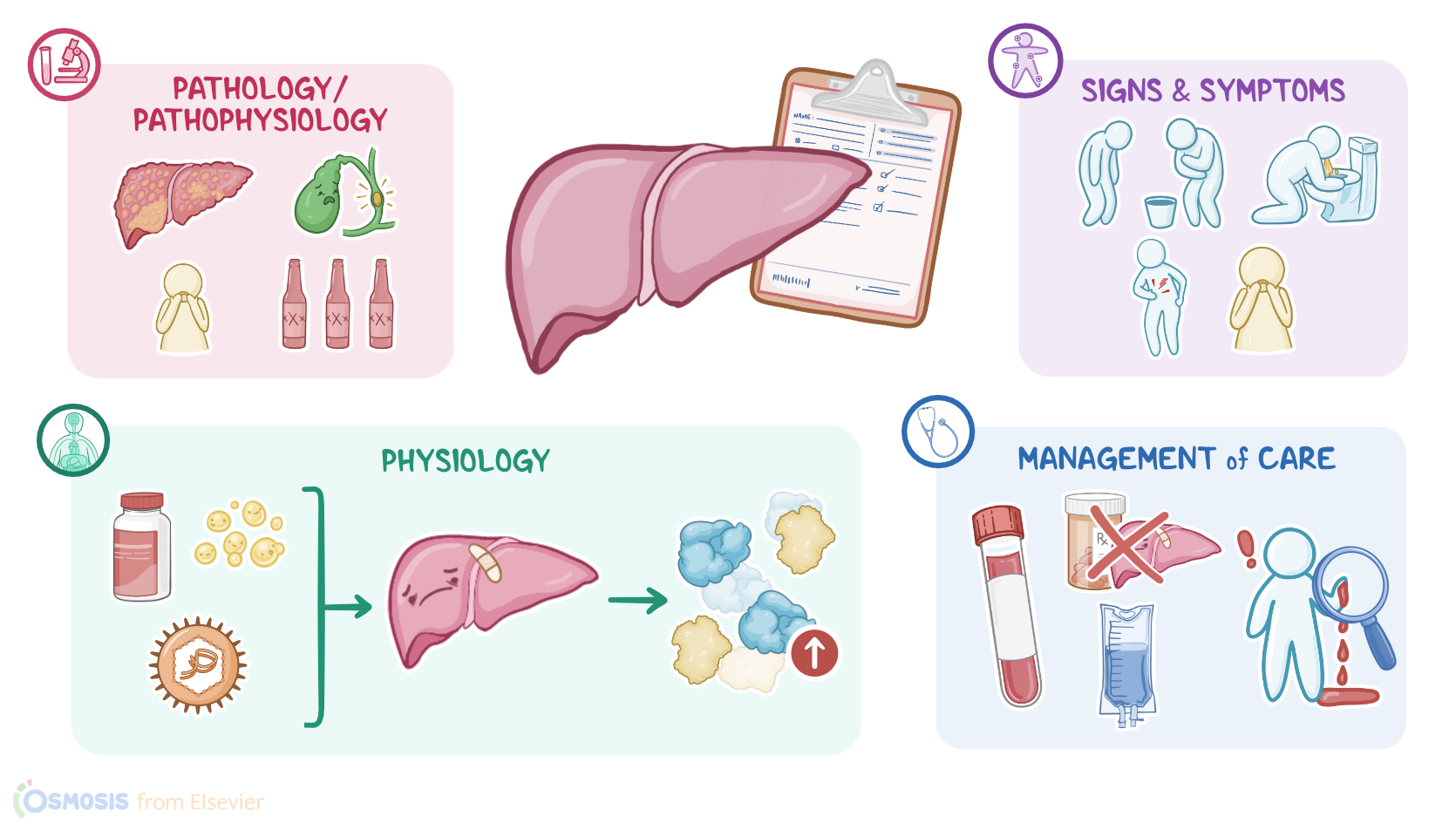
Alright, there are some conditions, like hepatitis, liver cancer, and fatty liver disease, as well as certain medications like acetaminophen, that can damage the liver causing its enzymes to leak out into the blood, resulting in elevated LFTs. Liver enzymes will also rise if there are problems with the hepatobiliary tree, like biliary obstruction or cholecystitis.
| LIVER FUNCTION TESTS (LFTs) | ||
| KEY POINTS | NOTES | |
| PHYSIOLOGY |
| |
| PATHOLOGY |
| |
| NURSING IMPLICATIONS |
| |
No notes for this video yet
Try adding a note below