Genomics - Ethical, legal, and social implications (ELSI): Nursing
Introduction0:00–0:47
Nurse Mateo is meeting with Ms. Sullivan today at the women’s health clinic.
“I’m very concerned about my risk of developing breast cancer,” says Ms. Sullivan.
Nurse Mateo replies, “Can you tell me more about the reason for your concern?” Ms. Sullivan answers, “Well, my mother was diagnosed with breast cancer when she was 50 years old.
Is there anything I can do aside from mammograms to assess my personal risk?” “There is a genetic screening, called BRCA screening that can help evaluate your risk.
We can discuss some testing considerations,” replies Nurse Matteo. To better understand the impact of genetic screening, let’s take a look at the ethical, legal, and social implications of genetic testing.Genomics is the branch of science that examines all of a person’s genes, including how the genes interact with one another and with the person’s environment.
Defining Genomics0:47–1:26
Genomics can help predict disease progression or the future development of disease, like how a BRCA screening can help predict Ms.
Sullivan’s risk of developing breast cancer. This means that nurses have the opportunity to provide client education, and to reduce risk and improve outcomes with a more client-centered approach.
While the introduction of genetic screening has had many positive impacts, it has also introduced new ethical, legal, and social implications.Now, one of the most significant ethical implications of genomics is confidentiality and the right to privacy concerning a client’s unique genetic information.
Ethical Implications1:26–2:36
This means that the results about a genetic test cannot be shared without the client’s explicit permission. This can be an ethically complex issue if there are family members who may benefit from knowing the outcome of certain genetic screening tests, but the client chooses not to disclose the results.
As the nurse, you should educate your client about the possible risks and benefits of their options, including the option to disclose their test results or to keep them confidential.
Most importantly, you are required to safeguard the client's privacy which includes protecting the confidentiality of their medical records.
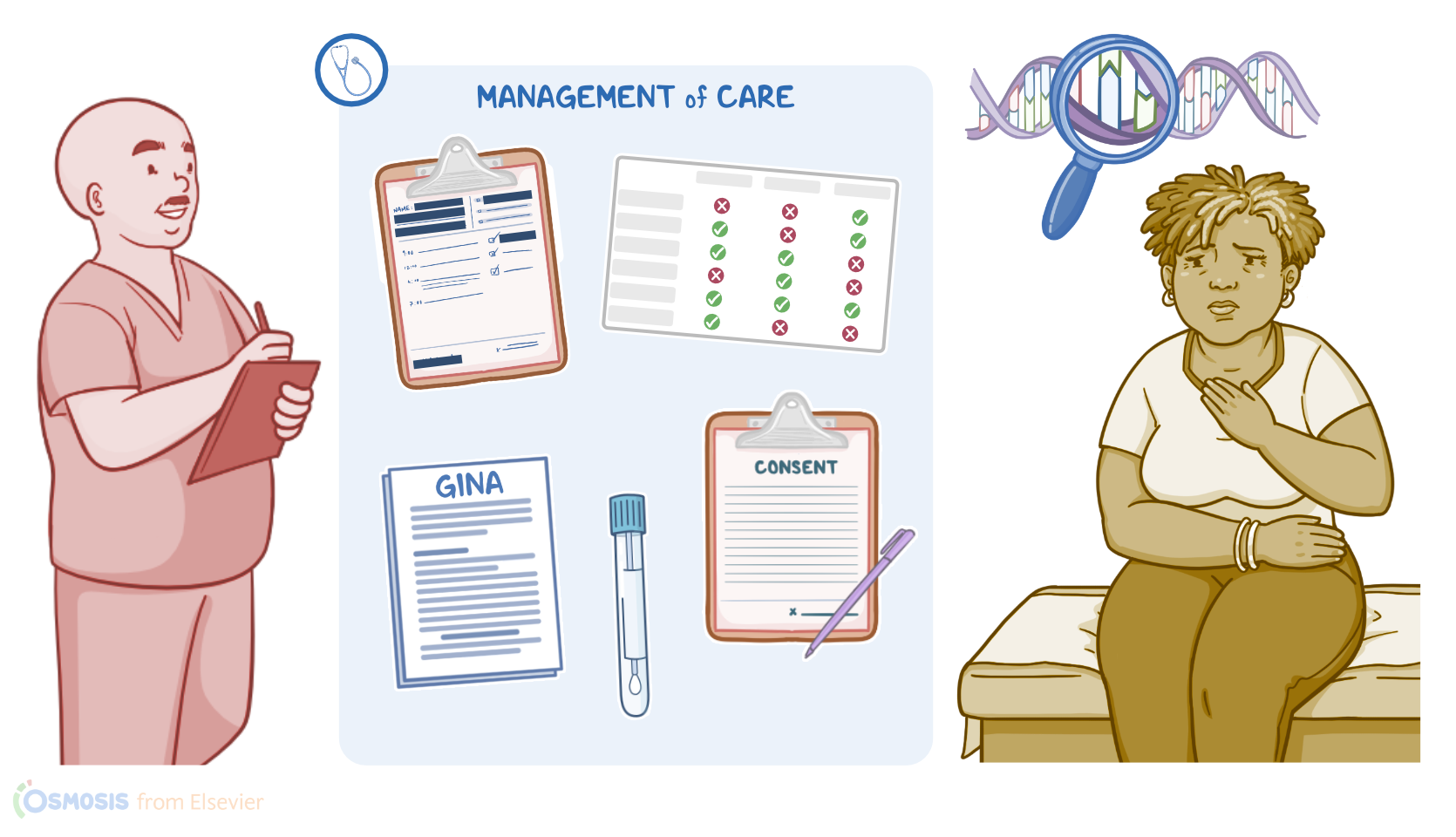
Next, there is the right to know, which means clients have the right to know they are being genetically screened. Genetic testing should not be ordered without written client consent.
The client is also entitled to the disclosure of all findings of genetic testing, including results that were not being directly tested for but coincidentally discovered.Alright, so there are a few legal implications to consider regarding genetic screening.
Legal Implications2:36–3:41
First, the Genetic Information Nondiscrimination Act, or GINA, was developed to address legal concerns related to genetic screening.
In the United States, GINA makes it illegal for employers or health insurance companies to discriminate against a person because of their genetic information, including using this information to identify pre-existing conditions or to set insurance premium rates.
On the other hand, GINA does not protect a client from discrimination from companies that provide life, disability, or long-term care insurance.
Other legal considerations mandate that clients must give consent regarding the use of any tissue that has been removed from their bodies for the purpose of genetic screening.
Finally, if there is a genetic test available that might benefit a client, they are entitled to receive information about the test.
And before providing informed consent for testing, information about the risks and benefits of the test, and how the test might impact their health must be provided.
Next, are the social implications of genetic screening. For example, a client’s genetic information can be used to foster social stigmatization based on their genetic attributes, leading to discrimination, demeaning behaviors from others, or a devalued social identity and loss of social status.
Social Implications3:41–5:49
Additionally, if one member of the family has genetic screening performed that others family members object to, this may cause stress within the family unit, especially if the findings directly or indirectly affect other family members.As nurses, we need to consider the personal impacts genetic screening might have on our clients.
Genetic screening might reveal information that causes extreme emotional responses like sadness, anger, anxiety, or even happiness.
Because this can affect their relationship with others or how they view themselves, appropriate support must be provided for clients receiving genetic screening results.Likewise, there are also considerations for how nurses and other healthcare providers handle the delivery of genetic screening results.
Since this information might be life-changing for the client, the results should be given face-to-face whenever possible, instead of receiving results over the phone or through written communication.
It is also important to remember that results of genetic testing can be complicated, and it’s common for clients to have a lot of questions about what their results mean, so it is important that you are properly trained in genetic counseling if you will be delivering genetic testing results.
Otherwise, you should refer the client to someone who is appropriately trained so they can accurately explain and educate the client on their findings.Alright, let’s check back with Nurse Matteo and Ms.
Sullivan. Nurse Matteo has provided education on the procedure for BRCA testing, Ms.
Sullivan has signed the consent, and Nurse Matteo has collected the saliva specimen. Ms.
Sullivan says, “Thank you for all of your help today. I am anxious to get the results of this test but glad that you have connected me with a genetic counselor and other resources to help me understand my genetic test results.”Alright as a quick recap… Genomics is the branch of science that examines all of a person’s genes, including how the genes interact with one another and with the person’s environment.
Review5:49–6:47
Genomics can help predict the future development of disease or the progression of a disease. With the inclusion of genetic screening as a more routine part of client care, ethical, legal, and psychosocial considerations are more prominent.
Ethical implications include the client’s right to privacy and confidentiality, the right to know, and the client’s right to disclosure of incidental findings.
Legal implications include the Genetic Information Nondiscrimination Act, or GINA, which was developed to address legal concerns related to genetic screening.
Lastly, social implications of genetic screening include concerns that clients might experience social stigmatization or discrimination as the result of their genetic testing results.
Clients who receive genetic screening should have their results explained face-to-face by someone who is trained in interpretation and delivery
| GENOMICS - ETHICAL, LEGAL, AND SOCIAL IMPLICATIONS (ELSI) | ||
| KEY POINTS | NOTES | |
| DEFINITION |
| |
| DEFINING GENOMICS |
| |
| ETHICAL IMPLICATIONS |
| |
| LEGAL IMPLICATIONS |
| |
| SOCIAL IMPLICATIONS |
| |
No notes for this video yet
Try adding a note below