Geriatric considerations - Psychosocial: Nursing
Introduction0:00–0:39
Geriatrics is the branch of medicine that deals with the physiology and psychology of aging, as well as the diagnosis and treatment of diseases affecting older clients.
Now, as a person ages, they go through psychosocial development, which refers to how the client's personal needs fit with the needs of the society.
This occurs through a lifelong series of events with multifactorial influences like personality thinking and behavior. Two psychiatrists and psychologists who were involved in studying psychosocial development are Carl Young and Erik Erikson.
Physiology0:39–1:52
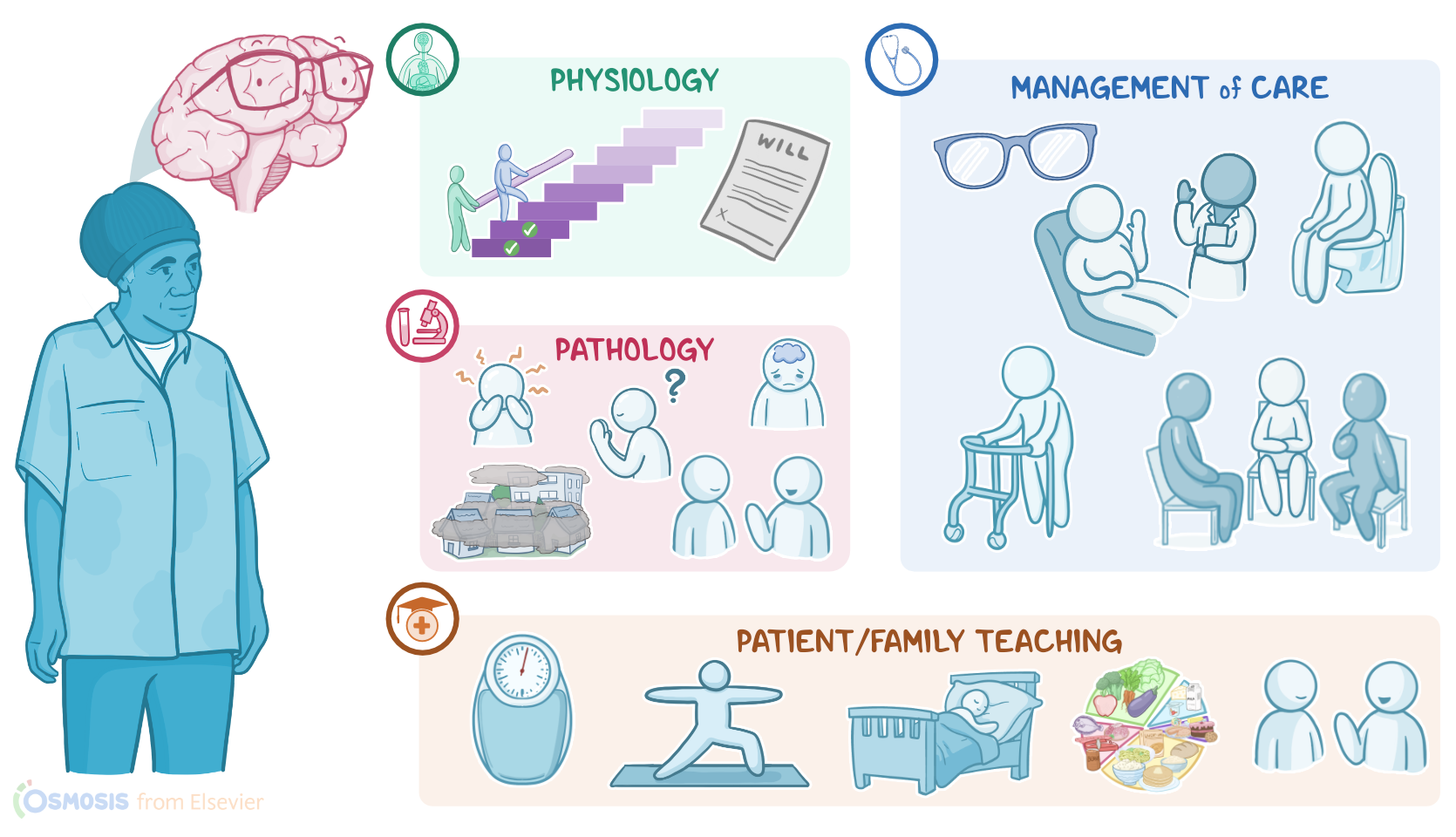
OK. Now, one particular theory of Carl Jung is called individualism, which describes the process by which a person develops into a unique individual by balancing their orientation between the external world and their own subjective inner experiences according to young individuals age successfully when they accept the past, adapt to physical decline and accept their life's accomplishments as well as its limitations.
Now, Erickson constructed a theory called the psychosocial theory of development, which describes development in eight life stages.
Typically, an individual needs to fulfill a particular task in one stage to move to the next one, the eighth and final life stage.
And Erikson's theory occurs in clients who are 65 years or older and it is called integrity versus despair. Integrity is when older clients review their lives with satisfaction even in the presence of inevitable mistakes.
Whereas despair occurs when older clients regret missed opportunities in life. Finally, psychosocial development is closely related to decisions regarding the end of life.
Now, psychosocial development can influence quality of life or QOL for short, which can be health related or environmental health related.
Pathology1:52–3:26
QOL includes a client's physical mental, emotional and social functioning and their impact on quality of life. These can include mobility, independence and bathing and dressing, sensory acuity in addition to mood and absence or presence of pain.
On the other hand, environmental Q OL involves the effect of the client's environment influencing quality of life. These can include economic resources, housing, air and water quality and community stability, as well as access to arts and entertainment, capacity to form friendships and appreciate nature and finding satisfaction in spiritual or religious life.
Now, these two types of QO are so related that 1 may affect the other and vice versa. For example, cognitive impairment associated with dementia can typically affect both health related and environmental quality of life.
Finally, during the end of life period, older clients typically think about the meaning of illness, spiritual uncertainty, loss, and grief, as well as fear of increasing dependency on others, uncertainty and fear about the future and worries about loved ones.
Now, let's talk about the care you would provide for a geriatric client while prioritizing their psychosocial needs. Your priority goals are to provide psychosocial support and promote quality of life.
Management of care3:26–5:13
Begin by assessing your clients psychosocial needs and provide individualized psychosocial support. Ask your client about their support system and social circles including family, friends, church groups or other activities.
Determine if your client lives alone and if they have experienced a loss of a family member or other significant loss. Remember to not rush your assessment.
So be sure to encourage open conversation and allow ample time for your client to answer your questions. Then institute interventions to support their unique developmental needs and assist with therapies such as reminiscing life review or guided autobiography.
Next, assess factors that may impact your clients quality of life and institute measures to promote their quality of life, review their health history to identify any chronic disease they may have and determine the effectiveness of the treatments.
Then assess their level of independence in their activities of daily living, including bathing, dressing, toileting, meal preparation and mobility.
Be sure to perform a detailed nutritional assessment to ensure there are no nutritional deficits, also check that they have glasses or hearing aids as needed.
Finally ensure there are referrals in place for social work, mental health counseling and case management. So any identified needs can be addressed.
General client & family teaching5:13–5:59
Now, let's move on to client and family teaching. Begin by discussing how maintaining a healthy lifestyle can support psychosocial health.
This includes maintaining a healthy weight, eating a balanced diet, engaging in regular physical activity as tolerated and getting adequate sleep.
Remember to emphasize the importance of stress management and teach them to use methods that appeal to them such as meditation, breathing exercises, music or reflective journaling.
Also talk about ways to stay mentally active and encourage them to keep connected with friends, family and others in the community and engage in meaningful activities.
Finally, stress the importance of regular checkups with their health care providers. All right, as a quick recap, as clients age, they go through psychosocial changes which involves how the client's needs fit with the needs of society.
Review5:59–6:51
Carl Jung's theory called individualism describes the process by which a person develops into a unique individual. On the other hand, Erikson's theory called the psychosocial theory of development describes development in eight life stages with the eighth and final life stage being called integrity versus despair.
Psychosocial development can influence quality of life or QOL for short, which can be health related or environmental. The priority goals of nursing care are to provide psychosocial support and promote quality of life.
Finally, client and family teaching is focused on maintaining a healthy lifestyle to support psychosocial health.
| GERIATRIC CONSIDERATIONS - PSYCHOSOCIAL | ||
| KEY POINTS | NOTES | |
| DEFINITION |
| |
| PHYSIOLOGY |
| |
| PATHOPHYSIOLOGY |
| |
| MANAGEMENT OF CARE |
| |
| PATIENT AND FAMILY TEACHING |
| |
No notes for this video yet
Try adding a note below