Insect stings and bites: Nursing
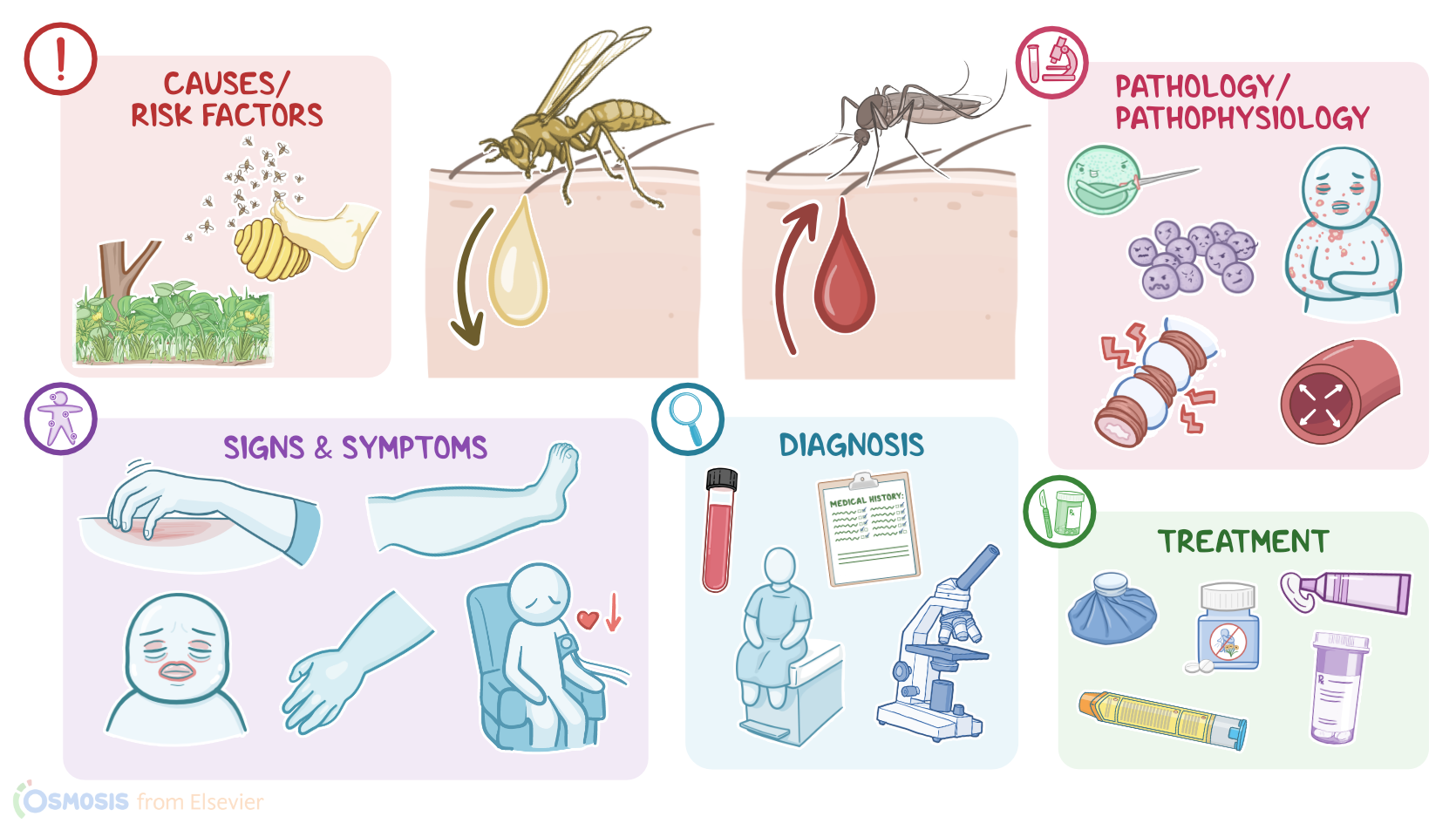
Insect stings and bites are relatively common injuries; the difference between them is that stings happen when an insect introduces toxic venom into someone's body, often as a self-defense mechanism; whereas bites happen when an insect pierces someone’s skin in order to feed on their blood.
Let’s start by looking at the anatomy and physiology of the skin. The skin is made of the epidermis, which is an outer layer that acts as a protective barrier against the environment; the dermis, which primarily contains blood vessels and nerve endings; and the hypodermis, which is a layer of connective tissue that provides structural support to the skin.
In addition to being a physical barrier against the external environment, the skin harbors several types of immune cells that participate in the body’s immune response. Normally, the immune system recognizes and acts against pathogens that cause disease, but in some clients, it can overreact and start targeting harmless molecules that don’t cause any problems for most people, including certain foods, medications, as well as the venom or saliva of some insects.
Now, insect stings are caused by stinger insects of the Hymenopteran family, which includes bees, wasps, hornets, yellow jackets, and fire ants; as well as other animals like spiders and scorpions. On the other hand, insect bites are most commonly caused by insects that feed on the host's blood to survive, and these include mosquitoes, chiggers, bedbugs, lice, and ticks.
Since many insects only sting when provoked, risk factors for getting stung include disturbing the animals, such as stepping on a bee-hive, for example. Additionally, insect stings and bites are more likely to happen in clients who spend a lot of time outdoors, especially those who live in warmer climates or near wetlands and forested areas with lots of wood, bushes, and tall grass. Other risk factors include collecting insects as a hobby and not using protective clothes or repellent when spending time outdoors.
Now, while insect stings and bites can result in similar injuries, their pathology is quite different. Stings occur when an insect introduces toxic venom through their stingers into the client’s skin. Here, the problem isn’t really the venom, but rather the immune system’s reaction to it. In mild cases, there may be a local skin reaction around the sting site due to the activation of neighboring immune cells and subsequent release of proinflammatory molecules, like histamine and bradykinin.
| INSECT STINGS AND BITES | ||
| KEY POINTS | NOTES | |
| DEFINITION |
| |
| PHYSIOLOGY |
| |
| CAUSES AND RISK FACTORS |
| |
| PATHOPHYSIOLOGY |
| |
| SIGNS AND SYMPTOMS |
| |
| DIAGNOSIS |
| |
| TREATMENT |
| |
| MANAGEMENT OF CARE |
| |
| PATIENT AND FAMILY TEACHING |
| |
No notes for this video yet
Try adding a note below